

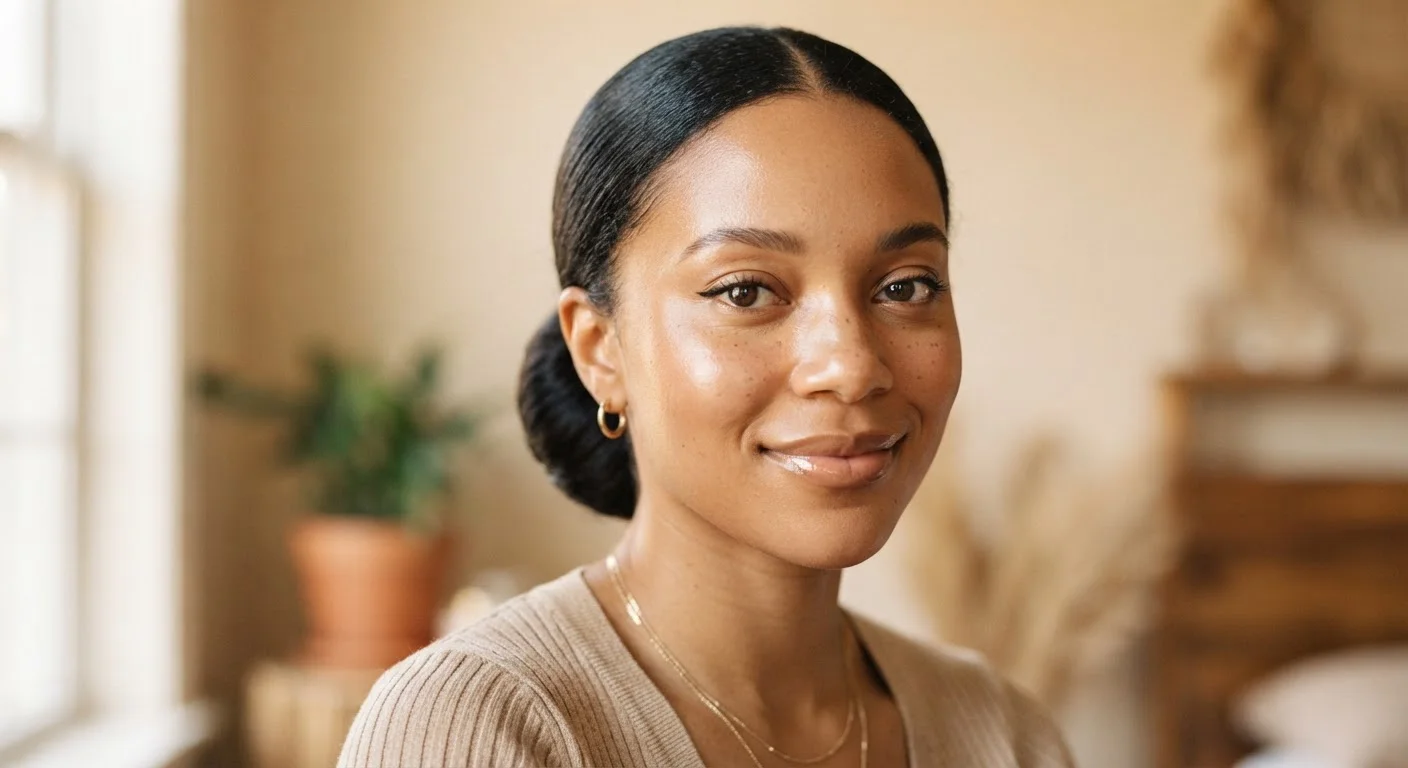
Why Unwashed Hair Is Actually Easier to Style
Skipping wash day isn't a beauty failure—it's often a strategic advantage. Natural sebum (the oil your scalp produces) coats the hair shaft and gives strands a slight grip and weight that freshly washed hair simply doesn't have. That texture is exactly what makes styles like braids, twists, and updos hold longer without extra product.
The key is knowing which styles actually benefit from that texture—and how to work with your hair's natural state rather than fight it. Whether you have fine straight hair, thick waves, or tightly coiled strands, the right technique makes day-two or day-three hair look deliberate rather than neglected.
If you're rethinking how often you shampoo, it's worth understanding your hair type's actual needs. Our guide on wash frequency breaks down how to find the right cadence for your hair.
Slicked-Back Low Bun
Natural oils help hair lie flat without product overload, making the slicked-back bun one of the most forgiving styles for unwashed hair. Gather hair at the nape of the neck, smooth it back using your hands or a soft brush, and secure with an elastic. Tuck the ends under and pin them to create a clean loop. A small amount of pomade or edge gel along the hairline tames flyaways without making the style look stiff.
Natural oils do the smoothing work so you need almost no product.
Braided Ponytail
A three-strand braid—or even a simple rope twist—elevates a basic ponytail and disguises any unevenness in texture. Pull hair into a ponytail first, then braid from the elastic down. Slightly pulling apart the braid after finishing (a technique sometimes called pancaking) adds visual volume and makes the style look fuller. Fine hair especially benefits from this, since the grip from day-old hair keeps the braid from sliding apart.
Pancaking the braid adds volume that freshly washed fine hair rarely holds.
Half-Up Twist
Take two sections from either side of your part, twist each section toward the back, and pin where they meet. This style takes under two minutes, requires no heat, and looks intentionally textured rather than undone. It works across hair types and lengths—wavy and curly hair especially benefit because the natural texture adds depth to the twist without any styling product at all.
This two-minute style looks deliberate on textured hair with zero product needed.
Space Buns or Double Mini-Buns
Part hair down the middle, create two high or mid-height ponytails, and wrap each into a small bun secured with bobby pins. The slightly rougher texture of unwashed hair keeps these in place far better than clean hair would. This style works especially well for shorter lengths where a single updo isn't possible. It's casual but put-together—appropriate for running errands, casual work environments, or weekend plans.
Unwashed texture is the secret ingredient that keeps double buns from sliding out.
Loose French Tuck with a Scarf or Headband
A wide headband or silk scarf placed along the hairline and tied or tucked at the back immediately frames the face and draws attention away from root oiliness. Leave the rest of the hair down or loosely tucked behind the ears. This works as a standalone style or as a finishing touch over other looks. Fabric accessories add a visual element that shifts the focal point entirely—making the styling conversation start and end at the accessory, not the hair itself.
A well-placed headband shifts attention away from root texture entirely.
Dry Shampoo + Voluminous Ponytail
Apply dry shampoo to the roots only, massage it in with fingertips, and let it absorb for two to three minutes before brushing through. Then flip your hair upside down, gather it at the crown, and secure into a high ponytail. The combination of absorbed oil and the slight lifting technique creates a ponytail with more body than most people can achieve on a fresh wash day. This is especially effective for fine or straight hair that tends to go flat between washes.
Applying dry shampoo before flipping hair upside down maximizes lift at the crown.
Making It a Habit, Not a Scramble
These styles work best when you approach them with a small, consistent toolkit: a few bobby pins, a couple of elastic bands, and a light-hold product like a wax stick or pomade for flyaways. Dry shampoo can help if oiliness is concentrated at the roots—apply it there, massage it in, and let it sit before brushing through.
Rotate Styles to Protect Your Hair
Wearing the same updo in the same spot every day can cause breakage over time due to repeated tension on the same strands. Varying your part placement and ponytail height from day to day reduces stress on any single section of hair. This is especially relevant if you're stretching wash days regularly.
Over time, spacing out wash days and rotating through these styles can become a low-effort routine rather than a last-minute fix. For a fuller approach to building habits that fit real life, see our low-maintenance hair routine guide.
This article is for general informational purposes. Individual hair types and scalp conditions vary; consult a licensed cosmetologist or dermatologist for personalized guidance, especially if you experience scalp sensitivity or hair loss.
The content on this site is for informational purposes only and is not a substitute for professional advice. Always consult a qualified professional for guidance specific to your situation.