

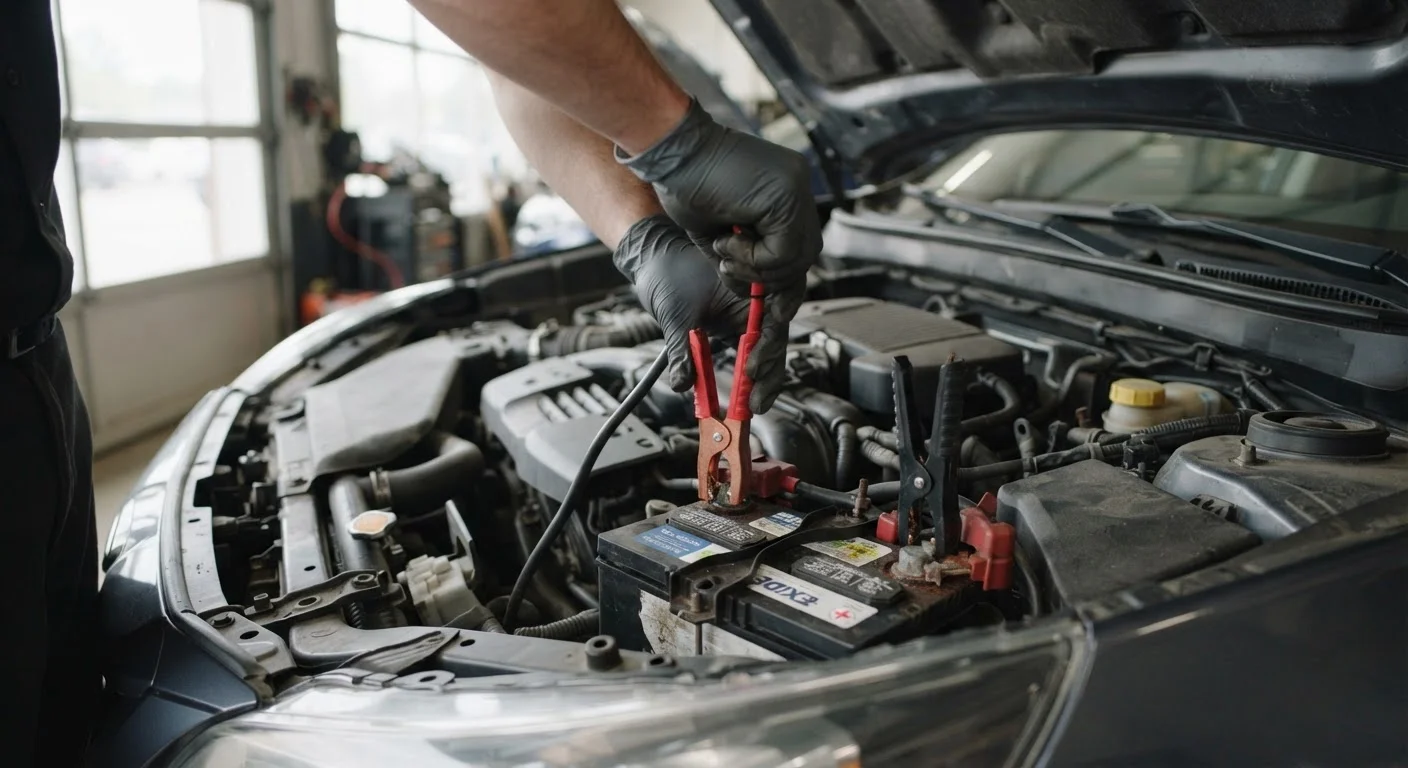
What Actually Kills a Car Battery
Battery failure rarely happens without warning — it builds up over time through a combination of factors most drivers don't think about until they're stranded in a parking lot.
Heat is the primary enemy. Prolonged exposure to high temperatures accelerates internal corrosion and causes battery fluid to evaporate. This is why batteries in hot climates like the Southwest often fail sooner than those in cooler regions. Cold weather, by contrast, doesn't destroy batteries — it just reveals how much capacity has already been lost.
Frequent short trips are another major contributor. Every time you start your engine, the battery delivers a large burst of energy. Your alternator — the component that generates electricity while the engine runs — needs roughly 20 to 30 minutes of driving to replenish that charge. If most of your driving is short errands, the battery never fully recovers, and gradual depletion accumulates over months.
Parasitic drain refers to the small electrical draw that continues when your car is off — clocks, security systems, and onboard computers all pull a tiny amount of power. This is normal, but if a light is left on or an accessory malfunctions, that drain becomes significant. A fully charged battery left with an interior light on can go completely dead within a day or two.
3–5 years
Typical car battery lifespan
Battery manufacturers and automotive service organizations generally cite three to five years as the expected service life under normal driving conditions.
~50%
Capacity loss in extreme heat
Research from battery industry sources indicates that sustained high temperatures can cut a lead-acid battery's effective capacity roughly in half over time.
20–30 min
Drive time needed to recharge after a start
Automotive engineers note that an alternator typically needs at least 20 to 30 minutes of engine-on driving to replenish the energy used during a cold start.
How to Get More Life Out of Your Battery
You can't stop a battery from aging, but several habits can slow the process and help you avoid early replacement.
- Drive regularly and for longer stretches. If your car sits unused for more than two weeks, consider starting it and letting it run for at least 20 minutes, or using a battery maintainer (sometimes called a trickle charger) to keep the charge stable.
- Keep the terminals clean. White or bluish residue on battery terminals is corrosion, and it reduces the efficiency of the electrical connection. A mechanic can clean terminals during routine service, or you can inspect them visually and flag any buildup for attention.
- Minimize electrical load when the engine is off. Avoid leaving the radio, phone chargers, or climate controls running while the engine is not on.
- Have the battery tested annually after it hits the two-year mark. Many auto parts stores and mechanics offer this for free. A load test measures whether the battery can deliver adequate power under real conditions — not just whether it reads a decent voltage at rest.
Test Your Battery Every Year After Year Two
Many mechanics and auto parts retailers offer free battery load tests. This test checks real-world output under demand — not just resting voltage — and is the most reliable way to catch a weakening battery before it fails. Schedule one at your next oil change once your battery is two or more years old.
It's also worth noting that the charging system matters as much as the battery itself. A failing alternator will undercharge a healthy battery, shortening its life. If a new battery drains quickly, the alternator should be checked. Some widely repeated maintenance advice doesn't hold up to scrutiny — for a broader look at what's fact versus habit, see Car Maintenance Myths That Cost Drivers Real Money.
When to Replace Rather Than Maintain
Maintenance only goes so far. Once a battery has degraded past a certain point, no amount of cleaning terminals or careful driving will restore reliable starting power.
If your battery is older than four years and you've experienced any of the warning signs — slow cranking, multiple jump-starts, a failed load test — replacement is the more dependable path. Trying to coax extra months from a compromised battery carries the real risk of an unexpected failure, often at the worst possible time.
When a replacement is needed, a qualified mechanic can help confirm the right battery specifications for your vehicle. Installing the wrong battery type or one with insufficient cold cranking amps (CCA) for your climate can shorten the new battery's life before it begins.
This article is for general informational purposes. For specific vehicle concerns, consult a qualified mechanic who can evaluate your car's actual condition.
Frequently Asked Questions
Common signs include slow engine cranking when you turn the key, dashboard warning lights, dim headlights, and electrical accessories behaving erratically. If your car needs a jump-start more than once in a short period, the battery should be tested by a mechanic.
Most batteries last between three and five years under normal driving conditions. Climate, driving habits, and how well the charging system functions can shorten or extend that range considerably.
Cold weather doesn't kill batteries outright, but it reduces their ability to deliver power and exposes existing weaknesses. A battery that's already degraded may fail to start an engine on a cold morning when it would have managed fine in mild temperatures.
Yes. Your alternator recharges the battery while you drive, but short trips don't give it enough time to fully recharge after the energy used to start the engine. Over time, frequent short trips keep the battery in a partially discharged state, accelerating wear.
If a battery is already past four or five years and showing symptoms of weakness, replacement is usually more reliable than maintenance fixes. Keeping a failing battery on life support risks being stranded unexpectedly.
Interior lights, trunk lights, or headlights left on are the most common culprits. Modern vehicles also have a small constant draw from computers and security systems, called parasitic drain, which can deplete a battery if the car sits unused for several weeks.
The content on this site is for informational purposes only and is not a substitute for professional advice. Always consult a qualified professional for guidance specific to your situation.