

Why Hydration Is About More Than Your Water Bottle
Most hydration advice focuses on drinking enough water — and that's a reasonable starting point. But the full picture is broader. Your body pulls fluid from everything you consume, including solid food. Understanding the food side of the equation helps you approach hydration more strategically, especially on days when you're eating well but not drinking as much as usual.
Hydration and nutrition are closely connected — water is required for digesting food, absorbing nutrients, and regulating body temperature. That connection runs both ways: what you eat influences how much water your body actually has to work with.
~20%
Of daily water intake from food
The USDA estimates that roughly 20% of total daily fluid intake for the average American comes from food rather than beverages.
90%+
Water content in top hydrating vegetables
Foods like cucumbers, lettuce, and celery are more than 90% water by weight, making them among the most hydrating foods available.
3.7L / 2.7L
Recommended total daily water intake (men/women)
The National Academies of Sciences recommends approximately 3.7 liters for men and 2.7 liters for women total daily water from all sources, including food.
How Food Contributes to Your Daily Fluid Intake
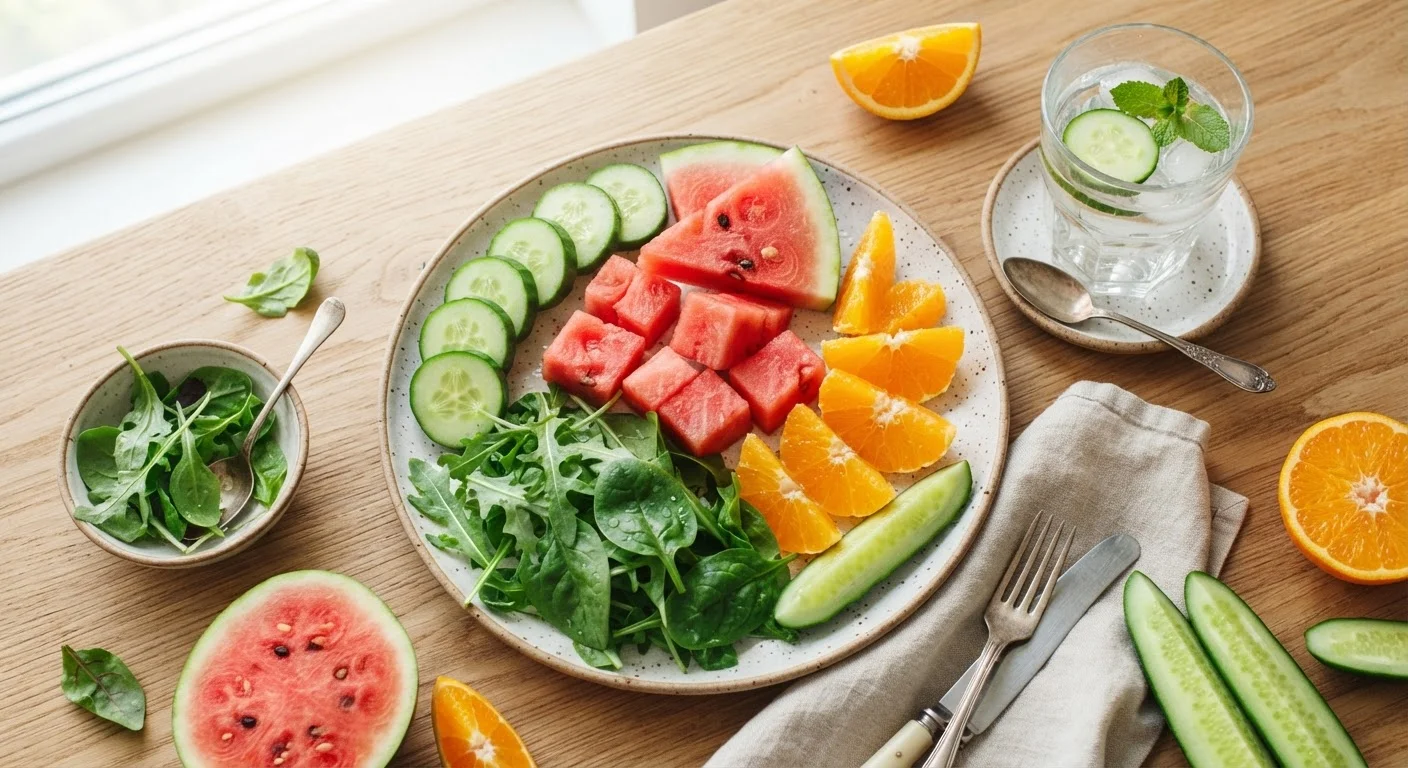
Most whole foods contain at least some water. Fruits and vegetables are the standout contributors — many are more than 90% water by weight. Cucumbers, lettuce, celery, tomatoes, strawberries, and watermelon all fall into this category. Even foods that feel dry, like cooked oatmeal or yogurt, can contain meaningful amounts of water depending on how they're prepared.
Broth-based soups and stews are another underrated hydration source. A bowl of vegetable soup can contribute a significant amount of fluid in one sitting. Dairy products and foods like smoothies also add to your total. Highly processed foods — chips, crackers, packaged snacks — tend to be very low in water and high in sodium, which works against hydration rather than for it.
Foods That Increase Your Body's Fluid Needs
Certain foods don't just fail to hydrate you — they actively raise how much fluid your body requires. Sodium is the primary culprit. When you eat high-sodium meals, your kidneys work to maintain a safe blood sodium concentration by retaining water and signaling thirst. This is why salty restaurant meals or processed snacks often leave you reaching for a drink.
High-sugar foods and beverages can have a similar effect. Excess sugar draws water into the digestive tract during processing, temporarily reducing what's available to the rest of the body. Alcohol acts as a diuretic, meaning it signals the kidneys to release more water than usual — a key reason why drinking alcohol without adequate water intake leads to dehydration symptoms.
Being mindful of these patterns doesn't require eliminating any food group. It simply means recognizing when your body is likely to need more fluid than usual and planning accordingly. Small, sustainable adjustments to eating habits — like choosing lower-sodium options more often — can quietly support better hydration over time.
Build Hydration Into Your Meals
You don't need a separate hydration strategy — just let your meals do more work. Aim to include at least one water-rich food (like leafy greens, cucumber, tomatoes, or fruit) at every meal. Pairing this with a glass of water before or during eating is one of the most consistent hydration habits you can build.
Practical Ways to Eat for Better Hydration
You don't need to track every gram of water in your meals. A few general habits go a long way. Filling half your plate with vegetables and fruit at most meals means you're consistently consuming water-rich foods. Choosing raw or lightly steamed vegetables over heavily cooked ones preserves more of their natural moisture. Starting a meal with a broth-based soup adds fluid before you've taken a sip of anything else.
Pairing meals with a glass of water remains one of the simplest and most reliable hydration habits — it anchors drinking to an existing routine. For people who struggle to drink enough throughout the day, leaning on high-water foods can quietly close the gap. Neither food nor beverages alone is the complete answer; the two work together as part of your overall fluid balance.
This article is for general informational and educational purposes only and is not a substitute for professional medical or dietary advice. Consult a qualified healthcare provider for guidance specific to your individual health needs.
Frequently Asked Questions
Food can meaningfully supplement your fluid intake, but it is unlikely to fully replace what beverages provide. Highly water-rich foods like cucumbers or watermelon are helpful, but most people still need several cups of water from drinks each day to meet their needs.
Cucumbers, lettuce, celery, tomatoes, strawberries, and watermelon are among the highest, all exceeding 90% water by weight. Broth-based soups are another strong contributor to fluid intake from food.
High-sodium foods don't directly remove water from your body, but they do increase thirst and prompt your kidneys to retain fluid to dilute excess sodium. Over time, regularly eating very salty food without drinking enough water can contribute to a mild fluid imbalance.
Caffeinated drinks have a mild diuretic effect, but research suggests that moderate consumption — a few cups of coffee or tea per day — does not cause net dehydration in most people. The fluid in the beverage itself generally offsets the diuretic effect.
Generally, yes. Many cooking methods — especially boiling — cause vegetables to lose some of their natural water content. Steaming or eating vegetables raw tends to preserve more of that water.
Pale yellow urine is a commonly used indicator of adequate hydration. Consistently dark yellow urine, dry mouth, or fatigue may suggest you need more fluids — though individual needs vary, and a healthcare provider can offer personalized guidance.
The content on this site is for informational purposes only and is not a substitute for professional advice. Always consult a qualified professional for guidance specific to your situation.