

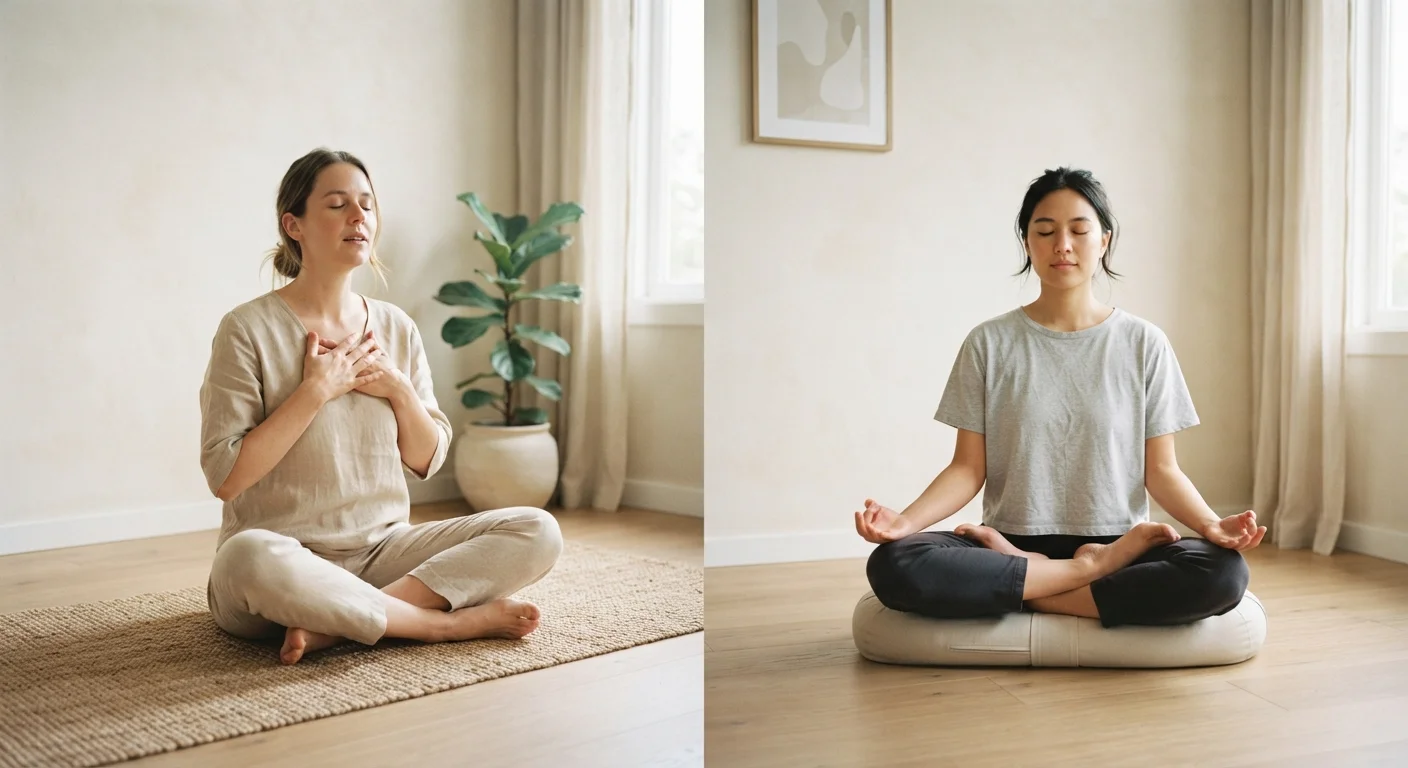
Option A
Breathwork
The active, immediate stress-response tool.
Best for: People who need fast, physical relief from acute stress, anxiety, or restlessness.
Option B
Meditation
The steady, long-term mental fitness practice.
Best for: People building consistent emotional awareness and resilience over time.
How Each Practice Actually Works
Breathwork and meditation are frequently mentioned together, and it's easy to assume they're just different names for the same thing. In practice, they work through distinct mechanisms and serve different psychological functions.
Breathwork refers to intentional manipulation of your breathing pattern — rate, depth, and rhythm — to produce a physiological shift. Techniques like box breathing (inhale for four counts, hold, exhale for four counts, hold) or diaphragmatic breathing activate the vagus nerve, which signals the parasympathetic nervous system to dial down the fight-or-flight response. The effect is relatively quick and measurable: heart rate slows, muscle tension decreases, and the sense of urgency fades. For a broader look at how stress affects the body, see our practical introduction to managing everyday stress.
Meditation, by contrast, is primarily a training practice for attention and awareness. Rather than directly controlling a body system, meditation asks you to observe your mental state without reacting to it. Over time, this builds what researchers call cognitive flexibility — the ability to notice a stressful thought and choose not to spiral into it. The benefits accumulate gradually rather than appearing in a single session.
| Criterion | Breathwork | Meditation |
|---|---|---|
| Primary mechanism | Physiological — shifts nervous system directly | Cognitive — trains attention and awareness |
| Speed of effect | Minutes — near-immediate calm | Weeks — cumulative over consistent practice |
| Best use case | Acute stress, anxiety spikes, overwhelm | Chronic stress, emotional reactivity, rumination |
| Beginner friendliness | High — simple techniques, immediate feedback | Moderate — requires patience and consistency |
| Equipment needed | None | None (apps or guides optional) |
| Can be done anywhere | Yes — eyes open, no quiet space needed | Mostly — quiet environment helps beginners |
| Research depth | Strong for acute stress and HRV | Extensive, especially for mindfulness programs |
Strengths, Limitations, and What the Research Says
Both practices have a meaningful body of research behind them, though the quality and depth of evidence varies.
Breathwork's effects on acute stress and anxiety are among the better-studied aspects of self-regulation. Slow, controlled breathing has been shown in multiple studies to reduce cortisol response and improve heart rate variability — a marker of nervous system balance. It works fast, which is exactly what makes it useful in high-pressure moments.
Meditation's research base is broader but also more varied. Mindfulness-based programs have been studied extensively in clinical contexts, with consistent associations between regular practice and reductions in perceived stress, rumination, and emotional reactivity. The catch: most benefits appear after weeks of consistent practice, not after a single session.
8 weeks
Typical duration for measurable meditation benefits
Research on Mindfulness-Based Stress Reduction (MBSR) programs consistently finds meaningful changes in perceived stress and emotional reactivity after approximately eight weeks of regular practice.
~90 sec
Time for slow breathing to reduce cortisol response
Studies on paced respiration suggest that as little as 90 seconds of slow, controlled breathing can begin to lower physiological stress markers in healthy adults.
One limitation worth noting for both: results vary significantly by individual. Some people find breathwork triggering if they have a history of panic or respiratory issues; some find meditation frustrating if they expect immediate calm. Neither works universally, and neither replaces professional mental health support when needed. If you're managing ongoing anxiety or depression, consult a qualified healthcare provider before relying on either as your primary strategy.
For practical context on weaving these tools into real life, our guide on daily routines during high-stress periods offers balanced guidance on which habits hold up under pressure.
Finding What Works for Your Life
The most useful question isn't which practice is objectively better — it's which fits the kind of stress relief you actually need, and which you'll realistically stick with.
If your stress tends to arrive suddenly — a tense meeting, a frustrating commute, a moment of overwhelm — breathwork gives you a portable tool you can use anywhere, without closing your eyes or finding a quiet space. A simple technique: inhale slowly for four counts, exhale for six. The longer exhale is particularly effective at shifting your nervous system out of high alert.
If your stress is more of a persistent background hum — a general sense of being stretched thin — regular meditation practice tends to address that layer better. Starting with just five to ten minutes in the morning builds the habit without demanding significant time. Apps, audio guides, and simple timer-based sessions all work; the format matters far less than consistency.
Many people find that starting with breathwork makes meditation easier. Using a few deliberate breaths before sitting to meditate settles the nervous system enough that quieting the mind becomes more achievable. These practices genuinely complement each other rather than compete.
For more on building sustainable small habits that support emotional wellbeing, see our article on everyday emotional regulation through small habits. And for a comprehensive overview of mental wellness pillars, The Full Picture on Mental Well-Being covers how stress, sleep, and emotional resilience fit together.
This article is for general informational and educational purposes only and is not a substitute for professional medical or mental health advice. If you are experiencing persistent anxiety, depression, or other mental health concerns, please consult a qualified healthcare professional.
The content on this site is for informational purposes only and is not a substitute for professional advice. Always consult a qualified professional for guidance specific to your situation.