

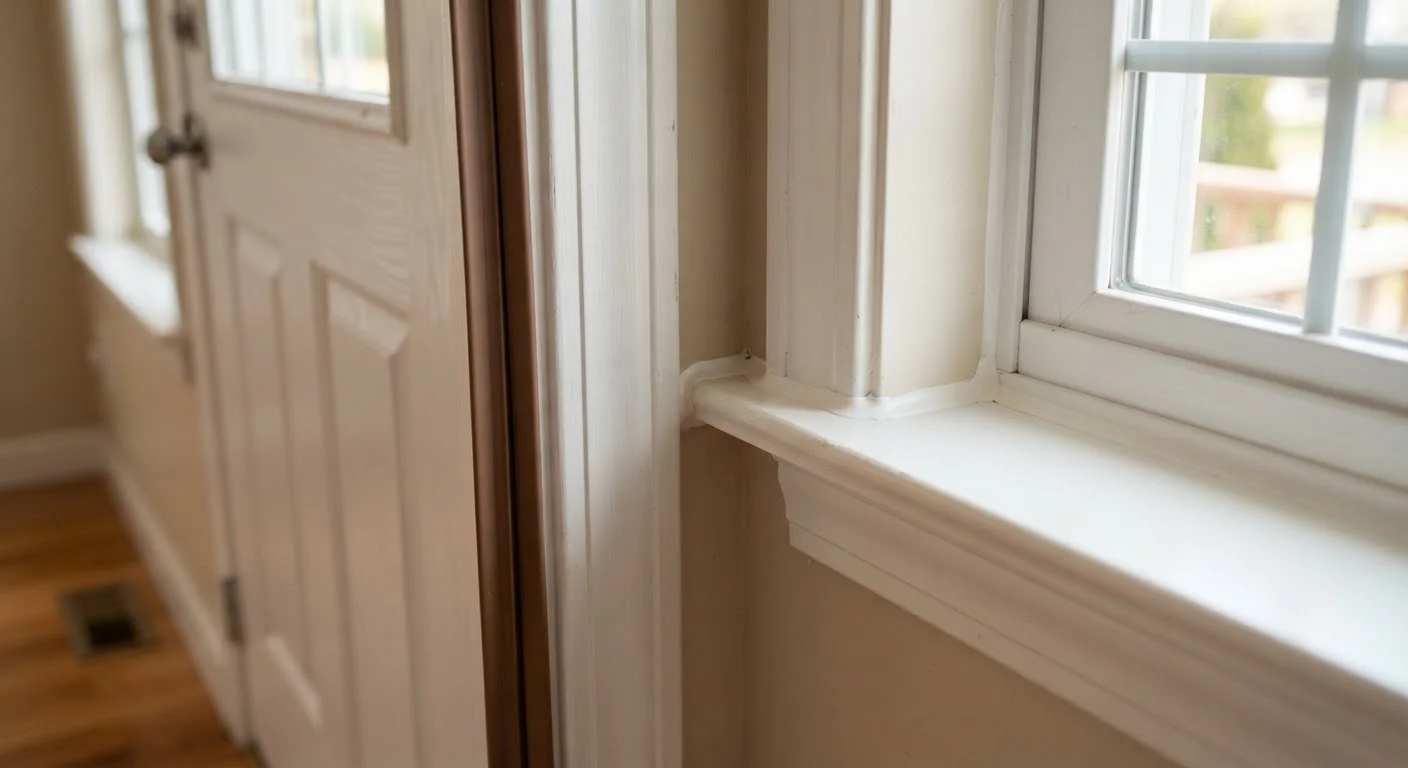
Option A
Caulk
The permanent, flexible filler for stationary gaps.
Best for: Sealing fixed cracks and gaps around window frames, door casings, baseboards, and plumbing penetrations where surfaces don't move.
Option B
Weatherstripping
The compressible seal for moving parts.
Best for: Creating an airtight barrier along the moving edges of doors and operable windows that open and close repeatedly.
Why the Distinction Matters
Many homeowners reach for whichever sealing product is closest when they notice a draft or spot a gap — and end up with a fix that fails within a season. Caulk and weatherstripping are both designed to seal air and moisture out of a home, but they're engineered for fundamentally different situations. Using the wrong one doesn't just mean the seal fails faster; it can also damage surfaces or make doors difficult to operate.
Think of it this way: caulk is a bonding sealant that cures into a semi-flexible solid. It's meant to fill a gap that stays put. Weatherstripping is a compression seal — a strip of material that gets squeezed between two surfaces each time a door or window closes. It needs room to compress and rebound, which cured caulk simply cannot do.
Most homes need both, applied in the right places. A thorough sealing job addresses both categories, and mixing them up is one of the most common — and easily avoided — home maintenance mistakes.
| Criterion | Caulk | Weatherstripping |
|---|---|---|
| Best application | Fixed, stationary joints and gaps | Moving edges — doors and operable windows |
| How it seals | Bonds and cures to both surfaces | Compresses between surfaces when closed |
| Typical lifespan | 5–10 years with correct application | 1–5 years depending on material and use |
| Common materials | Silicone, latex, acrylic | Foam tape, V-strip, door sweeps, vinyl |
| DIY difficulty | Low to moderate — requires clean surface prep | Low — most types are adhesive or screw-mounted |
| Consequence of misuse | Cracks or peels where surfaces flex | Prevents door/window from closing; tears quickly |
Where Caulk Belongs
Caulk belongs anywhere two stationary surfaces meet and leave a gap. Common locations include the joint between a window frame and the wall, where interior trim meets drywall, around the base of a bathtub or shower surround, and where pipes or cables enter through walls. The key question: does either surface move? If no, caulk is likely the right tool.
Silicone-based caulks are best for wet areas because they resist mold and remain flexible when exposed to moisture. Latex or acrylic caulks are easier to tool and paint over, making them well-suited for interior trim and baseboards. For outdoor use around windows and siding, look for a paintable exterior-grade formulation that handles temperature swings.
Gaps wider than about a quarter inch often need a foam backer rod inserted first; caulk applied over a deep gap alone tends to crack as it cures. If you're also dealing with tile joints in bathrooms, our guide on caulk and grout in wet areas walks through where each material fits in that specific context.
Where Weatherstripping Belongs
Weatherstripping belongs wherever a moving surface meets a stationary frame. The classic application is the perimeter of an exterior door — the top (head), two sides (jambs), and bottom threshold. It also applies to the sashes of double-hung, casement, and sliding windows that open and close regularly.
Materials vary by location and wear requirements. Foam tape (open- or closed-cell) is inexpensive and easy to install, but compresses permanently over time and may need replacing annually. V-strip (tension seal) is a durable folded plastic or metal strip tucked into the channel between a sash and frame — it lasts longer and is nearly invisible when installed. Door sweeps and door shoes address the gap at the bottom of a door, which is often the biggest source of air infiltration and pest entry.
Check Before the Cold Season
Fall is a practical time to inspect both caulk and weatherstripping around every exterior door and window. Run your hand along closed door edges on a windy day to feel for air movement, and look at existing caulk joints for cracking or separation. Addressing small failures early is far less disruptive than dealing with moisture damage or significantly higher heating bills. Most weatherstripping and caulk repairs are straightforward tasks that don't require specialized tools.
When weatherstripping wears out, you'll often feel a draft or notice daylight visible around a closed door. Because it's a mechanical seal that compresses thousands of times, it degrades faster than caulk and warrants a seasonal inspection — particularly before winter.
Comparing Them Side by Side
~30%
Home heating and cooling energy lost through air leaks
The U.S. Department of Energy estimates that air leaks through gaps, cracks, and openings can account for roughly 25–30% of heating and cooling energy use in a typical home.
2–5 years
Typical foam weatherstripping replacement interval
Basic foam tape weatherstripping on high-traffic doors tends to lose its compression and effectiveness within two to five years under normal use, according to general building science guidance.
The table above captures the practical differences at a glance. The most important takeaway is that neither material is universally superior — they're complementary. A well-sealed exterior door, for example, might use weatherstripping around the sash edges and caulk at the fixed joint where the door frame meets the exterior siding.
One useful habit: walk the perimeter of each exterior door and window in your home and mentally label every gap as either stationary or moving. That single distinction will guide you to the right product almost every time.
The content on this site is for informational purposes only and is not a substitute for professional advice. Always consult a qualified professional for guidance specific to your situation.