

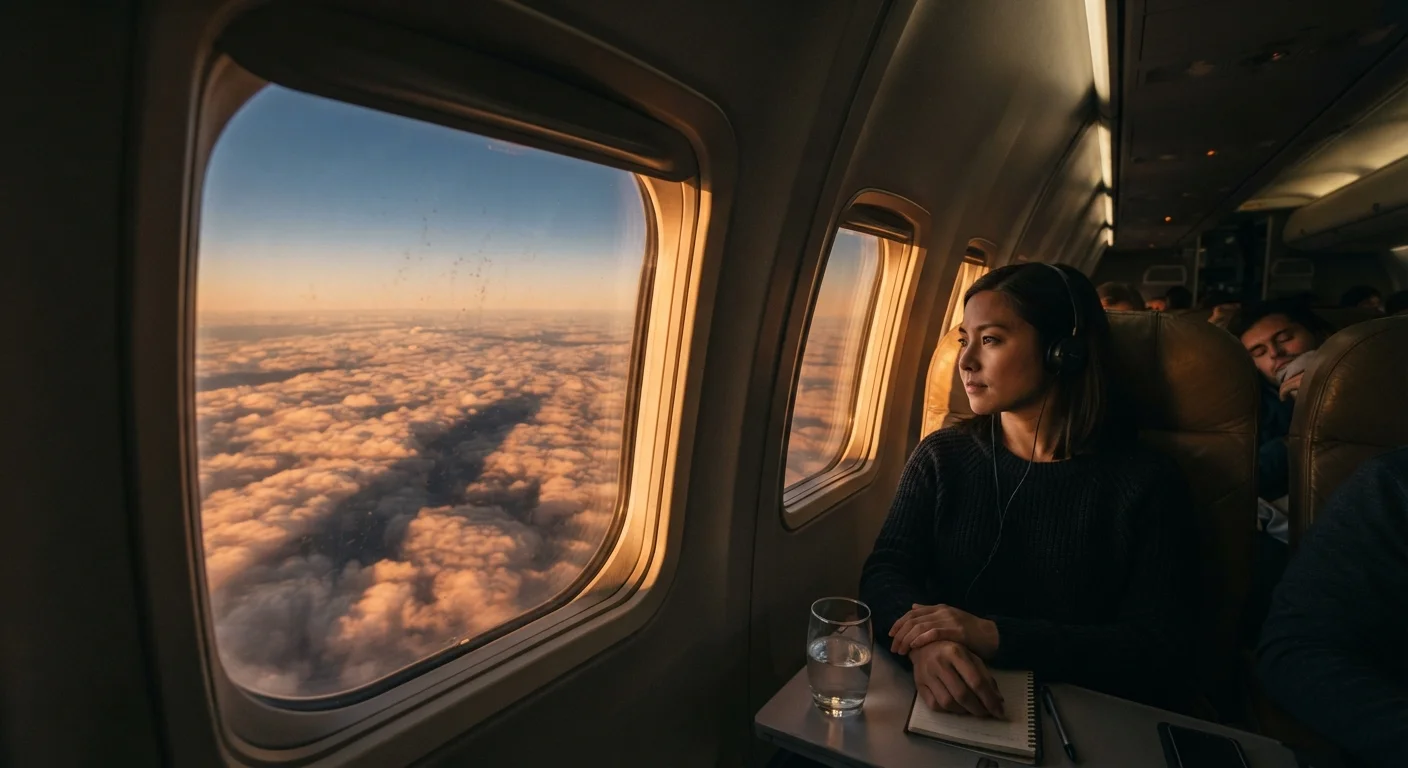
Your Body Has Its Own Clock — And It Doesn't Check Flight Schedules
Every cell in your body follows a roughly 24-hour biological rhythm called the circadian clock. This internal timekeeper regulates when you feel sleepy, when you're hungry, when your body temperature peaks, and when hormones like cortisol and melatonin are released. It's synchronized mainly by light — especially daylight — and it doesn't update instantly when you land in a new country.
When you fly across multiple time zones in a matter of hours, your clock is still broadcasting your home timezone's schedule. Your body thinks it's 2 a.m. while the local clock reads noon. That conflict between internal biology and external environment is jet lag — and the direction you flew determines exactly how that conflict plays out.
East vs. West: Why Direction Is Everything
Here's the key insight: your body's natural circadian cycle runs a little longer than 24 hours — closer to 24.2 hours on average, according to circadian biology research. That tiny difference has a big practical consequence.
When you fly westward — say, from New York to Los Angeles or from the U.S. to Hawaii — you're effectively lengthening your day. You're asking your body to stay awake a little longer before sleeping, which aligns with how it naturally wants to drift. It's uncomfortable, but workable.
When you fly eastward — heading to Europe or across the Atlantic — you're shortening your day. You need to fall asleep and wake up earlier than your clock wants. That runs against the grain of your biology, which is why travelers returning from Europe so often spend a week waking up at 3 a.m. and crashing by 7 p.m.
~24.2 hrs
Average human circadian cycle length
Research in circadian biology consistently shows the human body clock naturally runs slightly longer than 24 hours, making westward travel easier to adjust to.
~1 day
Recovery time per time zone crossed
Sleep medicine commonly cites this as a general guideline, though individual experience varies based on direction of travel and personal biology.
~50%
Travelers reporting worse eastward jet lag
Survey data cited in sleep research literature consistently shows more travelers find eastward travel harder to recover from compared to westward routes.
It's also worth noting that your personal chronotype plays a role here. If you tend to be a night owl naturally, eastward travel may feel even more brutal since your clock already skews later. Night owls and early birds experience jet lag differently — understanding your own tendencies can help you prepare smarter.
Light: The Most Powerful Reset Button
Light is the strongest external signal your circadian clock receives. Strategic light exposure — and avoiding it at the wrong times — is one of the most evidence-backed ways to speed up your adjustment after a long flight.
Time Your Light Exposure Strategically
After landing, spend 20–30 minutes outside in natural daylight at the right time for your direction of travel. Even on an overcast day, outdoor light is many times brighter than indoor lighting and far more effective at resetting your clock. This single habit is one of the easiest and most impactful adjustments you can make.
- Flying east: Seek bright light in the morning at your destination to push your clock earlier. Avoid bright light in the evening for the first day or two.
- Flying west: Get light exposure in the afternoon and early evening local time. Avoid early-morning bright light, which can confuse your clock further.
Skipping naps on arrival day — despite being exhausted — and pushing through to local bedtime can also accelerate adjustment, especially for shorter trips of three to five days.
Practical Habits That Can Help You Adjust Faster
Beyond light exposure, a few other strategies are well-supported by sleep research for reducing jet lag's sting:
- Shift your schedule before you leave. Moving your bedtime 30–60 minutes in the direction of your destination for two or three nights before departure can take the edge off the adjustment on arrival.
- Stay hydrated in the air. Cabin air is notoriously dry, and dehydration worsens fatigue. Drinking water consistently throughout a long flight helps.
- Avoid alcohol on board. Alcohol disrupts sleep quality even when it helps you fall asleep, which can make jet lag symptoms worse on arrival.
- Eat on local time. Meal timing also signals your circadian clock. Eating breakfast at local morning time — even if it doesn't feel like morning — helps your body recalibrate faster.
This article is for general informational purposes only. For personalized advice about sleep health or any related medical concerns, consult a qualified healthcare professional.
Frequently Asked Questions
Flying east requires your body clock to advance — falling asleep and waking earlier than it wants to. Most people's natural circadian cycle runs slightly longer than 24 hours, making it easier to stay up later (delay) than to force sleep earlier (advance). That's why westward travel tends to feel more forgiving.
Most travelers begin noticing symptoms after crossing two or more time zones. Crossing five or more typically produces significant disruption to sleep, digestion, and alertness. Transatlantic and transpacific flights are the most commonly cited culprits.
Melatonin is widely used as a sleep timing aid for jet lag, and some research supports its effectiveness for eastward travel in particular. However, dosage, timing, and individual response vary. Consult a healthcare professional before using it, especially if you take other medications.
A commonly cited guideline is roughly one day of recovery per time zone crossed, but this varies based on direction of travel, age, health, and individual biology. Eastward jet lag may linger a day or two longer than westward jet lag for the same distance traveled.
You can reduce its severity. Gradually shifting your sleep schedule by 30–60 minutes in the direction of travel a few days before departure, staying well hydrated, and avoiding alcohol on the flight are commonly recommended strategies. None guarantee prevention, but they can take the edge off.
The content on this site is for informational purposes only and is not a substitute for professional advice. Always consult a qualified professional for guidance specific to your situation.