

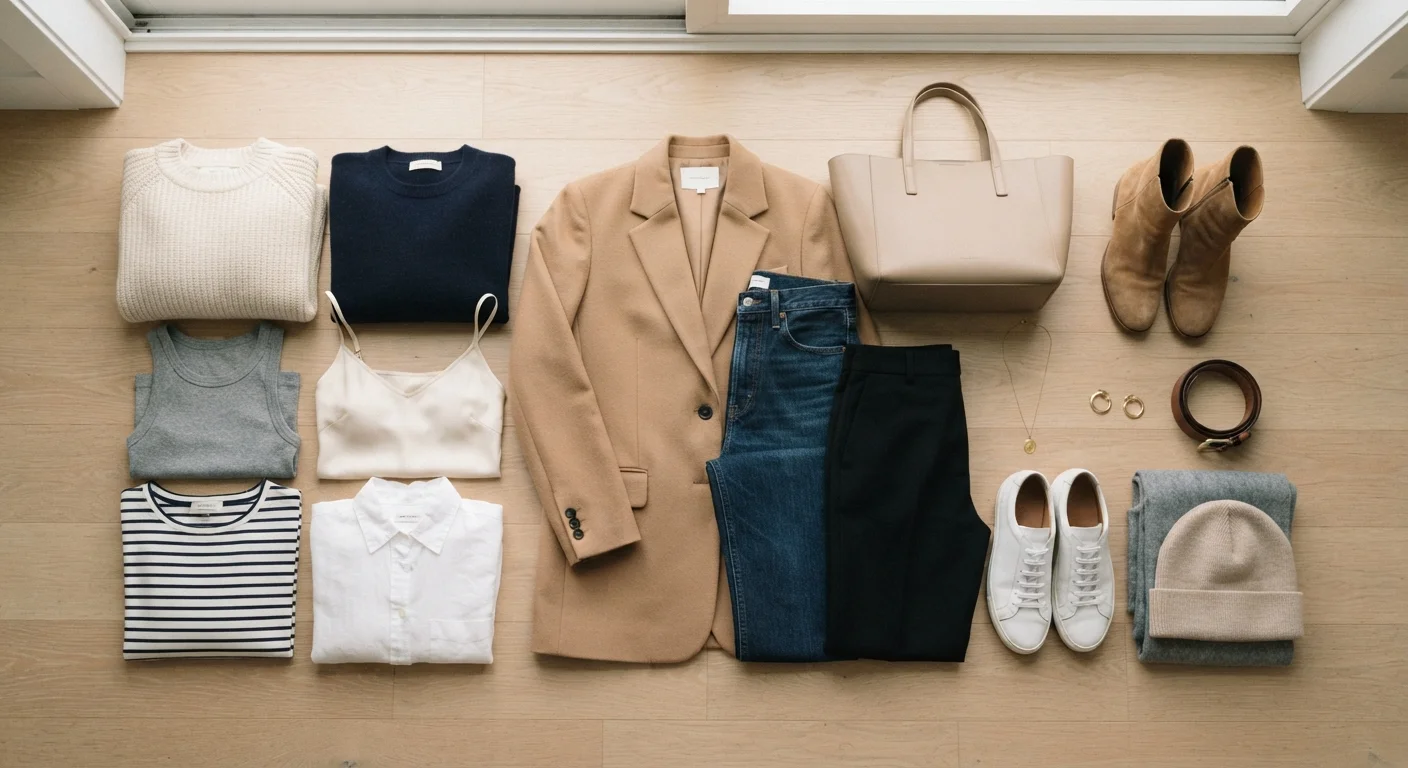
Why Formulas Work Better Than Rules
Most style advice comes in the form of rigid rules: never mix navy and black, always tuck in your shirt, avoid horizontal stripes. Rules like these may apply some of the time, but they collapse the moment your lifestyle, body, or occasion shifts. Outfit formulas are different. They're flexible frameworks — combinations of clothing categories that reliably work together — not mandates about specific pieces.
Think of a formula the way a cook thinks of a template: protein, starch, vegetable, sauce. The specific ingredients rotate, but the structure holds. In clothing terms, that might look like fitted base layer + relaxed outer layer + one statement element. The shirt, the jacket, and the earrings change. The logic stays the same.
This matters practically. Research in behavioral science consistently shows that reducing small daily decisions — sometimes called decision fatigue — can preserve mental energy for things that matter more. Getting dressed shouldn't require a strategy session every morning. If you're trying to get more outfits from what you already own, formulas are the most efficient tool available.
The Monochrome Stack
Wearing one color head to toe — or tonal variations of a single hue — is one of the most fool-proof formulas in everyday dressing. It creates an elongated, cohesive silhouette with almost no effort, and it works regardless of the color you choose.
The key is varying texture and finish within the palette. A cream linen shirt with off-white trousers and a ivory knit cardigan reads as intentional, not accidental. Matte and sheen, structured and relaxed — these contrasts keep a monochrome outfit visually interesting without introducing complexity.
This formula also travels well across occasions. A navy blazer over a navy turtleneck with charcoal trousers works in a boardroom; the same principle in chambray blue moves easily into weekend errands.
Varying texture within a single color palette keeps monochrome outfits looking intentional, not monotonous.
The Tuck and Contrast
This formula solves one of the most common outfit complaints: clothes that look fine individually but flat together. The structure is simple — tuck a fitted top into a higher-waisted bottom and anchor with a third piece (jacket, cardigan, or belt) in a contrasting tone.
The contrast doesn't have to be dramatic. Light top, dark bottom — or vice versa — provides enough visual break to define a waistline and give the outfit a clear focal point. Adding a structured third layer ties everything together and signals that the look is finished rather than assembled in a hurry.
This formula is especially adaptable for workplaces with shifting dress codes. For more on reading those environments accurately, see how to navigate interview vs. casual workplace dressing.
A tucked top, contrasting bottom, and a structured third layer is one of the most universally flattering outfit frameworks.
The Elevated Basic
Take one foundational piece — a plain white tee, a simple black dress, a clean pair of straight-leg trousers — and elevate it with a single, deliberate upgrade. That upgrade can be a tailored blazer, a structured bag, well-maintained footwear, or a piece of jewelry that anchors the look.
The formula works because it isolates the styling effort. Instead of making five decisions, you make one, and everything else stays neutral. The basic pieces do the quiet work; the one elevated element does the communicating.
This is also one of the most budget-friendly approaches to looking put-together, because it redirects investment toward one quality piece rather than a full outfit overhaul.
Elevating one basic piece with a single deliberate upgrade is more effective than trying to style every element at once.
The Print-Neutral Anchor
If you own printed or patterned pieces but rarely reach for them because you're unsure what they go with, this formula provides a reliable solution. Pair any print with one neutral that already appears in the pattern. Pull the tan from a floral skirt into a tan top. Match the dark base of a plaid shirt with solid black trousers.
The visual effect is harmonious because you're not guessing — you're borrowing a color that's already there. The pattern becomes the focal point; the neutral recedes and lets it do the work.
Once this principle feels intuitive, it opens the door to more adventurous combinations. Mixing patterns and textures uses a similar logic, extended further — learning one framework makes the next easier.
Anchoring a print with a neutral already visible within the pattern removes all the guesswork from styling bold pieces.
The Three-Proportion Rule
Proportion — how clothing lengths relate to each other — has more impact on how an outfit reads than almost any other factor. The three-proportion rule is straightforward: divide your outfit into three visible zones (top, middle, bottom) and vary their lengths so no two segments are equal.
In practice, this might mean a cropped top (short) over high-rise jeans (medium rise visible) with ankle boots that cut the leg at a specific point (defining the bottom zone). Or a longline cardigan (long) layered over a tucked-in shirt (medium) with slim trousers (full length). The exact lengths shift based on height, fit preference, and clothing type — but the underlying logic of intentional variation applies broadly.
This formula requires no special equipment or expensive pieces. It asks only that you look at how your clothing divides your silhouette and adjust until the proportions feel balanced rather than accidental.
Varying the visible length of each outfit zone — top, middle, bottom — creates proportion that reads as polished and intentional.
The Season-Bridge Formula
Transitional weather is where outfit planning breaks down for many people. The season-bridge formula addresses this directly: layer a warm-weather piece under or over an additional layer suited to cooler temperatures, using a cohesive color relationship to keep the combination from looking makeshift.
A sleeveless dress over a fitted long-sleeve top. A linen shirt under a structured knit vest. A summer-weight blouse beneath a tailored wool-blend coat. These combinations extend the wearable life of seasonal pieces and reduce the pressure to completely overhaul your wardrobe when temperatures shift.
The formula succeeds when all pieces share at least one color connection — even if the fabrics are entirely different. An inner layer that echoes the outer layer's tone creates a seamless effect rather than a layered-out-of-necessity look. This approach also pairs naturally with the habits explored in building consistent daily routines.
Season-bridging works when inner and outer layers share at least one color connection, making the combination look deliberate.
Putting Formulas to Work in Real Life
The goal isn't to dress identically every day — it's to eliminate the starting-from-zero feeling. Once you identify two or three formulas that suit your body, lifestyle, and existing wardrobe, mornings become noticeably easier. You're choosing within a framework rather than staring at an open closet.
Start With the Formulas You Already Use
Before building new formulas, look at the outfits you actually wear on repeat — they're probably already following a pattern you haven't consciously named. Identifying that pattern first makes it far easier to expand or refine your wardrobe intentionally. Most people have one or two formulas working for them already; the goal is simply to make them visible and repeatable.
It's also worth remembering that formulas compound. A single formula you understand well can be remixed by swapping colors, adjusting proportions, or adding texture. If you're curious about which color combinations will make your specific palette feel cohesive, learning which shades work for your skin tone can sharpen any formula significantly. And if context ever feels unclear — whether to dress up or down — prioritizing lifestyle over body-shape rules tends to produce more wearable results.
Style confidence rarely comes from owning more clothes. It comes from understanding what works and trusting that knowledge. Formulas give you that foundation — and once it's in place, getting dressed stops being a problem to solve and starts being something closer to a routine.
The content on this site is for informational purposes only and is not a substitute for professional advice. Always consult a qualified professional for guidance specific to your situation.