

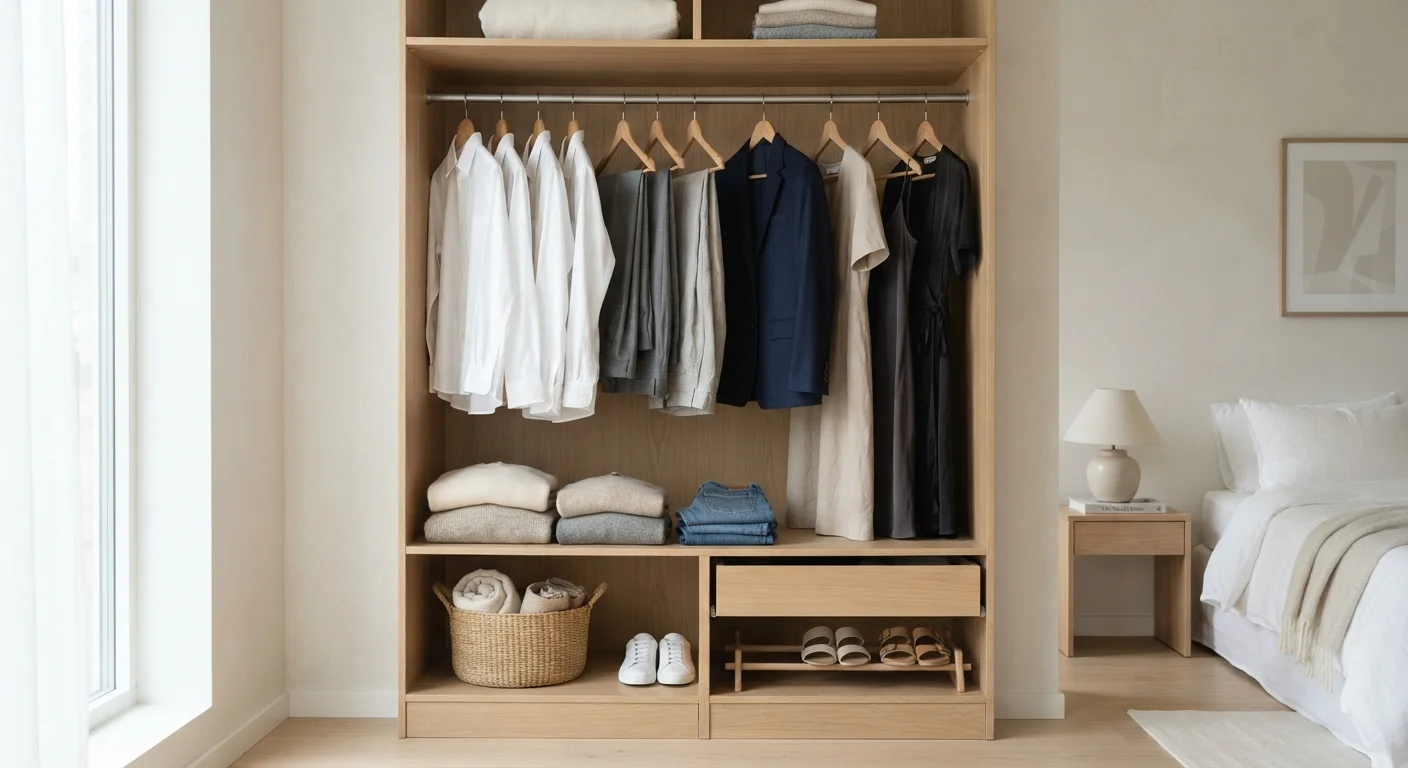
What a Capsule Wardrobe Actually Is
Strip away the Instagram aesthetics and Pinterest boards, and the capsule wardrobe concept is straightforward: own a smaller number of clothing pieces that are versatile, coordinate well together, and reflect how you actually live. That's it.
The underlying logic is that most people wear roughly 20% of their wardrobe 80% of the time. A capsule approach reverses that imbalance — the pieces you own become the pieces you wear. Decisions get easier because everything pairs with everything else, and you stop losing track of what you own.
Critically, a capsule wardrobe is personal. It is not a standardized shopping list. A teacher's capsule looks different from a nurse's or a remote worker's. The pieces you include should reflect your real schedule, your climate, and your genuine preferences — not a curated lifestyle you admire online.
~33%
Clothes never worn after purchase
Research from various consumer behavior studies suggests roughly a third of clothing bought goes unworn — a core problem the capsule approach is designed to address.
25–50
Typical capsule wardrobe item range
Style educators and wardrobe consultants commonly cite this range, though the right number varies significantly by lifestyle and climate.
80/20
Wear-frequency principle
The widely observed pattern that most people wear approximately 20% of their wardrobe roughly 80% of the time is a foundational motivation for the capsule approach.
What a Capsule Wardrobe Is Not
A few misconceptions are worth clearing up before you decide whether this approach suits you.
- It is not a uniform. Wearing the same outfit daily is one personal choice, but it is not what a capsule wardrobe requires. Variety is still possible — it's just intentional variety.
- It is not anti-fashion. Following trends is compatible with a capsule approach as long as trend-driven pieces are chosen selectively and integrated thoughtfully.
- It is not a one-time project. Capsule wardrobes evolve. As your lifestyle changes, so should your clothing collection.
- It is not about spending more on each item. Higher price does not automatically mean better fit or longer wear. Thoughtful selection matters more than price point.
Understanding what the concept does not demand often makes it feel far more achievable for everyday Americans who have varied, busy lives.
Start With What You Already Own
Before pursuing a capsule wardrobe, spend time with your current closet rather than rushing to buy new items. Identify which pieces you reach for consistently — those are already your personal capsule. Building intentionally from what you own is more sustainable than starting from a blank slate.
How to Know If It Suits Your Life
The capsule wardrobe framework is a tool, and like any tool, its value depends on whether it fits the job. Ask yourself a few honest questions before committing to the approach.
Do you find getting dressed stressful or time-consuming? If decision fatigue around clothing is genuinely affecting your mornings, a more curated closet can help. If you enjoy exploring a large wardrobe, the framework may feel restrictive rather than freeing.
Is your current wardrobe serving your actual life? Many people own clothes suited to a version of their life they no longer live — a previous job, a social life that changed, a body that has changed. A wardrobe audit can surface this mismatch quickly.
Do you have a fairly consistent daily routine? The capsule approach works most naturally when your days follow recognizable patterns. If your life is highly varied — say, you alternate between outdoor fieldwork and formal meetings — you may benefit from building two or three smaller sub-capsules rather than one unified collection. For broader guidance on how lifestyle should shape your clothing choices, this comparison of lifestyle-first versus body-shape-first dressing is worth reading.
Getting Started Without Overwhelming Yourself
The most common mistake when attempting a capsule wardrobe is treating it as a dramatic reset — emptying everything and starting fresh. That approach is rarely sustainable and often expensive. A gradual process works better for most people.
Start by doing a honest assessment of what you already own. Pull everything out, identify what you genuinely wear, and set aside what you do not. From there, note the gaps — not wants, but genuine gaps in your day-to-day functionality. If you need guidance building from the ground up, our article on building a wardrobe from scratch offers a grounded starting point.
Then, before adding anything, consider the overlooked pieces that quietly make a wardrobe functional. Some commonly skipped items — like a well-fitting layering piece or a versatile flat shoe — often do more work than the headline staples.
The goal is not perfection. It is a wardrobe that makes your daily life a little smoother and reflects who you actually are.
“The secret of getting dressed isn't about owning everything — it's about owning the right things. When every piece earns its place, getting ready becomes effortless rather than exhausting.”
— Susie Faux, London boutique owner credited with coining the capsule wardrobe concept
Frequently Asked Questions
There is no universally correct number. Common ranges cited are 25–50 pieces, but what matters more is that every item is worn regularly and works with the rest of your collection. Your lifestyle and climate will influence the right number for you.
No. While neutral palettes make mixing and matching easier, a capsule wardrobe can include color or print — as long as those pieces coordinate with others you own. The principle is cohesion, not colorlessness.
Not at all. The framework is a practical tool for simplifying decision-making, not a lifestyle philosophy. You can adopt the core principles without committing to minimalism in other areas of your life.
Yes. The approach actually tends to reduce spending over time by encouraging thoughtful purchases rather than impulse buys. You do not need expensive clothing — you need pieces that fit well and suit your day-to-day life.
Many people build sub-capsules — one for work, one for weekends, one for formal occasions. These can overlap significantly, with versatile pieces doing double duty across contexts.
A wardrobe audit is the most grounded starting point. Before buying anything new, assess what you already own — what fits, what you wear, and what gaps genuinely exist. See our <a href="/beauty-style/personal-style/wardrobe-audit-taking-stock-of-what-you-own-before-buying-anything-new">wardrobe audit guide</a> for a practical walkthrough.
The content on this site is for informational purposes only and is not a substitute for professional advice. Always consult a qualified professional for guidance specific to your situation.