

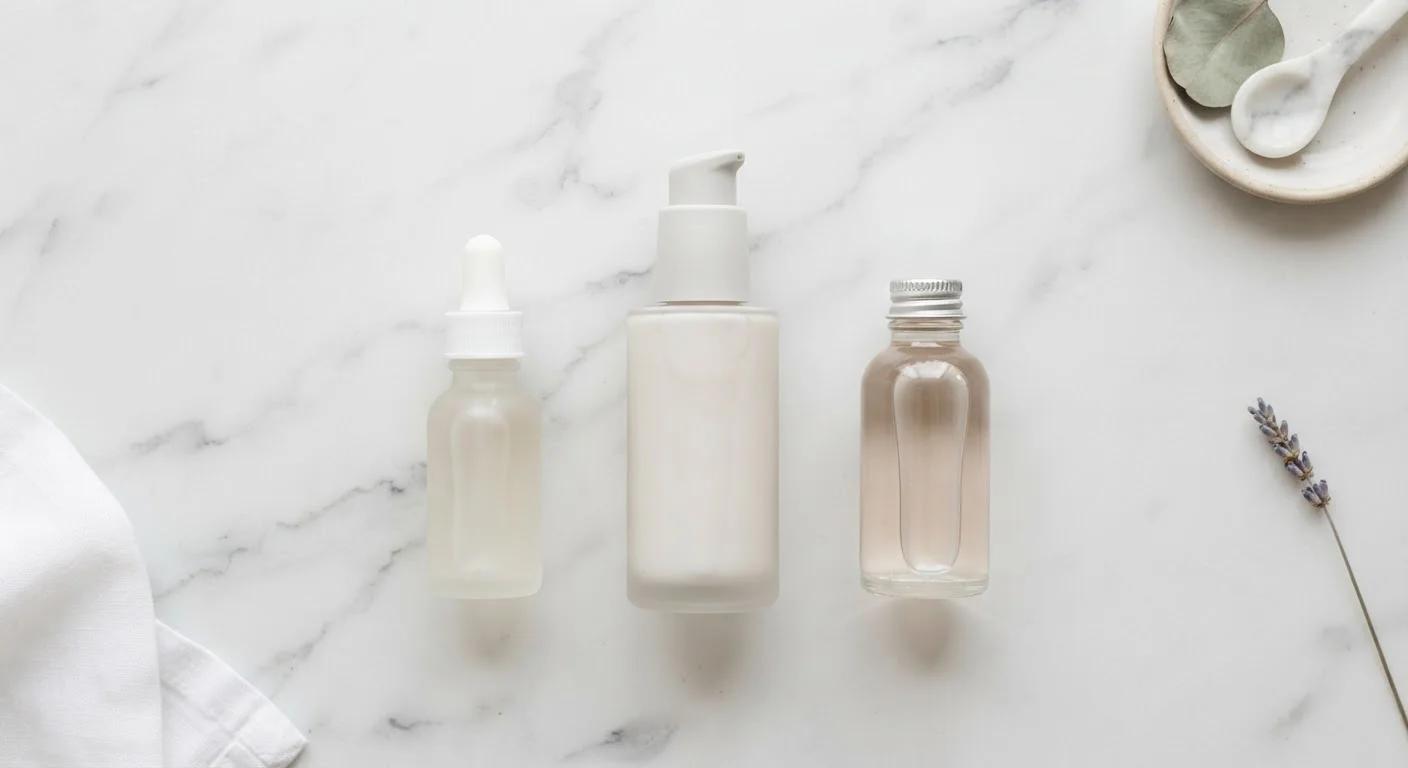
The Classic Three-Step Routine at a Glance
Walk into any drugstore or scroll through a skincare account, and the same trio keeps appearing: cleanser, toner, moisturizer. These three products form the backbone of most basic skincare routines — but few people can explain exactly what each one is doing to the skin, or why the order matters. This reference breaks it down plainly so you can make informed decisions about your own routine, whether you use all three steps or just one.
| Routine steps | 3 (Cleanser → Toner → Moisturizer) |
| Order rationale | Thinnest to thickest texture; each step preps skin for the next |
| Most optional step | Toner — beneficial for some skin types, not universally required |
| Recommended cleansing frequency | Once or twice daily, depending on skin type (General dermatological guidance) |
| Skin types addressed | All — formulation choice varies by type |
| Key moisturizer ingredient types | Humectants, emollients, occlusives |
Understanding the function of each step also helps you recognize when a product isn't working for you — or when you might be skipping something your skin actually needs. If you want to see how timing affects each of these steps, morning versus evening skincare routines explores how AM and PM needs differ.
Step 1: Cleanser — Removing What Shouldn't Stay
A cleanser's job is straightforward: remove dirt, excess oil, sweat, makeup, sunscreen, and environmental residue that accumulate on your skin throughout the day. Without this step, everything applied afterward sits on top of debris rather than contacting the skin directly.
Cleansers work through a combination of surfactants — molecules with one end attracted to water and one attracted to oil — that lift oil-based impurities off the skin so water can rinse them away. The key variable is how aggressively a formula does this. Foaming cleansers tend to strip more oil, which can be useful for oily or acne-prone skin but drying for other types. Cream or oil-based cleansers remove impurities while preserving more of the skin's natural moisture barrier, making them a common recommendation for dry or sensitive skin.
Surfactant
A cleansing agent with water-attracting and oil-attracting ends that lifts impurities off skin so they rinse away. The type and concentration of surfactants determine how gentle or stripping a cleanser feels.
Moisture barrier
The outermost layer of the skin (the stratum corneum) that locks in hydration and blocks environmental irritants. A compromised barrier can lead to dryness, sensitivity, and breakouts.
Humectant
An ingredient that attracts and holds water molecules, drawing moisture into the skin. Common examples include glycerin and hyaluronic acid.
Occlusive
An ingredient that forms a physical film on the skin surface to slow water evaporation. Petrolatum and dimethicone are widely used occlusives.
Non-comedogenic
A formulation descriptor indicating the product is designed to avoid clogging pores. It doesn't guarantee zero breakouts, but products with this label are generally lighter and better suited to acne-prone skin.
Emollient
An ingredient that softens and smooths skin by filling gaps between skin cells. Fatty acids and plant oils commonly serve as emollients in moisturizers.
Frequency matters too. Most dermatologists suggest cleansing twice daily — morning and evening — though people with very dry or sensitive skin sometimes benefit from rinsing with water only in the morning and reserving cleanser for the evening, when removing the day's buildup is most necessary.
Step 2: Toner — More Than Just pH Balance
Toner is the step most people are uncertain about — and historically with good reason. Older toners were astringent alcohol formulas designed to strip residual oil and tighten pores, often leaving skin irritated and dry. Modern toners are significantly different and serve several possible functions depending on the formula.
Contemporary toners typically do one or more of the following: sweep away any remaining cleanser residue, deliver a first layer of hydration, or deliver active ingredients like niacinamide, glycolic acid, or hyaluronic acid to freshly cleansed skin. Because skin is most permeable immediately after cleansing, toners can act as an efficient delivery mechanism for ingredients you want to absorb quickly.
Do you need a toner? It depends on your skin type and goals. If your cleanser rinses cleanly, your skin feels comfortable afterward, and you're not targeting a specific concern, toner is genuinely optional. However, if you're dealing with uneven texture, post-acne marks, or persistent dryness, a well-formulated toner can meaningfully complement your other steps. It's worth noting this is a distinct situation from hair care — just as conditioner, deep conditioner, and hair masks each serve distinct roles, skincare products aren't interchangeable either.
Step 3: Moisturizer — Sealing and Supporting the Barrier
Moisturizer is the step with the clearest, most universal purpose: support the skin's moisture barrier so it retains water and stays resilient. The skin barrier — the outermost layer of the epidermis — naturally prevents water from evaporating and keeps irritants out. Factors like harsh cleansers, cold weather, low humidity, and aging can compromise it over time.
Moisturizers work through three mechanisms: humectants (such as glycerin and hyaluronic acid) draw water into the skin; emollients (such as fatty acids and plant oils) fill gaps between skin cells and soften texture; and occlusives (such as petrolatum or dimethicone) form a physical seal on the surface to slow water loss. Many moisturizers combine all three types of ingredients.
Even oily skin benefits from a moisturizer — stripping the skin of moisture can actually trigger increased oil production as the skin tries to compensate. A lightweight, non-comedogenic formula (meaning it's formulated to avoid clogging pores) is generally appropriate for oilier skin types, while richer formulas work better for dry or mature skin.
Once you have this foundation in place, you can layer in targeted ingredients like retinol. How retinol works and what to expect as a beginner is a practical next read if you're thinking about adding actives. If you'd rather streamline personal care across the board, building a simple hair routine from scratch applies similar keep-it-manageable thinking to hair care.
This article is for general informational purposes only and is not a substitute for advice from a qualified dermatologist or healthcare professional.
The content on this site is for informational purposes only and is not a substitute for professional advice. Always consult a qualified professional for guidance specific to your situation.