

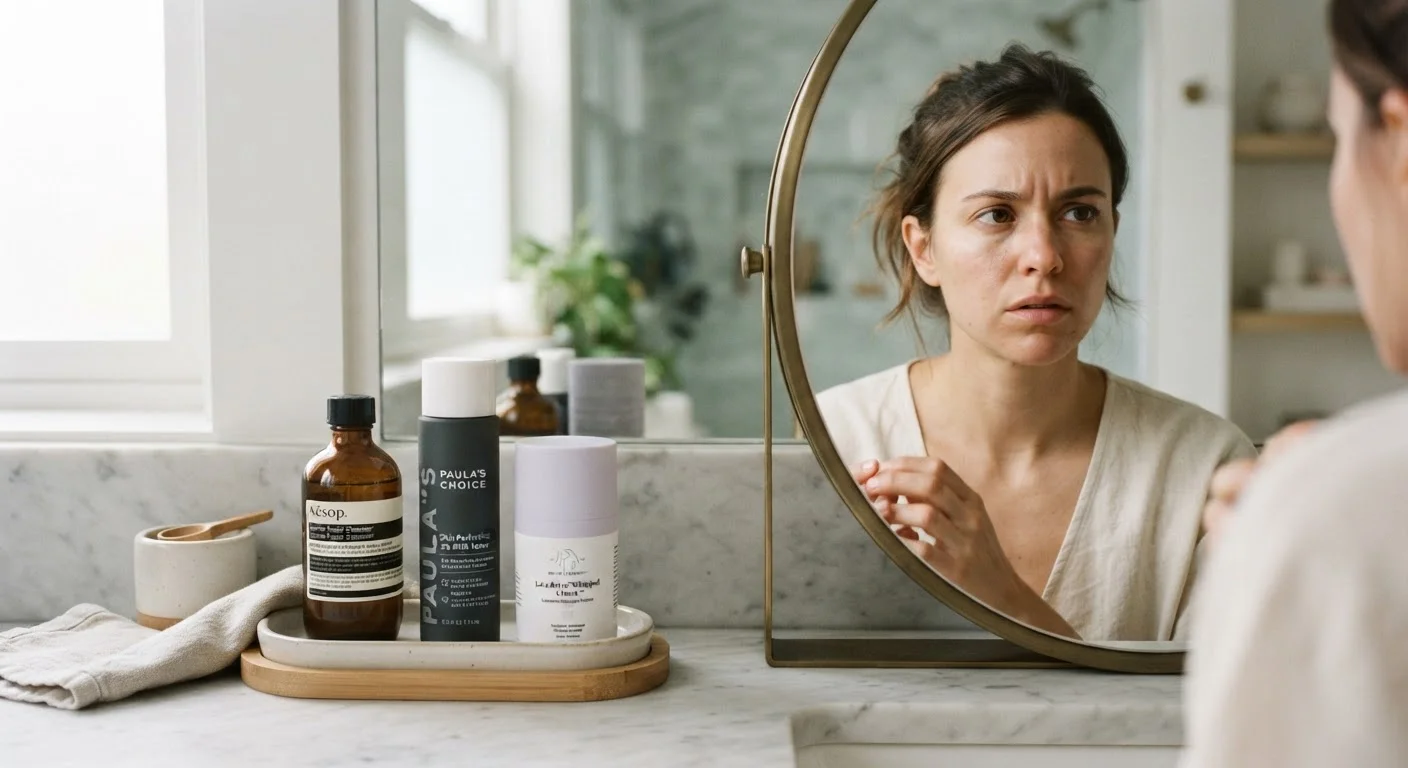
When 'Doing Everything Right' Still Isn't Enough
You cleanse morning and night. You never skip SPF. You've researched your products carefully. And yet — the breakouts keep coming. If this sounds familiar, you're not doing skincare wrong. You may simply be overlooking a few specific factors that have an outsized impact on skin clarity.
Persistent breakouts despite a consistent routine are one of the most common frustrations in skincare. The good news: the cause is almost always identifiable and fixable. Understanding why your skin isn't responding the way you expect is the first step toward a routine that actually works. For a refresher on what a functional routine actually requires, see our guide to the core skincare steps every routine should include.
Using too many active ingredients at the same time, especially when starting out.
Why it happens: The skincare market is full of products containing retinoids, AHAs, BHAs, vitamin C, and niacinamide — all with legitimate benefits. It's tempting to use several at once for faster results.
Over-cleansing or using a face wash that's too harsh for your skin type.
Why it happens: Many people assume acne-prone skin needs to be 'squeaky clean,' which leads to over-washing or reaching for stripping, high-pH cleansers.
Skipping moisturizer because skin already feels oily.
Why it happens: Oily and acne-prone skin is often assumed to need less moisture, but dehydrated skin compensates by producing more sebum, which can worsen clogged pores.
Touching your face frequently throughout the day without thinking about it.
Why it happens: Face-touching is largely unconscious — resting your chin in your hand, rubbing your eyes, adjusting glasses. It's a habit most people significantly underestimate.
Not accounting for pore-clogging ingredients in hair care or makeup products.
Why it happens: Shoppers often scrutinize their skincare labels carefully but overlook haircare conditioners, styling products, or heavy foundations that can contribute to breakouts — especially along the hairline and jawline.
The Lifestyle Factors Your Products Can't Fix
Even a well-formulated routine has limits. Breakouts don't exist in a vacuum — they're influenced by what happens outside your bathroom, too.
~85%
People affected by acne at some point
According to the American Academy of Dermatology, roughly 85% of people experience acne between the ages of 12 and 24, with many continuing into adulthood.
Up to 40%
Adults reporting stress-related skin flares
Research published in dermatology literature suggests a significant proportion of adults notice worsened skin conditions — including acne — during periods of elevated psychological stress.
Sleep deprivation elevates cortisol (the body's primary stress hormone), which in turn stimulates sebaceous glands to produce more oil. Similarly, chronic stress — even low-grade daily stress — can trigger inflammatory responses in skin that look a lot like acne but are harder to treat with topical products alone.
Your pillowcase is another often-ignored culprit. Fabric that isn't washed regularly accumulates oil, bacteria, and residual hair products — all of which press against your face for hours each night. Swapping to a clean pillowcase two to three times per week is a simple, no-cost adjustment that can make a noticeable difference.
It's also worth considering that skin behavior can shift significantly with the seasons. Our guide to adjusting your routine as the weather shifts walks through how to recognize when environmental changes — not your products — are what's driving sudden changes in your skin.
When to See a Dermatologist
If your breakouts are deep, painful, cystic, or leave lasting marks on your skin, over-the-counter products and routine adjustments may not be sufficient. Cystic acne in particular carries a higher risk of scarring and often requires prescription treatment. A board-certified dermatologist can assess the type of acne you're experiencing and recommend approaches appropriate to your specific situation — including options not available without a clinical evaluation.
This article is for general informational purposes only and does not constitute medical or dermatological advice. If you are experiencing persistent or severe acne, please consult a licensed dermatologist or qualified healthcare provider.
The content on this site is for informational purposes only and is not a substitute for professional advice. Always consult a qualified professional for guidance specific to your situation.