

What Tire Pressure Actually Does
Air pressure inside a tire isn't just keeping it inflated — it's doing structural work. Properly pressurized tires support the vehicle's weight, maintain the correct footprint on the road surface, and allow the suspension to do its job. When that pressure is off, everything from steering response to stopping distance is affected.
Think of each tire as a cushion between your car and the pavement. Too little air and the cushion collapses slightly, spreading the contact area unevenly and generating excess heat through increased flexing of the tire wall. Too much air and the cushion becomes rigid, reducing grip and making the ride harsher than the suspension was designed to deliver.
Neither extreme is benign. Both accelerate tire wear — underinflation wears the outer edges of the tread, overinflation wears the center strip — and both reduce the tire's ability to respond predictably when you steer or brake. Understanding what's stamped on the tire itself can help, but as explained in our tire sidewall guide, the sidewall's maximum PSI rating is a structural limit, not your target inflation.
~1 PSI
Monthly pressure loss under normal conditions
Tires naturally lose air through the rubber over time, making monthly checks necessary even with no visible leaks or damage.
25%
Pressure drop required to trigger TPMS warning
Federal regulations require TPMS systems to alert drivers at this threshold — meaning tires can be significantly underinflated before the dashboard light appears.
1 PSI per 10°F
Pressure change with temperature shift
The relationship between ambient temperature and tire pressure means seasonal transitions often require attention, particularly at the start of cold weather.
The Real-World Consequences of Getting It Wrong
Most drivers don't think about tire pressure until a warning light appears — or worse, until something goes wrong on the road. But the effects of incorrect pressure build gradually and quietly before any obvious sign appears.
Fuel economy is one of the first casualties. Underinflated tires create more rolling resistance, which means the engine consumes more fuel to maintain speed. The U.S. Department of Energy has noted that this relationship between tire pressure and fuel efficiency is real and measurable.
Handling and braking are also affected. An underinflated tire deforms under load, reducing the precision with which it follows steering inputs and increasing stopping distances, particularly on wet roads. Overinflation reduces the tire's contact patch with the road, making the vehicle feel skittish over imperfections.
Tire lifespan shortens noticeably. Tires running outside their recommended pressure range wear unevenly, meaning they need replacement sooner than they should. Combined with the indirect costs of reduced fuel economy, this is one of the reasons tire replacement is a recurring ownership cost that catches drivers off guard.
How to Check and Adjust Tire Pressure Correctly
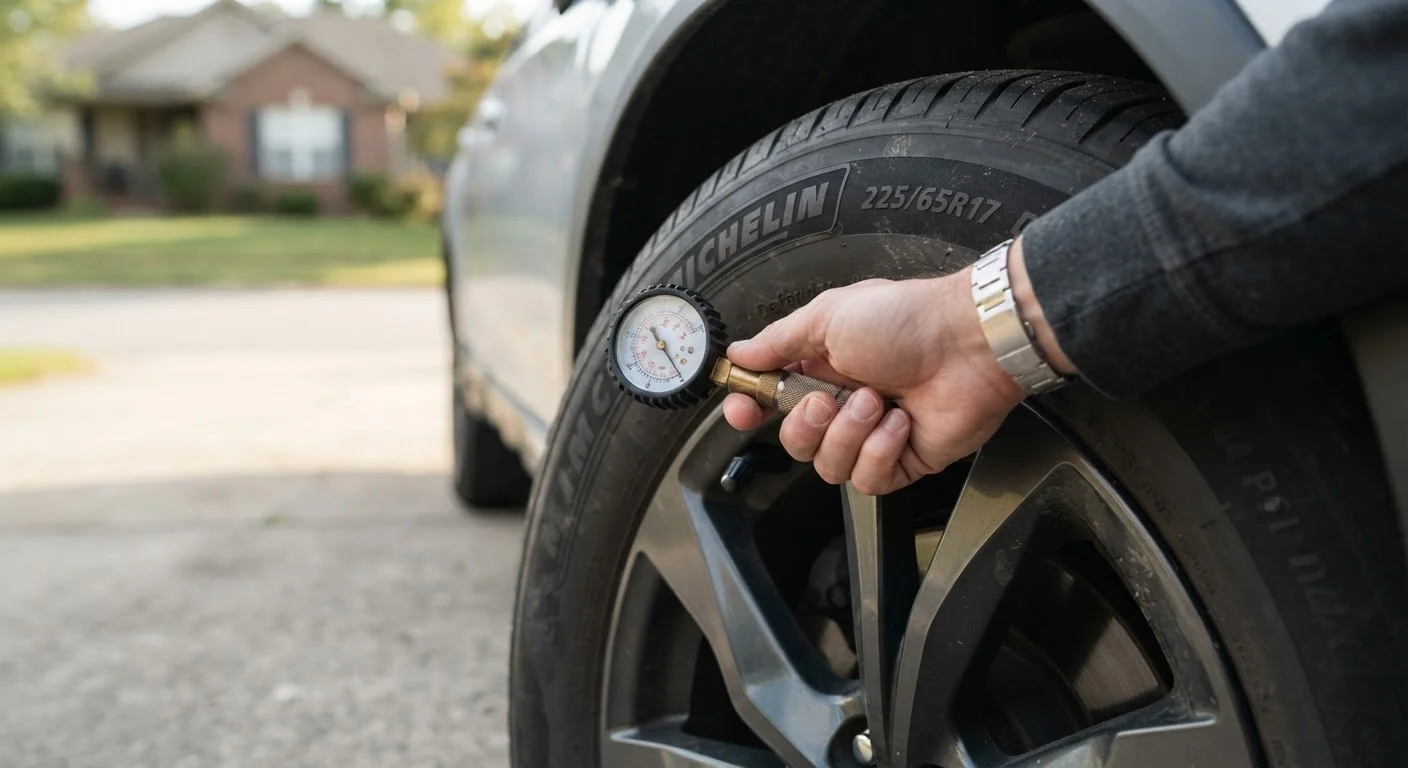
Checking tire pressure is a straightforward task that requires only a tire pressure gauge — either a simple stick-style gauge or a digital one. The important detail most drivers miss: check pressure when the tires are cold, meaning the vehicle has been parked for at least three hours or driven less than a mile at low speed. Driving heats the air inside the tire, raising pressure readings temporarily and masking the true baseline.
- Find the recommended PSI on the sticker inside your driver's door jamb — not the number on the tire sidewall.
- Remove the valve cap from the tire's valve stem (the small rubber or metal protrusion).
- Press the gauge firmly and squarely onto the valve stem and read the pressure.
- Compare the reading to the recommended PSI. Add air if low; release air using the small pin inside the valve stem if over-inflated.
- Replace the valve cap and repeat for all four tires, plus the spare if your vehicle has one.
Gas station air pumps work fine for adding air, though their built-in gauges can be inaccurate. Using your own gauge to verify after filling is a good habit. The whole process typically takes five minutes or less.
Use the Door Jamb, Not the Tire
The recommended PSI for your vehicle is on a sticker inside the driver's door frame — not the number embossed on the tire sidewall. That sidewall figure is the tire's maximum safe pressure, which is typically higher than what your vehicle actually needs. Using the wrong number leads to consistent overinflation.
Building It Into Your Routine
Tire pressure monitoring systems (TPMS), required on all vehicles sold in the U.S. since 2008, alert drivers when pressure drops roughly 25% below the recommended level. That's useful as a safety floor, but it's not a substitute for regular manual checks — by the time the light comes on, you've already been driving on underperforming tires.
A practical approach: check pressure on the first of each month, or tie it to a regular errand like a fuel fill-up. This takes almost no time and sidesteps the kind of gradual neglect that leads to more expensive repairs down the road. For those who do long drives or road trips, checking pressure the night before departure — when tires are definitively cold — is particularly worthwhile.
Tire pressure is one of those maintenance items where the effort is minimal and the payoff, in fuel savings, tire longevity, and predictable handling, is disproportionately large. It's the kind of knowledge covered in our driving and safety guidance that genuinely makes a difference without requiring mechanical expertise.
Frequently Asked Questions
Most mechanics recommend checking tire pressure at least once a month and before long trips. Tires lose roughly 1 PSI per month under normal conditions, and temperature swings can cause additional changes. A consistent monthly habit catches problems before they affect safety or fuel economy.
Look for a sticker on the inside edge of the driver's door or door frame — this lists the manufacturer's recommended PSI for front and rear tires. Do not use the maximum PSI printed on the tire sidewall, which is the tire's structural limit, not the recommended operating pressure.
Driving on a noticeably underinflated tire increases blowout risk, reduces braking effectiveness, and causes premature wear on the tire's outer edges. Even a 10 PSI drop can meaningfully affect handling. It's worth adding air before driving whenever pressure is significantly below the recommended level.
Yes. The U.S. Department of Energy has noted that underinflated tires can reduce fuel efficiency measurably. A soft tire creates more rolling resistance, meaning the engine works harder to move the vehicle the same distance.
No. The number on the sidewall is the maximum pressure the tire can safely contain — not the target pressure for your vehicle. Inflating to that level typically overinflates the tire, reducing the contact patch, creating a harsher ride, and increasing the chance of a blowout from road impacts.
Cold air is denser and contracts, which causes tire pressure to drop. As a rule of thumb, tires lose about 1 PSI for every 10°F drop in temperature. Drivers in colder climates often find their tire pressure warning lights illuminate after the first cold snap of the season.
The content on this site is for informational purposes only and is not a substitute for professional advice. Always consult a qualified professional for guidance specific to your situation.