

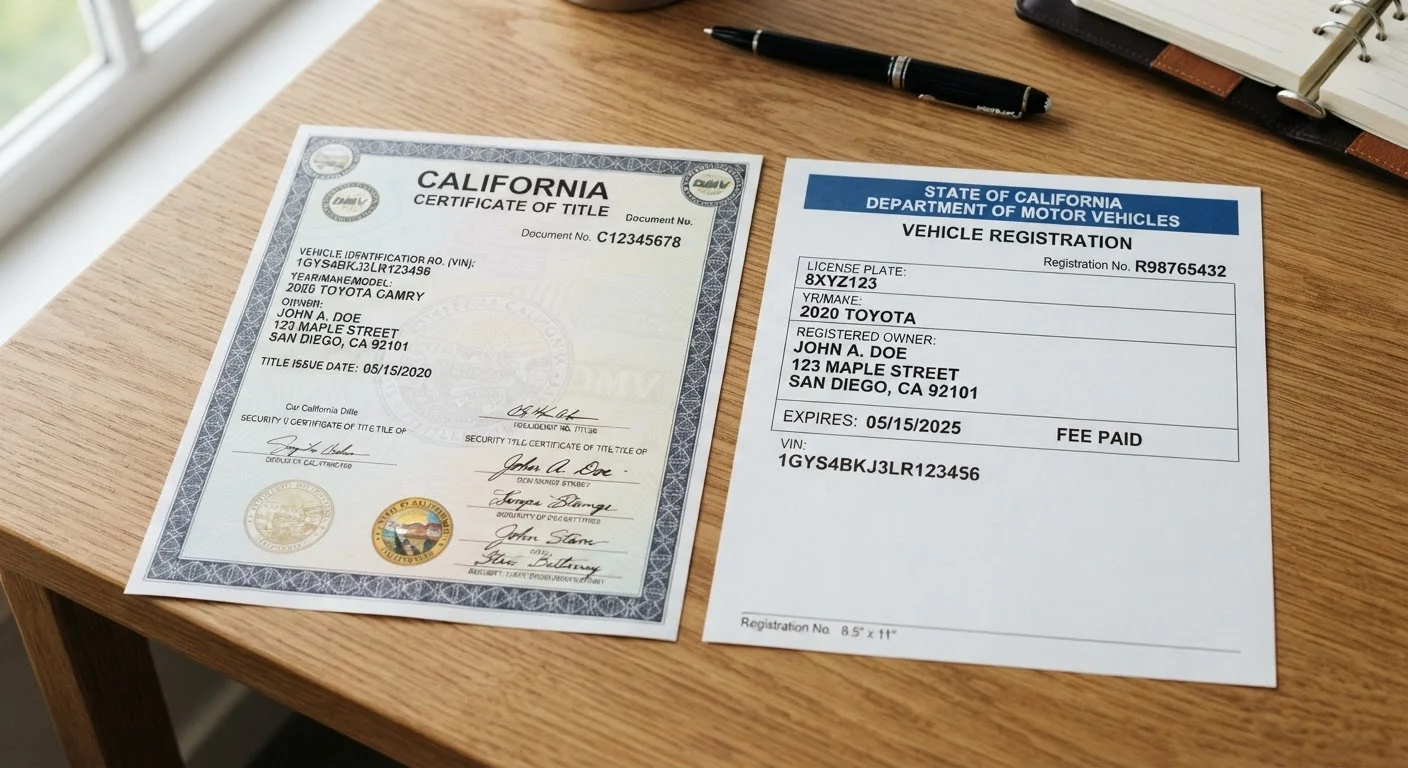
Two Documents, Two Different Jobs
Most drivers carry their registration card in the glove box and have a title filed away somewhere at home — but few can clearly explain what each one actually proves. They're not interchangeable, and mixing them up can cause real headaches when you're buying, selling, or dealing with law enforcement.
Put simply: the title proves ownership, and the registration proves your vehicle is authorized to be driven on public roads. Both are issued or tracked by your state's motor vehicle agency, but they serve entirely different legal purposes.
| What a title proves | Legal ownership of the vehicle |
| What registration proves | Authorization to drive on public roads |
| Who holds the title when financed | The lender, until the loan is paid off |
| Registration renewal frequency | Typically annual or biennial, varies by state |
| Where titles are issued | Your state's DMV or motor vehicle agency |
| Registration re-required when | Moving to a new state (usually within 30–90 days) |
For a broader look at all the paperwork that comes with owning a vehicle, see Car Ownership for First-Timers.
What a Vehicle Title Actually Is
A certificate of title is a legal document that establishes who owns a vehicle. It lists the owner's name and address, the vehicle identification number (VIN), and key details like the make, model, year, and odometer reading at the time of transfer.
If you financed your vehicle, the lender — a bank or credit union — is typically listed as a lienholder on the title. That means they hold a legal interest in the vehicle until the loan is paid off. Once you pay it in full, the lienholder releases its claim, and the title is issued clear (or "clean") in your name alone.
Certificate of Title
A legal document issued by the state that identifies the official owner of a vehicle. It includes the VIN, owner information, and any lienholder details.
Lienholder
A lender or financial institution that holds a legal claim on a vehicle until a loan secured by that vehicle is fully repaid.
Vehicle Registration
An annual or periodic authorization issued by the state that permits a specific vehicle to be driven on public roads. It is accompanied by a registration card and license plates.
Clean Title
A title with no outstanding liens, salvage designations, or legal encumbrances — meaning the owner holds full, uncontested ownership of the vehicle.
VIN
Vehicle Identification Number — a unique 17-character code assigned to every motor vehicle that identifies its manufacturer, specs, and history.
You don't need your title for routine traffic stops. But you absolutely need it when selling the vehicle, transferring ownership, or applying for a duplicate if the original is lost. Learn more about how that process works in our guide on transferring a car title when buying or selling privately.
What Vehicle Registration Covers
Registration is your annual (or biennial, depending on your state) permission to operate a specific vehicle on public roads. When you register a vehicle, you're telling the state it exists, where it's based, and that fees and taxes have been paid.
Your registration comes with two things: a registration card (kept in the vehicle) and license plates. Many states also issue a registration sticker for your plate or windshield to show the current period is valid.
Registration is tied to the vehicle and owner combination — not just the car. If you move to another state, you'll typically need to re-register within a set window, often 30 to 90 days. Fees vary widely by state and can factor in the vehicle's weight, age, or value.
Know which documents you should actually be carrying? See Documents Every Car Owner Should Keep in the Glove Box for a practical breakdown.
When You Need Each One
Understanding when to produce which document saves confusion in high-pressure moments:
- Traffic stop: You need your registration card (and proof of insurance). Officers use it to confirm the vehicle is legally permitted on the road.
- Buying or selling privately: The seller must sign over the title. No title — or a title with unresolved liens — is a serious red flag.
- Financing a new vehicle: The lender will hold the title until the loan is repaid.
- Moving to a new state: You'll need to re-register and may need to obtain a new title from your new state's DMV.
- Selling for parts or scrap: Even in this case, the title must transfer to the buyer or salvage yard.
Salvage and Rebuilt Titles Work Differently
If a vehicle has been declared a total loss by an insurer and later repaired, it receives a salvage or rebuilt title designation. This affects the vehicle's legal status, insurability, and resale value. Always check the title history when purchasing a used vehicle — your state's DMV and services like the National Motor Vehicle Title Information System (NMVTIS) can help verify title status.
If you've lost your title, most states allow you to apply for a duplicate through the DMV — typically requiring proof of identity and a small fee. Contact your state's motor vehicle agency directly for the correct process.
The content on this site is for informational purposes only and is not a substitute for professional advice. Always consult a qualified professional for guidance specific to your situation.