

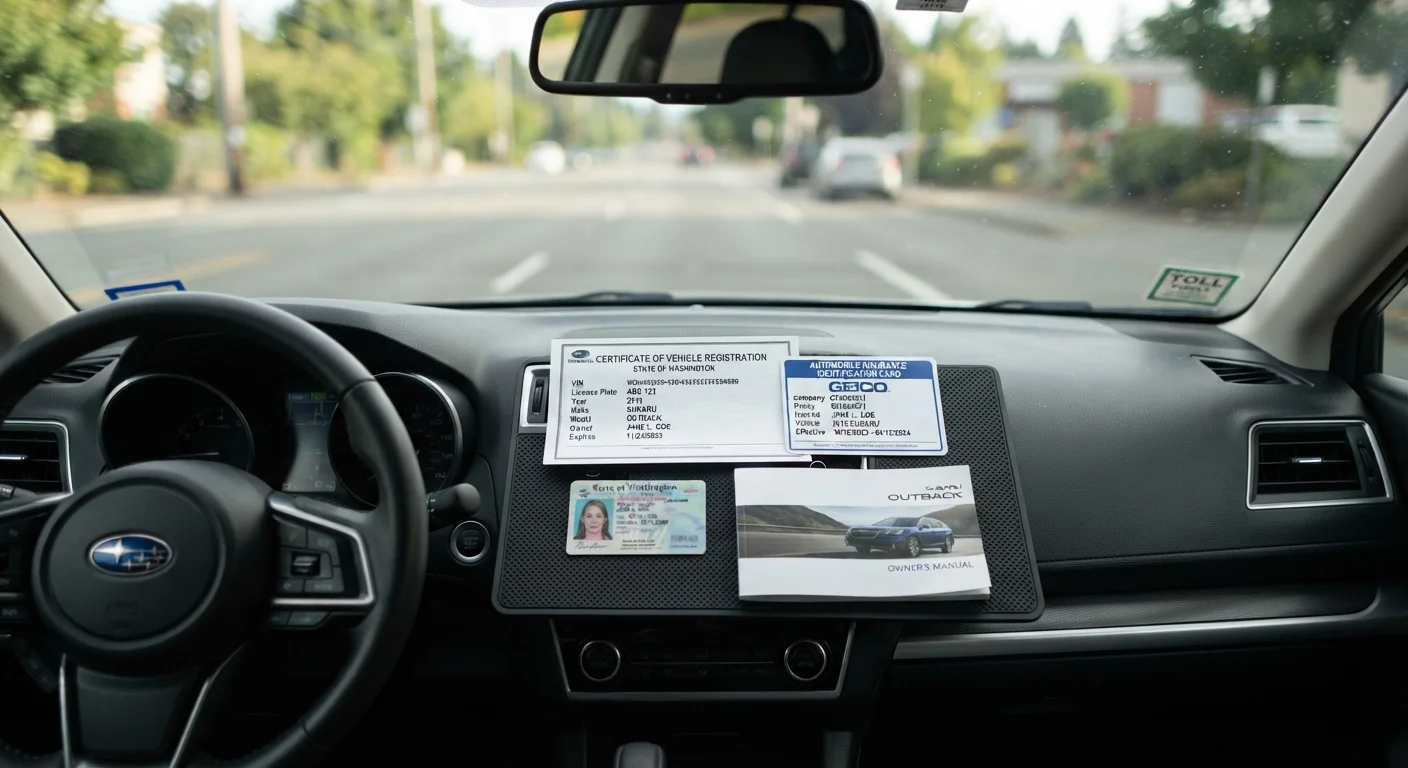
Why Your Glove Box Documents Matter
A law enforcement officer pulls you over. An accident happens at an intersection. In both situations, the first thing you'll be asked for is your license, registration, and proof of insurance. If those documents aren't within arm's reach — or if they're expired — you can face fines, delays, or complications even when the underlying incident is minor.
Keeping the right paperwork in your glove box isn't just a legal formality. It's a practical habit that protects you when things go sideways. This reference covers exactly which documents belong there, what each one proves, and a few additional items worth carrying. For a broader look at responsible car ownership, see Car Ownership for First-Timers.
The Core Three: What Every Driver Must Carry
Most U.S. states legally require drivers to carry three documents at all times while operating a vehicle. Missing any one of them can result in a citation.
Proof of Insurance
This document — typically a card issued by your insurer — confirms your vehicle is covered under a valid policy. It lists the policy number, coverage dates, and insured vehicle. Many insurers now offer a digital version accessible through a mobile app, and most states accept digital proof. Keep both a physical card and your app login handy.
Vehicle Registration
Your registration card proves the vehicle is properly registered with your state's motor vehicle agency. It's renewed annually or biennially in most states, so check the expiration date. An expired registration can trigger a traffic stop on its own. For a clear explanation of what registration actually proves versus your title, see Vehicle Registration and Title.
Driver's License
Technically this lives in your wallet, not your glove box — but it's worth mentioning because it completes the required trio. Always carry a current, valid license whenever you're behind the wheel.
Additional Documents Worth Keeping On Hand
Beyond the legal minimums, a few extra items in your glove box can make a real difference during an accident, breakdown, or roadside stop.
Proof of Ownership (or a Copy of Your Title)
Your vehicle title is the legal document proving ownership. You generally shouldn't store the original title in your car — if the vehicle is stolen, so is that document. However, a photocopy or a photo on your phone can be useful if you're ever questioned about the vehicle's ownership in a distant location.
Roadside Emergency Contact Card
Write down or print your roadside assistance membership number, your insurer's claims phone number, and an emergency contact. In a stressful moment, hunting through an app is harder than glancing at a card.
A Blank Accident Exchange Form
Most states don't require a specific form after a minor accident, but having a pre-printed sheet that prompts you to collect the other driver's name, license plate, insurance carrier, and contact information helps ensure you don't forget anything important under pressure.
Staying organized in the car extends to maintenance records, too. A brief log of service visits kept in your glove box — or at least a note of your last oil change — can matter for warranty claims and resale. Learn more in our guide on keeping maintenance records.
What Doesn't Belong in Your Glove Box
A few items are commonly stored in glove boxes that shouldn't be there. Your original vehicle title is the main one — keep it somewhere secure at home. Blank personal checks, Social Security cards, and spare credit cards are equally risky if your car is broken into. The glove box is a high-visibility, easily accessible compartment; treat it accordingly.
Also, review your stored documents once a year. Insurance cards and registration renewals both expire. An outdated card provides no protection and could indicate a lapsed policy you haven't caught. Set a calendar reminder each time you renew to swap out the old documents for the new ones.
For more practical habits that keep your vehicle in good shape — from fluid checks to seasonal prep — visit our Car Maintenance hub or check out The First-Time Car Owner's Guide to Keeping a Vehicle in Good Shape.
The content on this site is for informational purposes only and is not a substitute for professional advice. Always consult a qualified professional for guidance specific to your situation.