

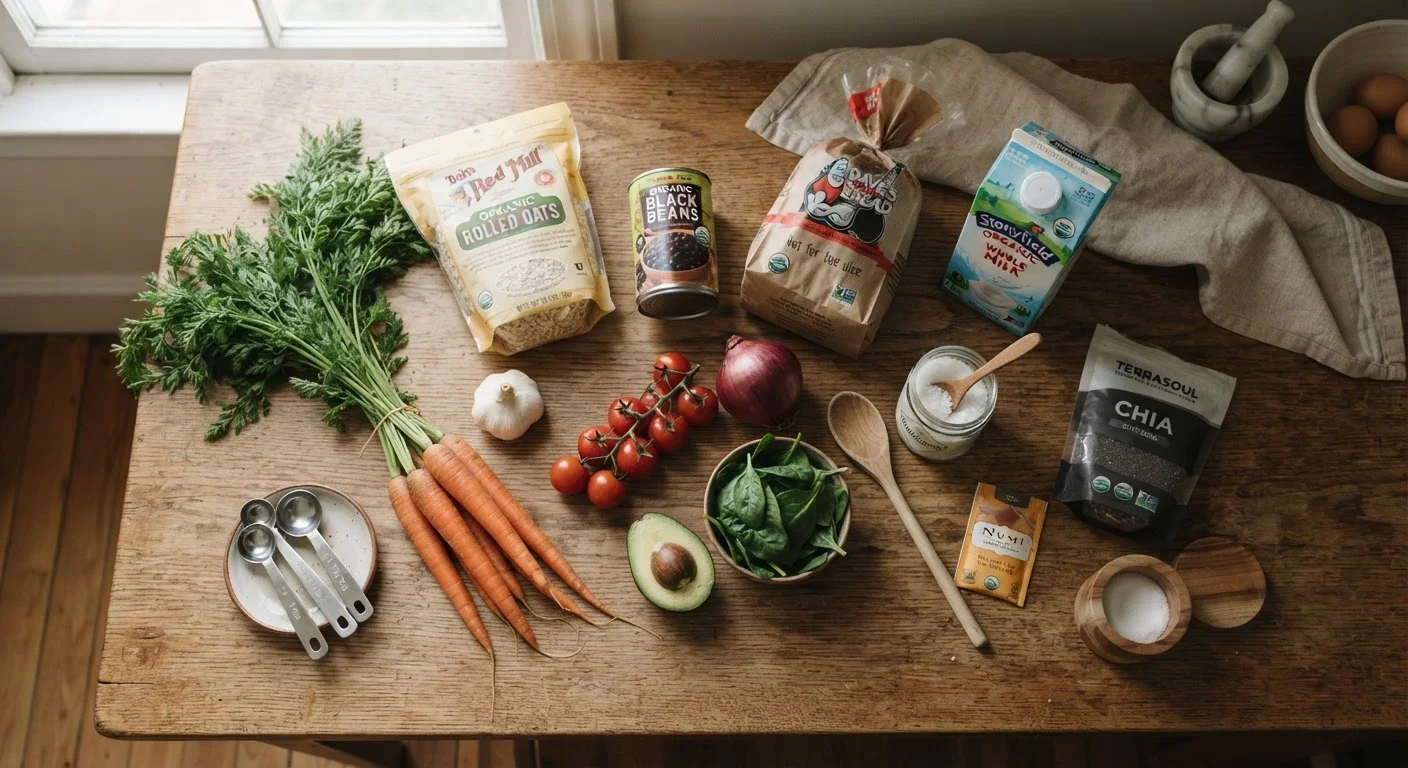
Why Sodium Matters — and Where It Actually Comes From
Sodium is an essential mineral. Your body uses it to regulate fluid balance, support nerve function, and help muscles contract. The problem isn't sodium itself — it's how much most Americans consume daily.
According to the USDA Dietary Guidelines for Americans, the general guidance for adults is to consume less than 2,300 milligrams (mg) of sodium per day — roughly equivalent to one teaspoon of table salt. Yet the average American adult takes in closer to 3,400 mg daily, nearly 50% above that threshold.
Here's the counterintuitive part: the salt shaker at your table contributes a relatively small share. Research consistently shows that roughly 70% of dietary sodium in the U.S. comes from processed, packaged, and restaurant foods — not from cooking at home or seasoning at the table. Understanding this distinction is the first step toward making more informed choices.
| Daily sodium limit (general adults) | Less than 2,300 mg (USDA Dietary Guidelines for Americans) |
| Average U.S. adult intake | ~3,400 mg/day (USDA Dietary Guidelines for Americans) |
| Share from processed/restaurant food | ~70% (Centers for Disease Control and Prevention (CDC)) |
| AHA ideal target (most adults) | 1,500 mg/day (American Heart Association) |
| Salt equivalent of 2,300 mg sodium | ~1 teaspoon |
Common High-Sodium Foods You Might Not Suspect
Some sodium sources are obvious — potato chips, pretzels, canned soups. But sodium hides in foods that don't even taste salty, and those are the ones that catch most people off guard.
- Bread and rolls: A single slice can contain 100–200 mg. Over a day's worth of sandwiches and toast, it adds up quickly.
- Deli meats and cold cuts: One serving of deli turkey can easily carry 400–500 mg.
- Cheese: Even varieties that seem mild — like cottage cheese or American cheese — can contribute 300–400 mg per serving.
- Breakfast cereals: Many contain 150–300 mg per cup before any milk is added.
- Condiments and sauces: Soy sauce, ketchup, and salad dressings are concentrated sodium sources often used in portions larger than the label's serving size.
- Restaurant meals: A single entrée at a sit-down restaurant can exceed an entire day's recommended intake.
Reading the Nutrition Facts label is the most reliable way to track sodium across your day. For a practical walkthrough of how sodium adds up across multiple servings and foods, see our guide to sodium on food labels.
Sodium
A mineral and electrolyte found naturally in some foods and added to many processed ones. It plays a key role in fluid regulation and nerve function, but excess intake is linked to elevated blood pressure in some individuals.
Daily Value (DV)
A reference amount printed on Nutrition Facts labels representing how much of a nutrient one serving contributes to a standard daily diet. For sodium, the Daily Value is 2,300 mg. A food with 20% DV or more is considered high in sodium.
Sodium sensitivity
A physiological trait where an individual's blood pressure rises or falls more dramatically in response to changes in sodium intake. Not everyone responds to dietary sodium the same way.
Processed food
Any food that has been altered from its natural state through methods such as canning, freezing, or adding preservatives and flavorings. Many processed foods contain significant added sodium to enhance flavor and extend shelf life.
What Established Guidance Says — and Who Should Pay Extra Attention
The 2,300 mg daily limit from the USDA Dietary Guidelines applies to generally healthy adults. The American Heart Association goes a step further, suggesting an ideal target of no more than 1,500 mg per day for most adults, especially those managing blood pressure. These are general population benchmarks, not prescriptions for individuals.
Certain groups are considered more sodium-sensitive, meaning their blood pressure responds more dramatically to sodium intake. These include adults over 50, people of African descent as a group, and individuals with high blood pressure, diabetes, or chronic kidney disease. If you fall into any of these categories, talking with a healthcare provider about a personalized sodium target is worthwhile.
Special Populations: Check with a Professional
General sodium guidelines apply to healthy adults, but individual needs vary. People with high blood pressure, kidney disease, diabetes, or heart conditions may require a stricter limit tailored to their situation. Pregnant individuals and older adults should also seek personalized guidance from their healthcare provider rather than relying on population-level targets.
Reducing sodium doesn't require eliminating flavor. Herbs, spices, citrus juice, and vinegar can build complexity in cooking without contributing sodium. Rinsing canned beans and vegetables under water can reduce their sodium content by roughly 40%, according to some research findings.
This article is for general informational and educational purposes only and is not medical or dietary advice. Consult a qualified healthcare professional before making significant changes to your diet, especially if you have a health condition.
The content on this site is for informational purposes only and is not a substitute for professional advice. Always consult a qualified professional for guidance specific to your situation.