

Why Your Pantry Is Your Best Meal-Planning Tool
When a busy evening derails dinner plans, a well-stocked pantry is the difference between a balanced home-cooked meal and a last-minute takeout order. Unlike a refrigerator, which depends on fresh ingredients that spoil quickly, your pantry holds reliable, shelf-stable foundations that are always ready when you are.
The goal isn't to stockpile everything — it's to keep a curated set of versatile staples that combine in dozens of ways. Think of it as building flexibility into your kitchen before the week even starts. If you're working on structured planning alongside this, a practical weekly meal planning guide can help you layer fresh ingredients around these pantry anchors.
| Typical pantry staple shelf life | 1–5 years for most canned goods and dried grains (USDA Food Safety and Inspection Service) |
| Canned bean protein | Approx. 7–9g per ½ cup serving (USDA FoodData Central) |
| Recommended grain type | Whole grains preferred over refined grains (USDA Dietary Guidelines for Americans) |
| Sodium tip for canned goods | Rinsing canned beans reduces sodium by up to 40% (Journal of Food Science, general nutritional research) |
| Pantry categories to cover | Grains, legumes, canned tomatoes/broth, healthy fats, spices |
| Meal planning benefit | Reduces reliance on last-minute takeout and impulse purchases |
The Essential Pantry Categories
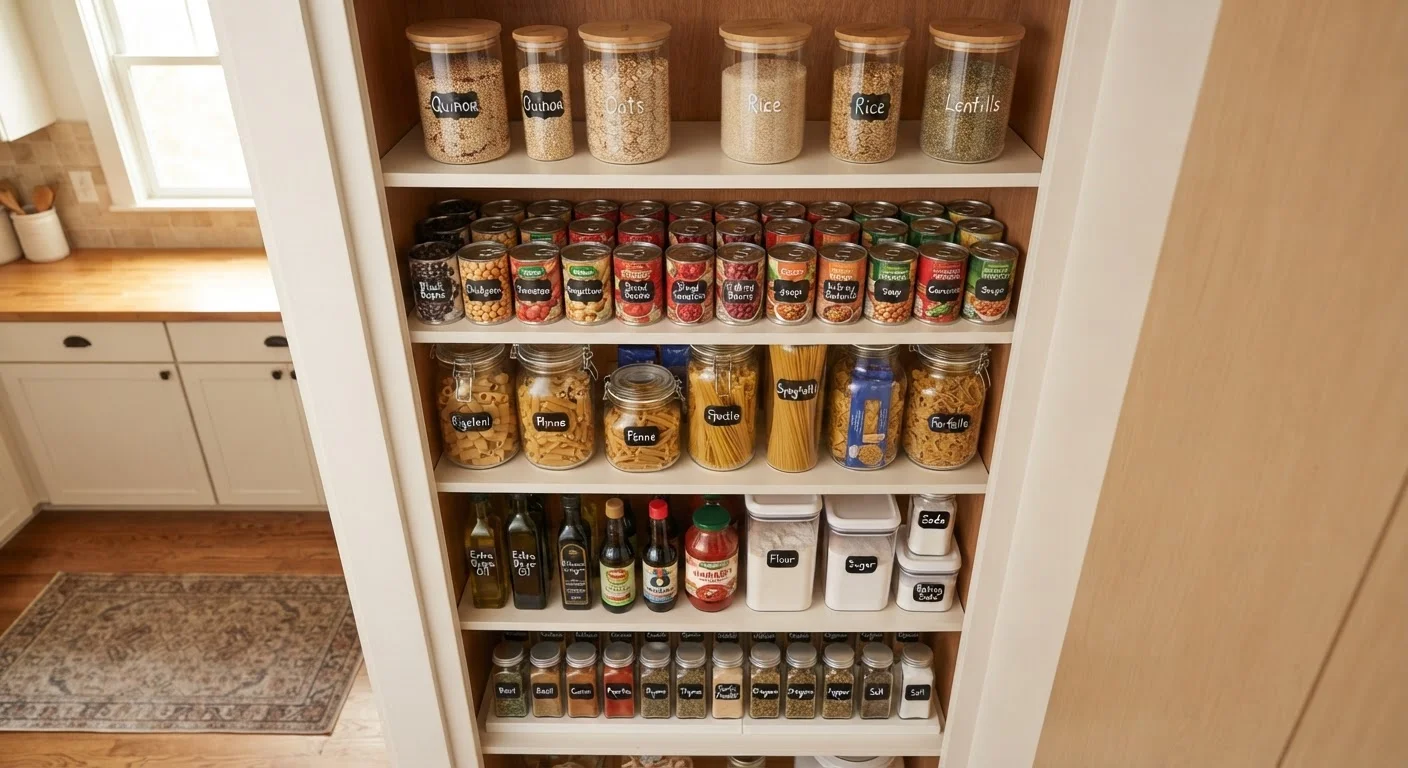
A functional pantry covers five core categories. Together, they provide protein, carbohydrates, healthy fats, flavor, and the ability to build complete meals with minimal planning.
Whole Grains and Pasta
Brown rice, quinoa, whole wheat pasta, and rolled oats are workhorses. They provide fiber and complex carbohydrates that support steady energy. Most cook in under 30 minutes, and they pair with virtually any protein or vegetable you have on hand.
Canned and Dried Legumes
Canned chickpeas, black beans, lentils, and kidney beans are among the most nutritionally efficient foods you can store. They deliver plant-based protein and fiber with almost no prep required. Rinse canned varieties to reduce sodium. Dried legumes take longer to cook but cost less and have a longer shelf life.
Canned Tomatoes and Broths
Crushed tomatoes, diced tomatoes, and low-sodium vegetable or chicken broth are the liquid foundations of soups, stews, sauces, and grain dishes. A single can of crushed tomatoes can become pasta sauce, shakshuka, or a quick soup base in minutes.
Healthy Fats and Condiments
Extra-virgin olive oil, neutral cooking oil, and a small selection of vinegars form the basis of dressings, sautés, and marinades. Soy sauce, hot sauce, and tahini add depth without requiring fresh ingredients. These flavor-builders are what turn simple staples into satisfying meals.
Nuts, Seeds, and Nut Butters
Almonds, sunflower seeds, walnuts, and nut butters provide healthy fats and a quick protein boost. They work as snacks, salad toppings, sauce ingredients, or oatmeal additions — making them among the most versatile items in any pantry.
Shelf-stable
Foods that can be safely stored at room temperature for an extended period without refrigeration, such as canned goods, dried grains, and certain oils.
Complex carbohydrates
Carbohydrates made of longer sugar chains, found in whole grains and legumes, that digest more slowly and provide more sustained energy than simple sugars.
Legumes
A plant family that includes beans, lentils, chickpeas, and peas. They are notable for their high protein and dietary fiber content and are commonly used as meat alternatives.
Aromatics
Vegetables and herbs — such as onions, garlic, and shallots — used at the start of cooking to build a foundational layer of flavor in a dish.
Plant-based protein
Protein sourced from plants rather than animals, including legumes, nuts, seeds, and whole grains. Many plant proteins lack one or more essential amino acids but can be complemented by eating varied foods.
Spices and Aromatics: The Flavor Foundation
No pantry is complete without a reliable spice collection. A modest set of dried spices dramatically expands what you can make from the same ingredients. Consider keeping cumin, smoked paprika, garlic powder, onion powder, dried oregano, red pepper flakes, and ground turmeric on hand.
Whole garlic, onions, and shallots — though not shelf-stable indefinitely — store for weeks at room temperature and anchor flavor in nearly every cuisine. Together with your spices, these aromatics mean that a can of beans and some rice can become a completely different meal on Monday versus Thursday.
For a deeper look at how your current kitchen inventory stacks up, a practical pantry audit can help you identify gaps and simple swaps worth making.
Putting It All Together: Last-Minute Meal Formulas
Having the right staples matters most when you can use them together quickly. A few reliable formulas make this easier:
- Grain bowl: Cooked grain + canned beans + any vegetable + olive oil and vinegar dressing + spices
- Quick soup: Broth + canned tomatoes + lentils or pasta + garlic powder + dried herbs
- Simple pasta: Whole wheat pasta + canned tomatoes + olive oil + red pepper flakes + parmesan (if available)
- Nut butter noodles: Pasta or rice noodles + peanut or almond butter + soy sauce + a splash of vinegar + sesame seeds
These aren't rigid recipes — they're templates. Swap ingredients based on what you have. If budget is also a consideration, strategies for stretching a grocery budget without sacrificing nutrition pair naturally with this pantry-first approach.
Before your next shopping trip, running through a pre-shop checklist helps you restock exactly what's missing — rather than duplicating what you already have.
This article is for general informational purposes. Individual nutritional needs vary; consult a registered dietitian or qualified healthcare professional for personalized guidance.
The content on this site is for informational purposes only and is not a substitute for professional advice. Always consult a qualified professional for guidance specific to your situation.