

Start here
Why Meal Planning Is Worth Your Time
Next
Step One: Take Stock Before You Plan
Then
Step Two: Build Your Weekly Meal Map
Almost there
Step Three: Turn Your Plan Into a Smart Grocery List
Finish strong
Keeping the Plan Alive Through the Week
Why Meal Planning Is Worth Your Time
Most people don't struggle with cooking — they struggle with deciding what to cook at 6 p.m. after a full day. That daily decision fatigue is what makes takeout feel easier, even when it isn't the choice you'd prefer. Meal planning removes the decision from the moment when you're tired and hungry and moves it to a calm, intentional window earlier in the week.
The practical benefits are well-documented: households that plan meals tend to spend less on groceries, waste less food, and eat more varied, nutritious diets overall — findings consistent with research published in nutrition and public health literature. But the less-talked-about benefit is simply less mental load. Knowing what's for dinner before dinner time is a surprisingly significant quality-of-life improvement.
For a deeper look at what makes a meal plan nutritionally sound week over week, see The Anatomy of a Balanced Weekly Meal Plan.
Step One: Take Stock Before You Plan
Before writing a single meal down, open your refrigerator, freezer, and pantry. Note what's already there — especially produce that needs to be used soon, proteins that are thawed, and staples that are running low. Planning around what you already have is the single best way to cut food waste and grocery spending at the same time.
Ask three practical questions:
- What needs to be used this week? Prioritize those ingredients in early-week meals.
- What staples do I reliably have? Pasta, canned beans, eggs, and frozen vegetables often form the backbone of quick weeknight meals.
- What's my schedule like? Identify the two or three nights you'll genuinely have time to cook, and plan simple or no-cook options for the rest.
A well-stocked pantry dramatically expands your options. Pantry staples that make last-minute meals possible covers the essentials worth keeping on hand.
Meal planning
Deciding in advance what you'll cook and eat for the week, so you shop intentionally and spend less time making last-minute food decisions.
Batch cooking
Preparing large quantities of a recipe at once so portions can be eaten over several days, saving time on individual cooking sessions.
Pantry staples
Shelf-stable ingredients — like canned beans, rice, pasta, or broth — kept on hand so you can build meals without a special shopping trip.
Meal map
A simple grid or list showing which meal you plan to cook on each day of the week, serving as a visual reference throughout the week.
Food waste
Groceries that spoil or go uneaten before they're used — something meal planning actively reduces by matching purchases to an actual plan.
Step Two: Build Your Weekly Meal Map
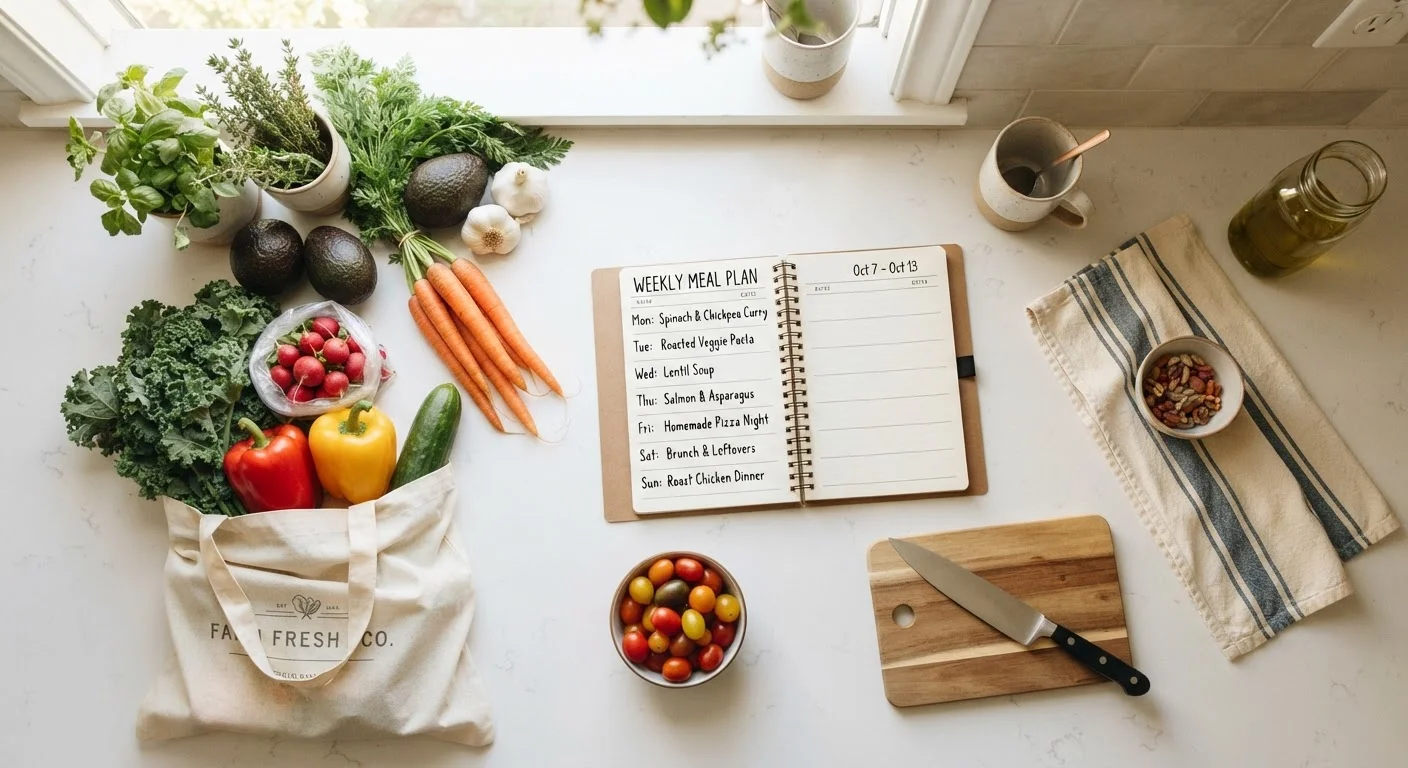
With your inventory in mind, sketch out a simple grid — seven days across the top, meals down the side. For beginners, focus on dinners only. Plan for leftovers to cover at least two or three lunches, and keep breakfast on a short, familiar rotation that doesn't require planning.
Assign meals based on realistic effort. Reserve longer recipes for days when you have time — often a weekend — and schedule your quickest meals for the busiest days. A few patterns that help beginners:
- Theme nights — assign a loose category per night (e.g., pasta night, grain bowl night, soup night) to reduce decision-making while keeping variety.
- One batch cook — plan one recipe that scales well and provides leftovers or a second meal mid-week.
- One flexible slot — intentionally leave one evening open for leftovers, takeout, or whatever didn't get cooked earlier.
Start Smaller Than You Think You Should
If planning seven dinners feels daunting, plan just three or four and allow for one planned leftovers night and one flexible night. A partial plan executed consistently beats a perfect plan abandoned by Wednesday. Build up gradually as the habit solidifies.
If your week is unpredictable, Planning Meals Around a Tight Schedule offers frameworks that flex with real-life disruption.
Step Three: Turn Your Plan Into a Smart Grocery List
Once your meal map is set, write down every ingredient you need — then cross off what you already have at home. Organize the remaining list by store section (produce, proteins, dairy, pantry) so shopping moves efficiently and you're less tempted by impulse buys.
A few list-building habits that prevent mid-week problems:
- Check quantities, not just ingredients. Having pasta doesn't help if you only have enough for one portion.
- Account for condiments and aromatics — garlic, olive oil, and spices disappear quietly and are easy to forget.
- If a recipe calls for half a can of something, plan a second meal that uses the rest that same week.
Before your next shopping trip, run through the weekly meal planning checklist to catch anything you've missed.
Meal Planning Isn't One-Size-Fits-All
Households vary widely in schedule, budget, cooking skill, and dietary needs. The steps here are a general framework — adjust the number of meals planned, the complexity of recipes, and the planning cadence to fit your actual life. What works for a family of four may look very different from a plan built for a solo cook or a couple.
Keeping the Plan Alive Through the Week
The plan is made — now the real test begins. Most meal plans don't fail because they were badly designed; they fail because life intervenes and there's no recovery strategy. Build yours with a little deliberate slack.
Post your meal map somewhere visible: on the fridge, a whiteboard, or a notes app you check daily. Paper lists vs. planning apps explores which format actually keeps people consistent — it comes down to personal habit more than the tool itself.
When the plan drifts (and it will), swap meals within the week rather than abandoning the plan. Tuesday's stir-fry moved to Thursday is still a win. Understanding the most common reasons plans unravel — explored in Why Your Meal Plan Falls Apart by Wednesday — helps you course-correct faster.
Finally, keep your expectations proportionate. A meal plan that gets you home-cooked food five nights out of seven is genuinely successful, even if it isn't perfect. Consistency over weeks matters far more than any single week's execution. For a broader view of what sustainable meal planning looks like long-term, The Complete Guide to Sustainable Home Meal Planning is a natural next step.
This article is for general informational and educational purposes only and does not constitute dietary or medical advice. Consult a registered dietitian or qualified healthcare professional for guidance specific to your health needs.
Frequently Asked Questions
Most people spend 20–30 minutes once they have a simple system in place. The first few attempts may take longer as you build your routine, but the process gets faster with repetition.
Not necessarily. Many beginners find it easier to start by planning only dinners and letting leftovers cover lunches. Breakfast can often run on a short rotation of familiar staples without formal planning.
A meal plan is a guide, not a contract. Swapping Tuesday's dinner to Thursday, or ordering out once mid-week, doesn't mean failure. Adjust and keep going rather than abandoning the plan altogether.
Rotate a core set of 10–15 recipes across weeks and introduce one new recipe at a time. Small variations — different spices, a new grain, a seasonal vegetable — can refresh familiar dishes without extra effort.
Yes — solo meal planning is especially effective for reducing waste and overspending. Focus on batch cooking and freezer-friendly recipes that scale down well or store easily for several days.
Whatever you'll actually use consistently. A sticky note on the fridge, a whiteboard, a notes app, or a dedicated planning notebook all work. Consistency of format matters more than the tool itself.
The content on this site is for informational purposes only and is not a substitute for professional advice. Always consult a qualified professional for guidance specific to your situation.