

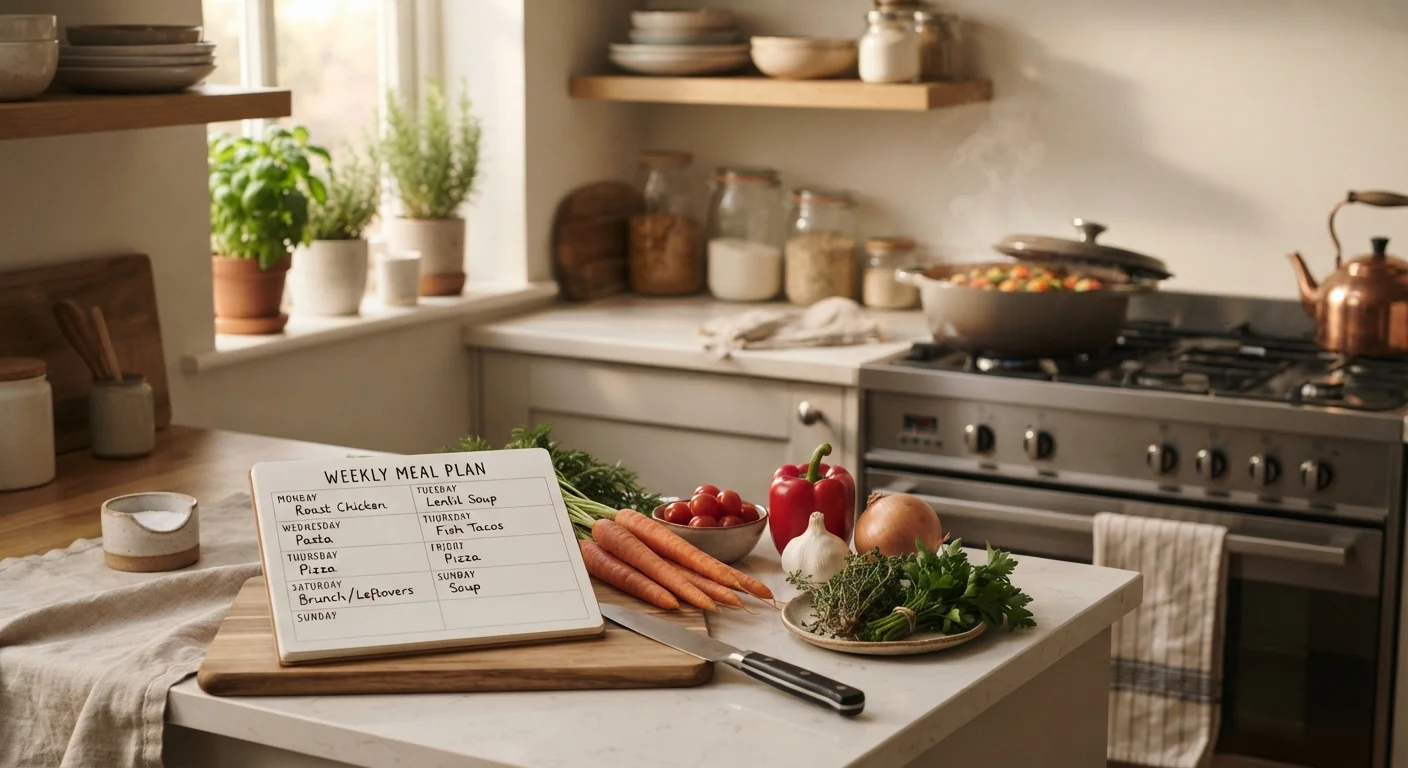
Why Rigid Meal Plans Fail Busy People
Most meal planning advice is built around an ideal week — consistent work hours, time to shop mid-week, and the energy to cook a different recipe each night. For a large share of Americans, that week doesn't exist. Shift workers, caregivers, freelancers, and parents with unpredictable schedules find that a tightly scripted plan becomes a source of stress rather than relief.
The problem isn't meal planning itself — it's the format. A plan that demands you make a specific recipe on a specific night gives you no room to adapt. When life intervenes, the whole structure collapses, and takeout fills the gap. Understanding the real trade-offs of weekly meal planning helps set realistic expectations before you start.
A flexible framework — one that plans structure instead of specifics — holds up across unpredictable weeks because it gives you decision scaffolding without a rigid script. The steps below walk through how to build exactly that.
What you will need
What You'll Need to Get Started
The tools for flexible meal planning are minimal. You don't need a subscription service, a specialized app, or any equipment beyond a basic kitchen setup. What matters most is a short planning habit and the right pantry foundation.
Weekly planner or notes app
Used to jot down meal categories and a short grocery list each week.
Sheet pan or large skillet
Enables batch-cooking proteins and vegetables efficiently in one pass.
Airtight food storage containers
Keeps batch-cooked ingredients fresh and ready to use across several days.
Slow cooker or instant pot
Allows hands-off cooking of large portions while you handle other tasks.
If you're cooking for just one or two people, some of these habits look slightly different — meal planning for smaller households covers how to adjust batch quantities and avoid waste at a smaller scale.
The Five Steps to a Flexible Meal System
The following steps are designed to take about 15–30 minutes to set up the first time, with a recurring 10–15 minute weekly check-in to keep the system running. You don't need to follow every step perfectly — even adopting two or three of these habits consistently will reduce daily meal-related stress significantly.
Audit your actual week before planning anything
Before writing a single meal down, look at your upcoming week realistically. Identify which evenings are genuinely available for cooking and which ones will require something grab-and-go. Most people overestimate available cooking time by 30–40 minutes per day. This audit is what separates a plan that holds from one that collapses by Tuesday.
Note your late nights, commute days, and any social commitments. These slots need zero-cook solutions — leftovers, pantry pulls, or a pre-assembled option — not fresh recipes.
Plan meal categories, not specific meals
Instead of assigning "chicken stir-fry" to Wednesday, assign a category: protein + grain + vegetable. This approach, sometimes called template meal planning, gives you the nutritional structure of a full plan without locking you into a recipe you may not feel like making. Swap chicken for eggs or canned chickpeas depending on what's on hand.
Common useful categories include: grain bowl, soup or stew, sheet-pan meal, sandwich or wrap, and pasta night. See what makes a meal plan structurally sound for how to build nutritional variety into these categories.
Batch-cook one or two versatile proteins
Once a week, cook a large portion of one or two proteins that work across multiple meals — think baked chicken thighs, hard-boiled eggs, ground turkey, or a pot of lentils. These become the building blocks for grain bowls, tacos, salads, and wraps throughout the week without additional cooking effort.
Pair batch proteins with a cooked grain (rice, quinoa, farro) and you've effectively prepared the core of four to five meals in a single session. Store everything in labeled containers and refrigerate for up to four days.
Stock your pantry as a fallback, not an afterthought
A reliable pantry is the infrastructure of flexible meal planning. When your plan shifts — and it will — pantry staples let you pull together a nutritious meal in under 20 minutes without a grocery run. Key items include canned beans and tomatoes, dried pasta, quick-cook grains, low-sodium broth, olive oil, and spices.
Explore pantry essentials worth keeping on hand to build a list that matches how you actually cook. Replenish pantry items during your regular weekly shop before they run out.
Set one weekly planning anchor — and keep it short
Choose a consistent 10–15 minute window each week to review your schedule, check what's in the fridge, and write a short grocery list. Sunday evening or Friday morning both work well for many people. The goal is not a detailed plan — it's a quick orientation that reduces daily decision fatigue.
Your planning anchor should result in three outputs: a rough category list for the week, a grocery list of gaps, and a mental note of which day you'll do a batch-cook session. If your schedule changes every week, building a flexible routine around shifting days can help you find a sustainable anchor point.
The Two-Night Rule for Leftovers
When batch-cooking, plan for leftovers to cover at least two additional meals — not just one. This single habit can eliminate the need to cook on your busiest nights. Pair leftover proteins with different grains or vegetables each time to keep meals feeling varied without extra effort.
For a deeper look at the nutritional principles behind building a balanced week of eating, the Healthy Eating Basics hub covers core dietary concepts in plain language.
Making the System Work Long-Term
The most common reason flexible meal systems stall is over-engineering. Resist the urge to plan every snack, assign specific recipes to every slot, or use a complex tracking spreadsheet. The goal is a low-friction habit that removes daily guesswork — not a second job.
Review what worked at the end of each week. Which categories did you actually use? What fell through? Gradually refine your approach based on your real patterns rather than an idealized version of your week. If you're starting completely from scratch, a simple first week with just two or three planned dinners is a more sustainable entry point than a full seven-day plan.
This article provides general nutrition and lifestyle information for educational purposes only. It is not a substitute for advice from a registered dietitian or other qualified health professional. Individual dietary needs vary — consult a qualified professional for personalized guidance.
The content on this site is for informational purposes only and is not a substitute for professional advice. Always consult a qualified professional for guidance specific to your situation.