

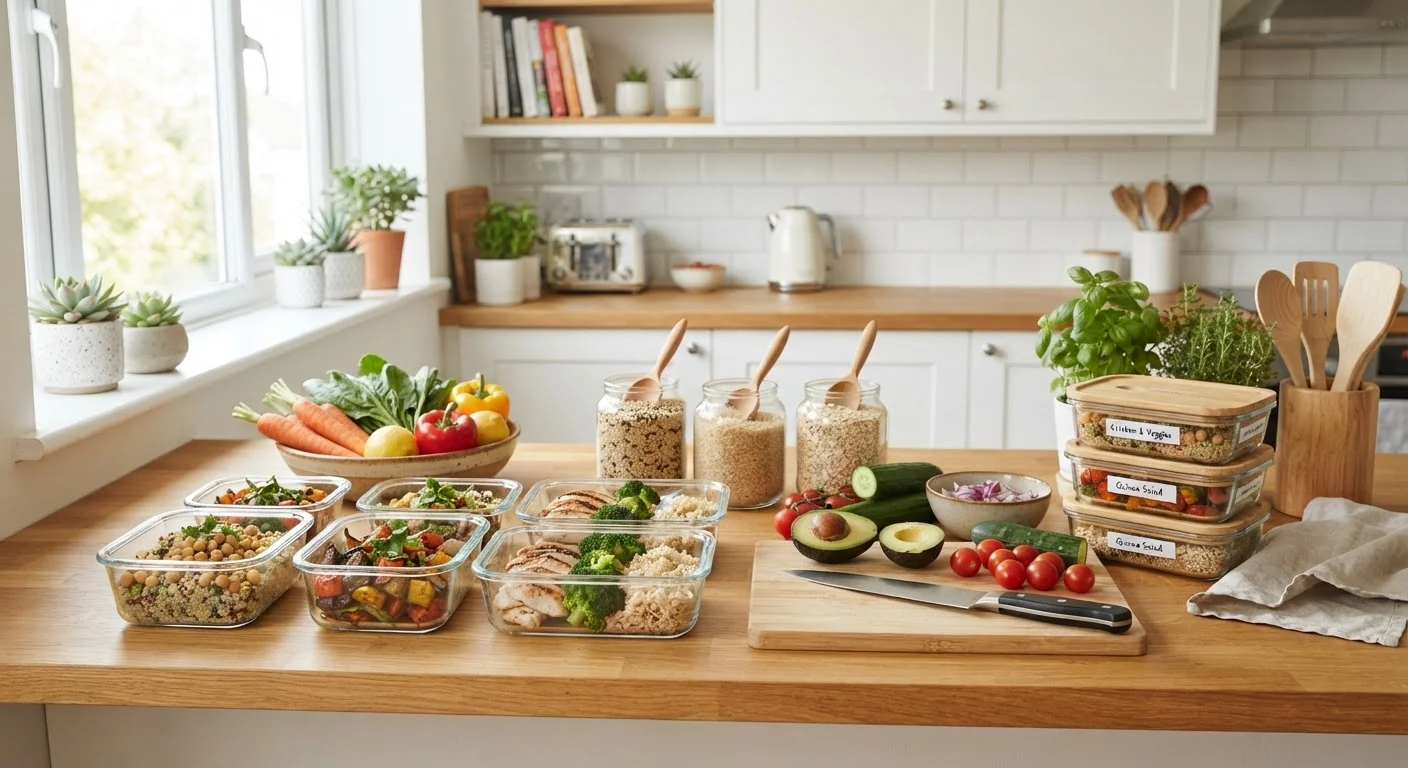
Why Sustainable Meal Planning Actually Works
Meal planning isn't about eating the same thing every day or mapping out a nutritionally perfect spreadsheet. It's about reducing decision fatigue — the mental exhaustion that happens when you face the question "what's for dinner?" after a long day. Research in behavioral science consistently shows that reducing daily micro-decisions helps people follow through on healthier habits.
For most Americans, the alternative to planning is improvisation: last-minute takeout, repeat trips to the grocery store, and ingredients that spoil unused. According to the USDA, American households waste roughly 30–40% of their food supply. A sustainable meal plan directly attacks that number by ensuring ingredients have a purpose before they're purchased.
This isn't about restriction — it's about structure that creates freedom. When you know Monday is grain bowls and Thursday is sheet-pan dinners, you spend less energy deciding and more energy actually eating well. For more foundational guidance, explore the Healthy Eating Basics hub for core nutrition principles that support your planning goals.
30–40%
U.S. household food wasted annually
According to the USDA Economic Research Service, roughly 30–40% of the U.S. food supply is lost or wasted at the consumer level.
~$1,500
Estimated annual food waste cost per household
The Natural Resources Defense Council estimates American families of four throw away an estimated $1,500 worth of food each year.
5x
More likely to meet dietary goals with planning
A study published in the International Journal of Behavioral Nutrition found meal planning was associated with greater diet quality and variety.
Building Your Weekly Meal Framework
The most durable meal plans are built around categories, not rigid recipes. Assign each weeknight a loose theme — pasta night, protein + vegetable night, soup or stew, etc. — and fill the theme with whatever looks good or is on hand that week. This keeps variety high and planning effort low.
Start by anchoring your week around two or three proteins and two or three vegetables that can overlap across meals. For example, roasted chicken can be dinner one night, a grain bowl topping the next, and a wrap filling by midweek. This "planned overlap" approach stretches ingredients without boring repetition.
For a more detailed breakdown of what makes these structures nutritionally complete, see The Anatomy of a Balanced Weekly Meal Plan, which covers how to balance macronutrients, variety, and realistic timing across a full week.
When building your weekly menu, plan backwards from the ingredients most likely to spoil first. Fresh fish or leafy greens should appear in Monday or Tuesday meals; hardier items like root vegetables and grains belong later in the week.
This sequencing minimizes waste by aligning ingredient fragility with meal timing — one of the most practical tactics professional meal planners use consistently.
Keep a "use-it-up" meal slot at the end of each week — a frittata, fried rice, or soup that can absorb odds and ends from the fridge before your next shopping trip.
End-of-week clearing meals reduce waste, lower grocery costs over time, and often produce surprisingly satisfying results from what's left behind.
Smarter Grocery Shopping Strategies
A well-designed grocery list is the bridge between your meal plan and your kitchen. Before heading to the store, inventory what you already have — pantry staples, freezer items, and anything nearing its use-by date. Build your list around gaps, not aspirations.
Shop the perimeter of the store first (produce, proteins, dairy) and treat the center aisles as supplemental for shelf-stable staples. Buying store-brand grains, legumes, and canned goods is a practical way to maintain nutrition without inflating costs. For a deeper look at cost-conscious strategies, Stretching a Grocery Budget Without Sacrificing Nutrition offers grounded, practical approaches.
Before every shopping trip, run through a quick checklist to avoid impulse buys and missed ingredients. Before You Grocery Shop: A Weekly Meal Planning Checklist walks you through exactly what to review.
Food Storage That Reduces Waste
Even the best meal plan fails if ingredients spoil before you use them. Knowing how to store food properly is as important as knowing what to buy. A few core principles make a meaningful difference:
- Leafy greens: Wrap in a dry paper towel and store in a sealed bag or container. This absorbs excess moisture and can double their fridge life.
- Herbs: Treat like flowers — trim stems and store upright in a glass with water, loosely covered.
- Cooked grains and proteins: Cool completely before sealing in airtight containers. Most last 4–5 days refrigerated.
- Fruits that ripen quickly: Store bananas, avocados, and tomatoes at room temperature; refrigerate only once fully ripe.
Label containers with the prep date using masking tape and a marker. This simple habit eliminates the guesswork that leads to wasted food.
Batch Cooking and Prep Efficiency
Batch cooking doesn't mean spending your entire Sunday in the kitchen. A focused 60–90 minute prep session covering two or three foundational ingredients is enough to transform your weeknights. Prioritize items with the most versatility: a large pot of whole grains, a sheet pan of roasted vegetables, and a cooked protein.
Think in components rather than complete meals. Cooked brown rice can become a grain bowl, a stir-fry base, or a side dish. Roasted sweet potatoes work in salads, tacos, or alongside eggs at breakfast. This modularity means you're not locked into eating "meal number three" on Tuesday — you're assembling ingredients based on what sounds good.
Building these prep habits supports broader Daily Routines that make healthy living easier throughout the week, not just at mealtimes.
Keeping Your Plan Flexible and Long-Lasting
The biggest reason meal plans fail isn't willpower — it's rigidity. Life intervenes: a long work day, an unexpected dinner invitation, or simply not being hungry for what you planned. A sustainable plan anticipates this and builds in slack.
Designate one or two "flex nights" per week where the fallback is something simple and fast — eggs, a grain bowl with whatever's in the fridge, or a quick pasta. These nights aren't failures; they're part of the system. Similarly, keep a short list of 5–7 reliable recipes your household genuinely enjoys and rotate them freely. Familiarity reduces friction.
Review your plan briefly each week — what worked, what went uneaten, what you want to try. This feedback loop gradually improves your system without requiring a full overhaul. Sustainable meal planning is a practice, not a destination, and even a partially followed plan beats none at all.
This article is for general informational and educational purposes only. It is not medical or dietary advice. Individuals with specific health conditions or nutritional needs should consult a qualified healthcare professional or registered dietitian.
The content on this site is for informational purposes only and is not a substitute for professional advice. Always consult a qualified professional for guidance specific to your situation.