

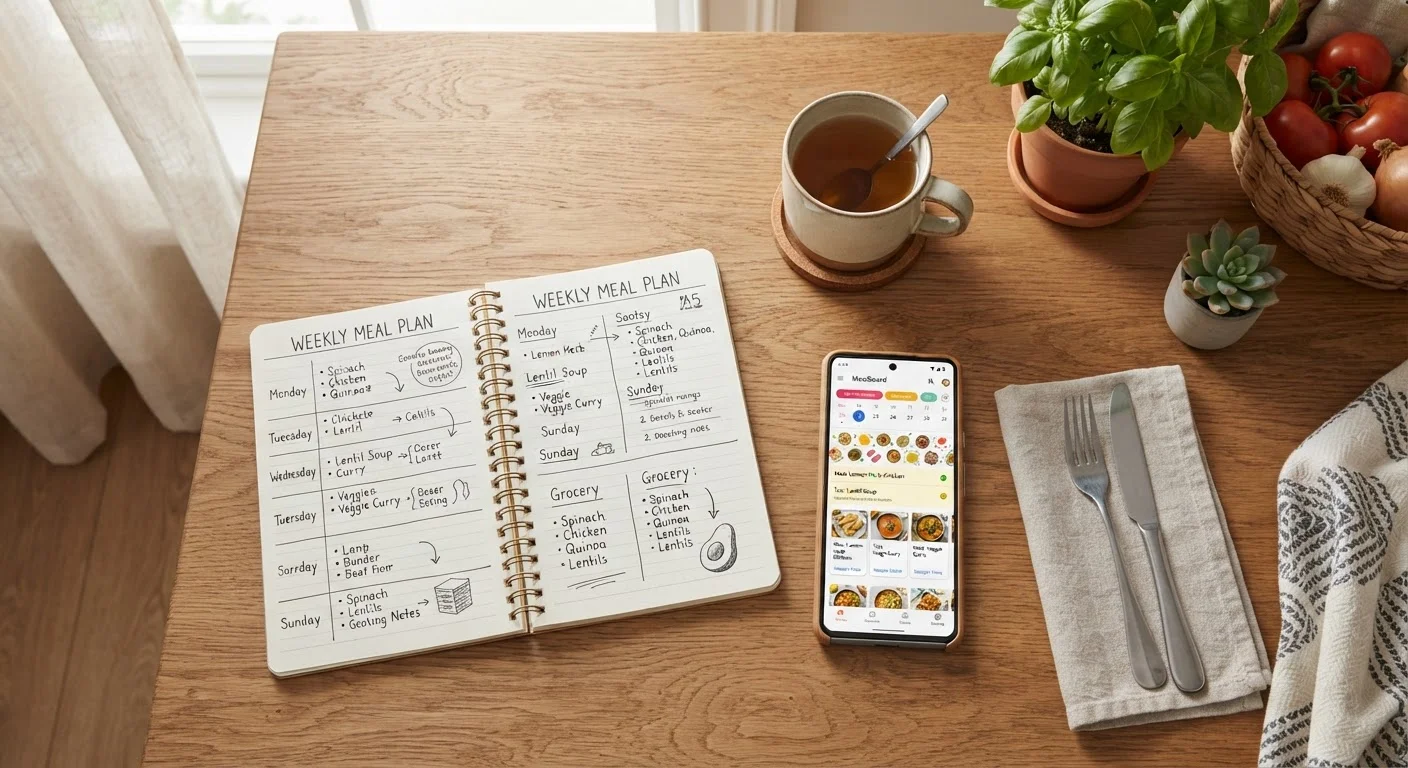
Our Verdict
Paper lists win on simplicity and low friction, making them ideal for people just building a meal planning habit. Apps shine when you're managing complex schedules, multiple eaters, or want to track nutritional patterns over time. Ultimately, the method you actually return to each week is the one that will make a meaningful difference in how you eat.
| Best for | Recommended |
|---|---|
| Those new to meal planning or preferring minimal setup | Paper lists |
| Busy households coordinating multiple schedules or dietary needs | Planning apps |
| People who want nutritional insight alongside their weekly plan | Planning apps |
| Anyone who finds screens distracting or prefers tactile habits | Paper lists |
Why Your Organizing Method Matters More Than You Think
Meal planning is one of the most reliable ways to eat more consistently, reduce food waste, and avoid the 6 p.m. panic of wondering what's for dinner. But the tool you use to plan — a sticky note, a spiral notebook, or a feature-packed app — shapes whether the habit actually sticks.
This isn't about which method is objectively superior. It's about understanding the real trade-offs so you can choose what fits your life. See our practical starting point for weekly meal planning if you're still building the basics before choosing your tools.
| Paper Lists | Planning Apps | |
|---|---|---|
| Setup time | Instant — just write | Moderate — account and learning curve |
| Household sharing | Manual (photos or hand-off) | Real-time sync across devices |
| Grocery list integration | Manual transfer required | Often automatic from meal plan |
| Nutritional data | None built in | Available in many apps |
| Reliability | No battery or internet needed | Requires charged device |
| Flexibility | Instant edits anywhere | Depends on app interface |
| Long-term organization | Can become cluttered or lost | Searchable history and templates |
The Case for Paper Lists
There's a reason people have been jotting grocery lists on envelopes for generations — it works. Paper requires zero setup, no account, no password reset, and no software update at an inconvenient moment. You grab a pen and go.
Research on handwriting and cognition suggests that writing by hand tends to engage deeper processing than typing, which may help you actually remember what you planned to cook. Practically speaking, a paper list stuck to your fridge is always visible — no unlocking a phone, no app switching.
Paper also adapts instantly. Cross something out, add a note in the margin, circle what's urgent. There's no interface to navigate. For people who find digital tools anxiety-inducing or overly complicated, this frictionless quality is genuinely valuable.
The downsides are real, though. Paper lists don't sync with a partner, can't send a grocery reminder, and get soggy in a wet bag. If you meal plan as a household, coordinating paper notes requires physical proximity or photos of photos — which starts to undermine the simplicity advantage.
Start Simple, Then Add Complexity
If you're new to meal planning, begin with a basic paper list for two or three weeks before evaluating any app. Getting the habit established first — before adding a new tool to learn — dramatically increases the chance the routine sticks. Once planning feels natural, you'll have a clearer sense of which app features, if any, would genuinely help you.
The Case for Planning Apps
Dedicated meal planning apps — and even general calendar or notes apps used intentionally — solve several problems that paper can't. They sync across devices and with household members in real time, turn your meal plan directly into a categorized grocery list, and often integrate with recipe libraries so you're not reinventing dinner ideas from scratch each week.
For anyone tracking nutrition patterns, many apps provide macro and micronutrient breakdowns at the recipe or day level. This is useful context for managing specific dietary goals under the guidance of a healthcare provider — something a handwritten list simply can't offer. The anatomy of a balanced weekly meal plan matters here: apps can help surface whether your week is protein-heavy on certain days or light on vegetables.
The friction point is the learning curve. Setting up an app, adding your preferred recipes, and learning its workflow takes real time upfront. Notifications can feel like nagging. And if the app changes its interface or discontinues a feature, your system breaks without warning. Apps also require a charged device — a small but real limitation.
How Real People Actually Use Both
In practice, most consistent meal planners aren't purists. A common pattern: a weekly digital plan for structure, with a paper list on the counter for day-to-day reminders or impulse additions. This hybrid approach captures the organizational depth of apps without losing the at-a-glance simplicity of paper.
Others rotate based on life stage. During a particularly busy stretch — new job, newborn, heavy travel — they simplify to paper because lower friction means the habit survives. When life steadies, they return to apps for more intentional planning. The meal planning on a realistic schedule framework is worth keeping in mind: your tool should serve your actual week, not an idealized version of it.
The consistent finding among people who sustain the habit long-term: they don't let the tool become the project. Whether it's a worn notebook or an app with color-coded categories, what matters is that planning happens reliably — not that it looks impressive. For a fuller picture of making meal planning a lasting system, the complete guide to sustainable home meal planning covers everything from grocery strategy to reducing waste.
The content on this site is for informational purposes only and is not a substitute for professional advice. Always consult a qualified professional for guidance specific to your situation.