

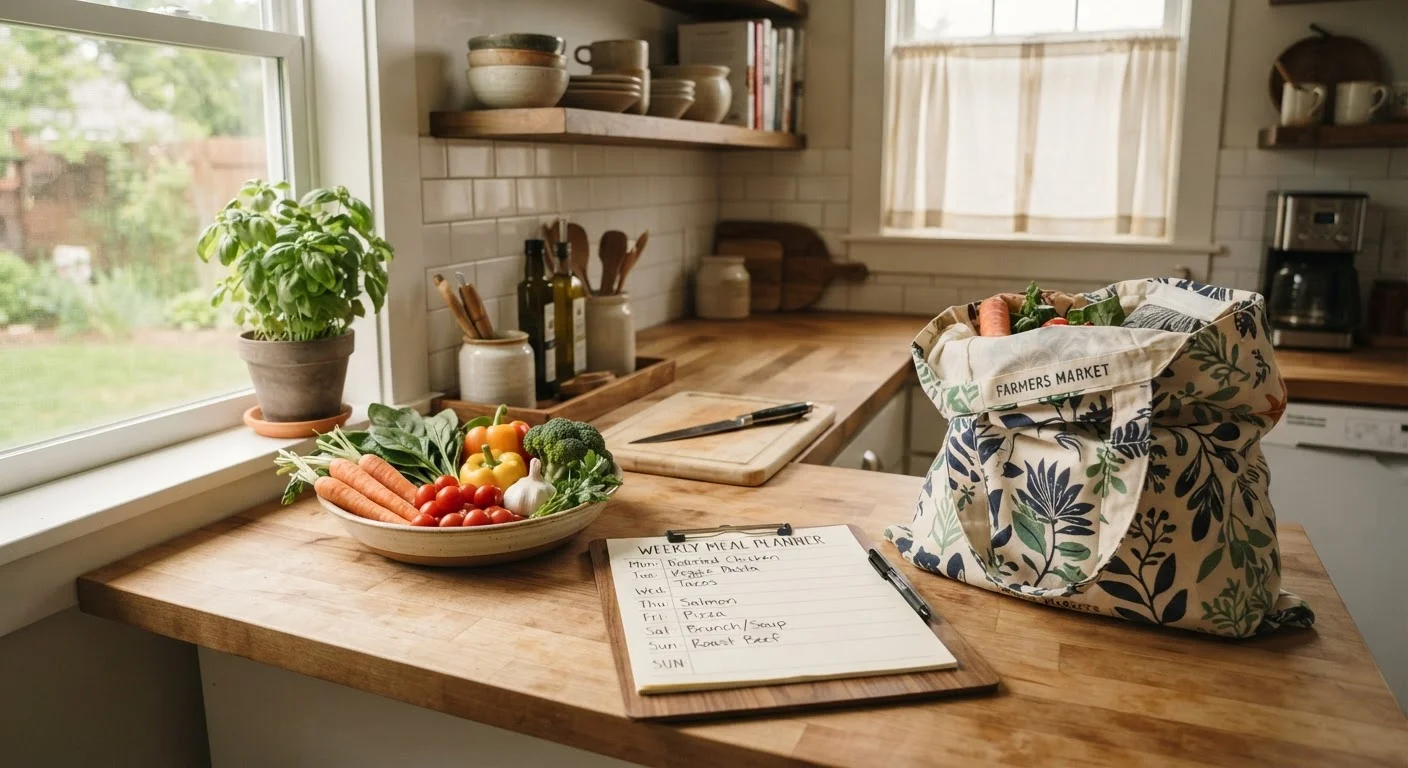
Why Most Meal Plans Fail by Wednesday
Most meal planning advice assumes an idealized week: steady energy, free evenings, and a kitchen you enjoy spending time in. Real life rarely cooperates. According to common patterns in dietary behavior research, the biggest obstacle to consistent home cooking isn't motivation — it's mismatch between plan and reality. When Tuesday's elaborate recipe collides with a late meeting, the plan collapses and takeout fills the gap.
The fix isn't more willpower. It's a more honest planning process. A realistic meal plan is built on your actual schedule, your current skill level, and a grocery budget that doesn't require perfect execution. If you're approaching meal planning for the first time, weekly meal planning from scratch covers the foundational framework before you get into scheduling specifics.
What you will need
Tools That Make the Process Work
You don't need specialized software to plan effectively, but a few basic tools make a significant difference in consistency. A calendar and a pantry list do more practical work than most planning apps. That said, some people find digital tools helpful for tracking recurring meals and building grocery lists automatically. Paper lists vs. planning apps explores what actually keeps people consistent across both approaches.
Weekly calendar or planner
Maps your actual availability each evening so meals match real time constraints.
Pantry and fridge inventory list
Prevents duplicate purchases and reveals what meals you can already make.
Grocery list (paper or app)
Organizes shopping efficiently and reduces impulse purchases.
Meal planning app or notebook
Records your meal schedule so you can refer back and refine it each week.
Step-by-Step: Building Your Realistic Plan
Follow these steps in order. Each one builds directly on the last — skipping the calendar audit and jumping straight to recipes is the most common planning mistake. The full process takes 20–45 minutes once a week and becomes faster as it becomes routine.
Map your actual week before choosing a single recipe
Open your calendar and mark every evening with an honest time estimate. Flag nights with late meetings, kids' activities, or social plans. Label each day as high time (60+ minutes available), medium time (30–45 minutes), or low time (under 20 minutes, or out entirely). This map — not a recipe collection — is your real starting point.
Designate one batch-cooking or prep window
Choose a 60–90 minute block — Sunday afternoon is common, but any consistent window works. During this time you'll pre-cook grains, roast vegetables, or prep proteins that serve multiple meals. This single session does most of the heavy lifting for the week. See batch cooking vs. daily cooking for a full breakdown of both approaches.
Assign meal types — not specific recipes — to each day
Rather than locking in exact dishes Monday through Sunday, assign categories that match your time map: quick protein + vegetable, sheet-pan meal, leftovers, grain bowl, or takeout/easy night. This gives structure without rigidity. If Wednesday's plan falls through, swapping a grain bowl for a pasta takes seconds because the category already fits your available time.
Take a pantry and fridge inventory before writing your grocery list
Check what you already have. Note proteins in the freezer, canned goods, sauces, and fresh produce nearing its end. Build at least two of this week's meals around existing ingredients. This directly reduces food waste and keeps your grocery spend in check. Use our pre-shop checklist to make sure nothing gets missed.
Match recipes to your actual skill level
If you're newer to cooking, choose recipes with five or fewer main ingredients and one or two techniques. Complexity is not a proxy for quality — a well-seasoned simple meal beats an ambitious recipe that creates stress or gets abandoned mid-week. For a deeper look at structuring a nutritionally solid plan, see the anatomy of a balanced weekly meal plan.
Build in intentional flexibility — not just fallback takeout
Plan at least one flex meal per week: a night where dinner is a repurposed fridge cleanout, a simple egg dish, or a planned leftover. This isn't failure — it's a deliberate buffer. When something unexpected hits your week, the flex meal absorbs it without derailing the rest of your plan. For unpredictable schedules, planning meals around a tight schedule covers adaptive frameworks in more detail.
Once your system is working, explore the complete guide to sustainable home meal planning to layer in grocery strategy, food storage, and waste reduction over time.
Adjusting for Budget Variability
Grocery costs fluctuate week to week based on what's in season, what's on sale, and how well your pantry is stocked. A realistic plan accounts for this rather than assuming a fixed per-meal cost. Two strategies consistently help: building meals around versatile staples (dried legumes, eggs, whole grains, frozen vegetables) rather than premium proteins every night, and overlapping ingredients across multiple meals to reduce per-item cost.
It's also worth being honest about the trade-offs involved. Meal planning does save money and reduce waste on average — but it also requires consistent effort and flexibility. The honest trade-offs of meal planning every week gives a balanced view of what you gain and what you give up. If you're cooking for a household with different tastes or dietary needs, meal planning for families with mixed dietary preferences offers targeted strategies for that added layer of complexity.
This article is for general informational and educational purposes only and is not a substitute for advice from a qualified dietitian or healthcare professional.
The content on this site is for informational purposes only and is not a substitute for professional advice. Always consult a qualified professional for guidance specific to your situation.