

Why Mixed Preferences Make Dinner Feel Complicated
Between a picky seven-year-old, a spouse avoiding gluten, and a teenager who recently stopped eating meat, getting everyone to the table happily can feel like a logistics puzzle. You're not alone — this is one of the most common frustrations households face around food.
The good news: the solution isn't cooking four separate dinners. It's rethinking how you structure meals so that one core effort satisfies a range of needs. That shift in approach — from "one dish that must please everyone" to "a flexible framework everyone can work with" — is what makes family meal planning sustainable. See healthy eating basics for the nutritional principles worth building your plan around.
Build Modular Meals Instead of One Fixed Dish
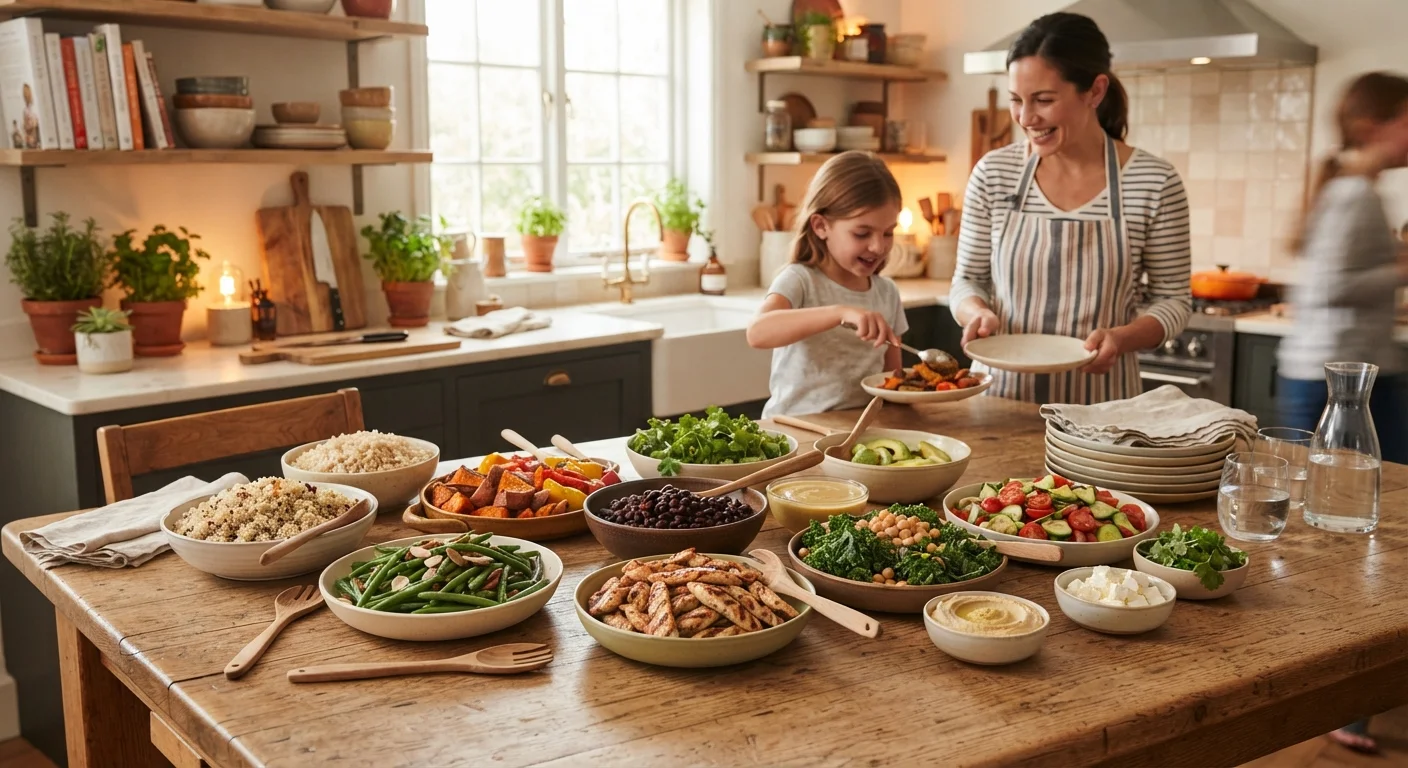
The most effective strategy for mixed-preference households is the modular meal: a set of components served separately that each person assembles to their liking. Think taco night where the tortillas, seasoned meat, black beans, cheese, salsa, and greens all land on the table as individual elements. The meat-eater loads up on protein; the vegetarian skips it and doubles the beans; the kid who hates "stuff mixed together" builds a plain version.
This approach works across dozens of meal types — grain bowls, stir-fries, pasta bars, and sheet-pan dinners with components kept separate before serving. Theme nights and protein swaps are a natural fit here: once your family knows Tuesday is always a grain bowl night, the decision fatigue disappears.
Shop and Prep Around Shared Ingredients
When your grocery list is built around ingredients that cross multiple meals and preferences, costs drop and waste shrinks. Rice, for example, works as a base for a stir-fry, a bowl, or a simple side. Roasted sweet potatoes satisfy both the vegetable-averse child (slightly sweet, soft) and the nutrition-conscious adult.
Each week, identify three or four anchor ingredients — items that serve at least two meals and work for most family members. Then add small, low-cost customizers (a specific sauce, a protein swap) for anyone with stricter needs. For the budget dimension of this approach, stretching a grocery budget without sacrificing nutrition offers practical tactics grounded in everyday grocery realities.
Involve the Whole Family in the Planning Process
Research consistently shows that people — children included — are more willing to eat foods they helped choose or prepare. A simple weekly "meal vote" where each family member nominates one dinner builds ownership and reduces resistance at the table.
Keep a running list of meals that have worked before, organized by who liked what. Over time this becomes a reference that makes weekly planning faster. For households with real time pressure, meal planning on a realistic schedule offers a structured approach that accounts for cooking skill and available time — not just ideal scenarios.
“Feeding a family isn't about achieving a perfect meal — it's about building a reliable rhythm that works most nights, for most people.”
— Ellyn Satter, Registered dietitian and author known for the Division of Responsibility in feeding
Batch cooking on weekends is especially helpful: prepare versatile proteins (grilled chicken, baked tofu, hard-boiled eggs) and grains (quinoa, brown rice) that anyone can use across multiple meals. For a deeper look at that trade-off, see batch cooking vs. daily cooking.
This article is for general informational and educational purposes only and is not a substitute for professional dietary or medical advice. Individuals with specific health conditions or nutritional needs should consult a registered dietitian or qualified healthcare provider.
The content on this site is for informational purposes only and is not a substitute for professional advice. Always consult a qualified professional for guidance specific to your situation.