

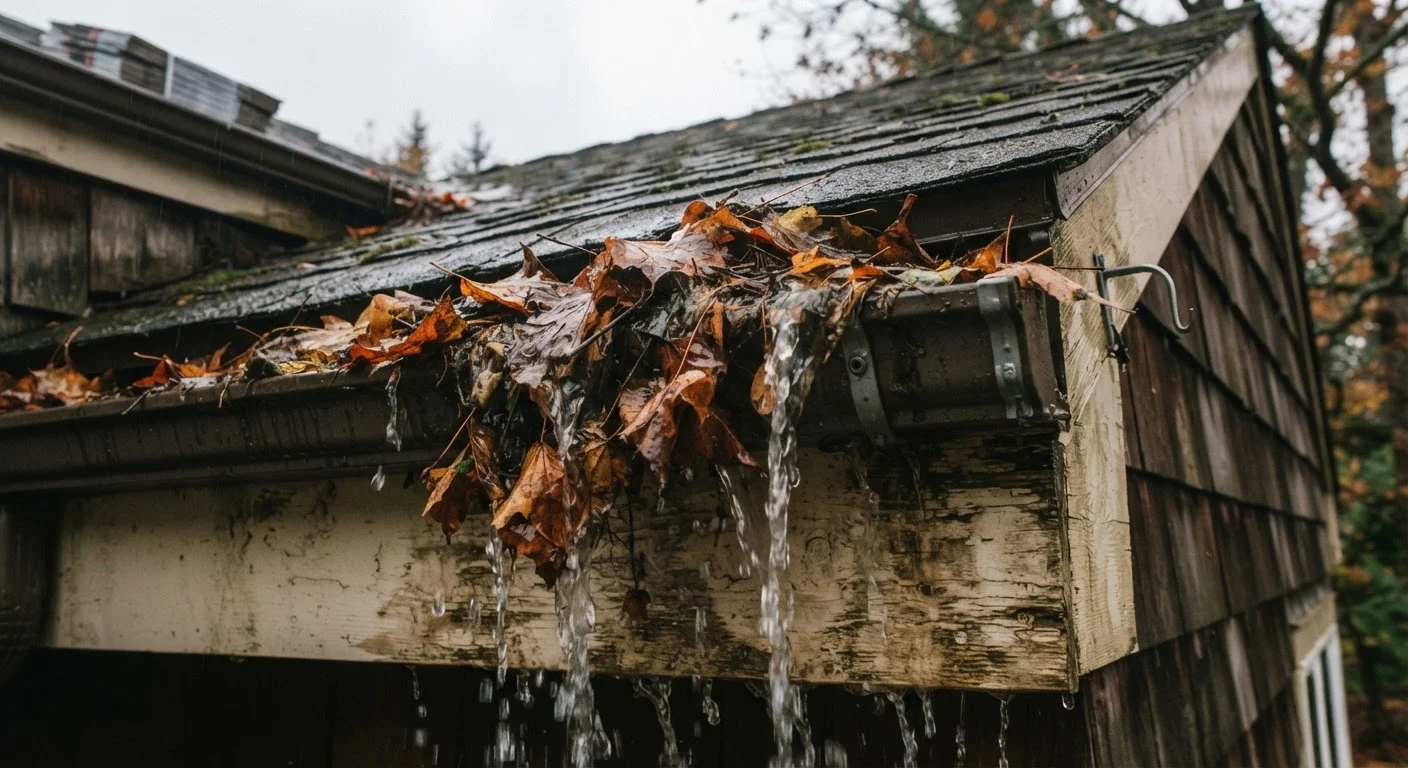
Why Gutters Fail Quietly
Gutters are one of those home systems that earn almost no attention until something goes visibly wrong. Because they're out of eye level and out of mind, cleaning lapses are extremely common — and the consequences rarely announce themselves immediately. Instead, water finds new paths, materials begin to deteriorate, and by the time damage is obvious, repair costs have already escalated.
Understanding the specific chain of problems that follows neglected gutter maintenance helps homeowners recognize why this routine task belongs on a firm schedule. As part of a broader approach to home upkeep, gutters fit into the same logic described in the real costs of deferred home maintenance: small oversights compound into large, avoidable expenses.
Skipping cleaning after heavy leaf fall, leaving gutters packed with wet debris through winter.
Why it happens: Homeowners often assume gutters can wait until spring, underestimating how much damage wet, compacted debris causes over several months.
Cleaning the gutter trough but ignoring the downspouts, leaving blockages in place.
Why it happens: Downspouts are less visible and harder to inspect, so they're easy to overlook when attention is focused on the open gutter channel.
Allowing gutters to sag or pull away from the fascia without reattaching them promptly.
Why it happens: Debris weight gradually pulls gutter spikes or screws loose, but the change is gradual enough that homeowners don't notice until the separation is significant.
Letting water discharge from downspouts too close to the foundation.
Why it happens: Downspout extensions or splash blocks are sometimes removed or never installed, and the gap often goes unnoticed until water damage becomes visible.
Assuming plastic gutter guards eliminate the need for any cleaning or inspection.
Why it happens: Gutter guard marketing often implies these products are maintenance-free, leading homeowners to skip inspections for years at a time.
The Cascade of Damage from Neglected Gutters
Each of the mistakes above contributes to a broader pattern of water mismanagement around your home's exterior. Fascia rot weakens the attachment points for gutters themselves, meaning one problem accelerates another. Foundation moisture intrusion — one of the costlier repairs a homeowner can face — often begins with nothing more dramatic than an overflowing gutter during a rainstorm.
2×/year
Recommended minimum gutter cleaning frequency
Most home maintenance authorities, including extension programs at state universities, recommend cleaning gutters at least twice annually for typical residential properties.
4–6 ft
Minimum downspout discharge distance from foundation
Building professionals generally advise that downspouts should direct water at least four to six feet from the foundation to prevent moisture intrusion and soil erosion.
Landscaping and grading damage are frequently underestimated. When water consistently pours from the same overflow point, it erodes soil and can shift the grade of the ground near the foundation — the opposite of what proper drainage requires. Similarly, interior water damage from inadequate gutter function shares characteristics with the kind of slow infiltration detailed in how failing caulk and grout cause hidden water damage.
For a full picture of which home systems require attention on what schedule — including gutters — a ground-up guide to home maintenance schedules provides a useful reference. And if you're uncertain what to look for from the ground near your roofline before cleaning season, roof inspection tips for homeowners explains what's visible without climbing a ladder.
Never Clean Gutters From a Roof Edge Without Proper Safety Equipment
Working at height on ladders or near roof edges carries real fall risk. Always use a stable, properly rated ladder positioned on level ground, and consider using a ladder stabilizer to protect both yourself and the gutter from ladder contact. If the pitch of your roof or the height of your home makes safe access difficult, hiring a licensed gutter cleaning service is the appropriate choice — not a shortcut.
Cleaning gutters twice a year — typically in late spring after seed pods and early summer growth settle, and again in late fall after trees have shed — prevents nearly all of the problems described here. If your home sits beneath heavy tree canopy, quarterly checks may be warranted. The task is straightforward, but when heights or roof pitch make safe access difficult, hiring a professional is the right call.
This article is for general home maintenance information only. Always follow appropriate ladder safety practices and consult a qualified professional for work involving heights, structural assessment, or significant water damage evaluation.
The content on this site is for informational purposes only and is not a substitute for professional advice. Always consult a qualified professional for guidance specific to your situation.