

Why Organization Has Its Own Language
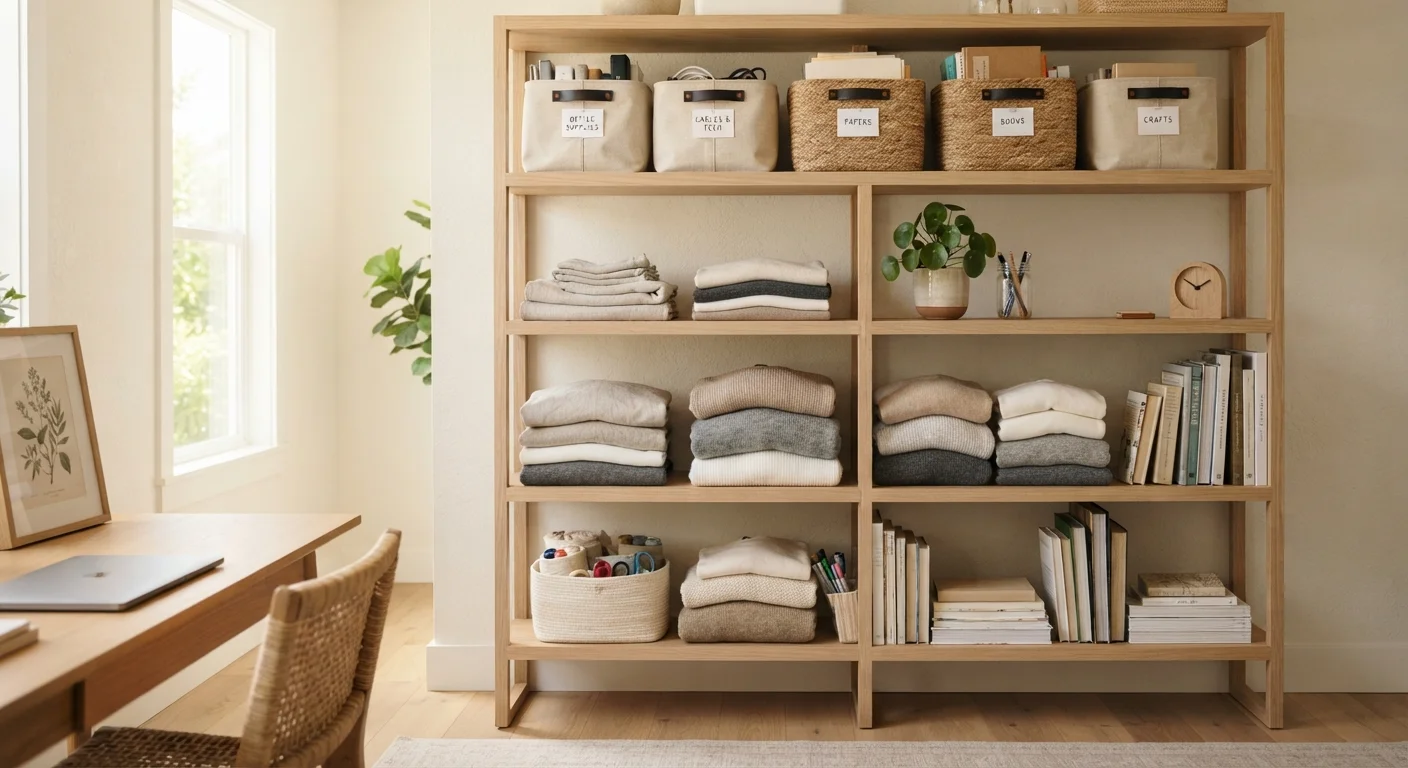
Home organization has developed a vocabulary all its own — phrases borrowed from minimalism, professional organizing, and interior design that can feel opaque if you're new to them. When someone says to "decant" your pantry or build a "drop zone," it sounds more complicated than it is. This glossary cuts through the jargon so you can follow any organizing guide, video, or podcast with confidence.
Whether you're just getting started organizing your home or simply want to understand a term you keep encountering, these definitions are here to serve as a plain-language reference you can return to anytime.
Capsule Closet
A curated, intentionally small wardrobe made up of versatile pieces that work well together. The goal is to reduce decision fatigue and clutter by keeping only what you actually wear.
Decant
To transfer items — most commonly pantry foods or cleaning supplies — from their original packaging into uniform, often clear, containers. This improves visibility and creates a more consistent look on shelves.
Drop Zone
A designated spot near an entryway where everyday items like keys, bags, mail, and shoes land when you come home. A functional drop zone prevents clutter from spreading through the rest of the house.
Editing
The practice of selectively removing items from a space that no longer serve a purpose. Unlike a full declutter, editing is typically lighter and ongoing — reviewing a drawer or shelf without overhauling the whole room.
Declutter
A more thorough clearing process where you go through a space, room, or entire home and remove items you no longer need, use, or want. Often a starting point before setting up a new organizational system.
Zone
A dedicated area within a room designed to support one type of activity or category of items. Zoning places related items together near where they're used — for example, a homework zone with supplies near a desk.
One-In, One-Out Rule
A maintenance habit where every new item brought into the home is balanced by removing one existing item. It's a simple way to prevent gradual accumulation over time.
Command Center
A centralized spot — often in a kitchen or entryway — used to manage household information: calendars, mail, notes, charging cables, and family schedules. It keeps shared logistics visible and in one place.
Decision Fatigue
The mental exhaustion that comes from making too many choices. In an organizing context, a cluttered or disorganized space forces constant small decisions about where to put things, which can be draining over time.
Corral
To gather loose, related items together in a single container or defined space so they're easier to find and less visually chaotic. A basket of remote controls on a coffee table is a common example.
Vertical Space
The wall area above countertops, floors, or furniture that is often underused for storage. Shelving, hooks, and wall-mounted organizers make use of vertical space to free up surfaces below.
Like with Like
An organizing principle that groups similar items together in one location — all batteries in one drawer, all cleaning sprays under one sink. It reduces searching and makes it easy to see when supplies run low.
Concepts Worth Understanding in More Depth
A few terms show up constantly in organizing content but are often misunderstood or used loosely. Here's a closer look at the ones that matter most in practice.
| Most common organizing principle | Like with Like |
| Typical starting point for a full home edit | One room or one category at a time |
| Drop zone location | Near the primary home entrance |
| Capsule closet typical size | 30–50 items, varies by method |
| Primary goal of decanting | Visibility and visual consistency |
Editing and decluttering are often used interchangeably, but there's a useful distinction: editing implies a selective, ongoing process — like reviewing a drawer and removing only what no longer serves you — while decluttering typically refers to a more intensive, one-time clearing effort. Both are valid; knowing which you're doing helps set realistic expectations.
Zones are one of the most practical concepts in home organization. Rather than organizing by object type alone, zoning means grouping items by the activity they support and placing them nearest to where that activity happens. Coffee supplies near the coffee maker, school paperwork near the homework spot. It's intuitive once named.
The idea of a capsule closet gets a lot of attention. If you're curious whether a pared-down wardrobe approach would suit your lifestyle, our article explains the capsule wardrobe concept honestly, including when it doesn't make sense.
Finally, organizing a shared home introduces a layer of complexity that vocabulary alone won't solve — but understanding these terms is a strong foundation. See how to organize when household members have different standards for practical strategies once you're speaking the same language.
Organization Terms Appear Across Topics
You'll find plain-language glossaries useful in other areas of daily life, too. If financial vocabulary feels just as opaque as home organization jargon, the glossary of budgeting terms follows the same plain-language approach. Likewise, if confusing food packaging language is a frustration, the food label terms glossary defines ingredient-list words that stump most shoppers.
The content on this site is for informational purposes only and is not a substitute for professional advice. Always consult a qualified professional for guidance specific to your situation.