

Why Paper Is the Most Stubborn Clutter in Any Home
Paper is uniquely difficult to manage because it arrives constantly, often carrying a sense of urgency, and rarely has an obvious home. A piece of mail lands on the counter because there's nowhere else obvious to put it. A school permission slip gets shuffled aside because you need to read it first. Before long, a small pile becomes a sprawling archive of things that haven't been decided yet.
The root cause isn't laziness — it's the absence of a system. Without a clear process for what to do the moment paper enters your home, every document defaults to the nearest flat surface. If you've ever found yourself sorting the same stack twice, that's a sign your setup needs structure, not more effort. For a broader look at tackling disorganized spaces, see our guide to decluttering a room when you don't know where to start.
The Core System: Sort Once, Decide Fast
The most reliable paper management systems share one principle: make a decision the first time you touch a document. That decision belongs to one of three categories:
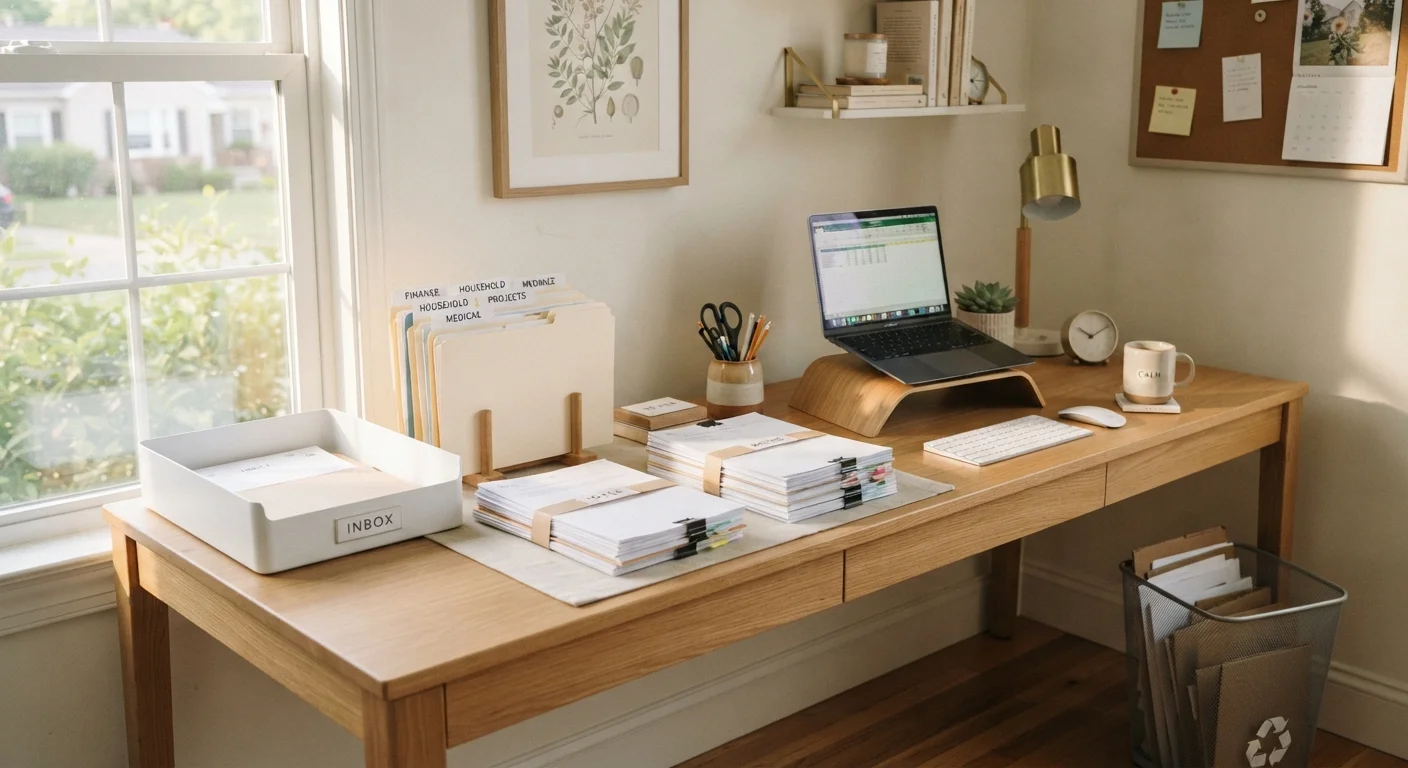
- Act: Something requires a response — signing, paying, RSVPing, or reading carefully. These go into a single, visible inbox tray kept in one consistent location.
- File: The document has long-term value — tax records, insurance policies, medical summaries, vehicle titles. These go directly into a filing folder or binder.
- Recycle or shred: Junk mail, catalogs, duplicates, expired coupons, and anything you've already acted on with no future reference value.
The mistake most households make is creating a fourth invisible category: "I'll deal with it later." That category is where piles are born. Training yourself — and your household — to sort immediately is the single highest-leverage habit change you can make.
Designate one inbox spot and never let paper land anywhere else in the house.
Multiple landing spots fragment your paper flow and make it easy for documents to get lost or forgotten. A single, visible tray creates a predictable home base that makes sorting a habit rather than a search.
Process your inbox tray at least once per week — not just when it overflows.
Reactive sorting means you're always catching up. Scheduled processing keeps the pile manageable and ensures time-sensitive items (bills, permission slips) don't get buried.
Label your file folders with plain language, not categories you have to decode later.
Filing systems fail when folders are too abstract or too granular. Clear, direct labels speed up both filing and retrieval, so the system gets used consistently.
Opt into paperless statements and notifications for every recurring account you can.
Reducing inflow is more effective than organizing accumulation. Every account switched to electronic delivery is one fewer recurring document requiring a physical decision.
Set a twice-yearly date to purge outdated files and shred what no longer needs to be kept.
Even a well-maintained filing system grows stale. Scheduled purges prevent the file drawer from becoming its own form of clutter and reduce the stress of hunting through outdated documents.
What to Keep, What to Shred, and What to Let Go
A common reason paper accumulates is uncertainty about what's safe to discard. Here are general guidelines used by many households, though your specific situation may vary — when in doubt about legal or financial records, consult a relevant professional.
Document Retention Varies by Situation
The guidelines below reflect common general practices, but how long you should keep specific records depends on your personal financial, legal, and medical circumstances. Tax laws, business ownership, real estate, and other factors can affect recommended retention periods. When in doubt — especially for financial and legal records — consult a qualified professional rather than relying on general rules.
- Tax documents: Many financial professionals suggest keeping returns and supporting records for several years; check with a tax professional for your situation.
- Bank and credit card statements: Monthly statements are typically safe to discard once reconciled, especially if you have digital access.
- Pay stubs: Often kept until the corresponding W-2 arrives and is confirmed accurate.
- Medical records: Summaries of major diagnoses or treatments are worth keeping; routine visit paperwork typically is not.
- Warranties and manuals: Keep only for items you still own. Most manuals are also available online.
Shred anything with your name, address, account numbers, or Social Security number before discarding — this is a straightforward identity-protection habit worth building into your routine.
Building a System That Holds Over Time
Even a well-designed filing setup can collapse without a maintenance habit. The goal isn't a perfect system — it's a consistent one. A short weekly pass through your inbox tray (5–10 minutes is often enough) prevents any backlog from quietly rebuilding. Pair it with something you already do, like Sunday evening prep or a weekday morning routine.
Going paperless for recurring documents — opting into e-statements for utilities, banking, and insurance — cuts incoming volume at the source. This is one of the most effective structural changes a household can make. For more habits that create calm over time, explore small habits that quietly transform a cluttered day.
Once your paper system is running smoothly, the same thinking applies to keeping the rest of your home organized. Rules like one-in, one-out extend naturally from paper to physical possessions across every room.
The content on this site is for informational purposes only and is not a substitute for professional advice. Always consult a qualified professional for guidance specific to your situation.