

Why Small-Space Organization Is Different
Organizing a small apartment or compact home isn't simply a scaled-down version of organizing a larger one — it requires a different mindset entirely. In a spacious house, a forgotten corner or an overstuffed closet can go unnoticed for weeks. In a studio or one-bedroom, there are no forgotten corners. Every surface, every shelf, and every square foot pulls double duty.
The challenge is real, but so is the opportunity. When you have less space, organization decisions carry more weight — and more reward. A well-organized 600-square-foot apartment can feel genuinely calm and functional, while a disorganized one of the same size can feel unlivable quickly.
If you're approaching home organization for the first time, our introduction to organizing your home covers the foundational concepts and realistic expectations to help you build from the ground up.
Reframe the Constraint
Instead of approaching a small home as a problem to solve, treat it as a set of clear design parameters. Knowing you have limited floor space pushes you toward more intentional, creative decisions — which often result in a more functional home than a larger, loosely organized one.
Think Vertical: Making Your Walls Work
Floor space in a compact home is finite, but vertical space is almost always underutilized. Most apartments have eight to ten feet of ceiling height, yet the majority of storage clusters in the bottom four feet of a room.
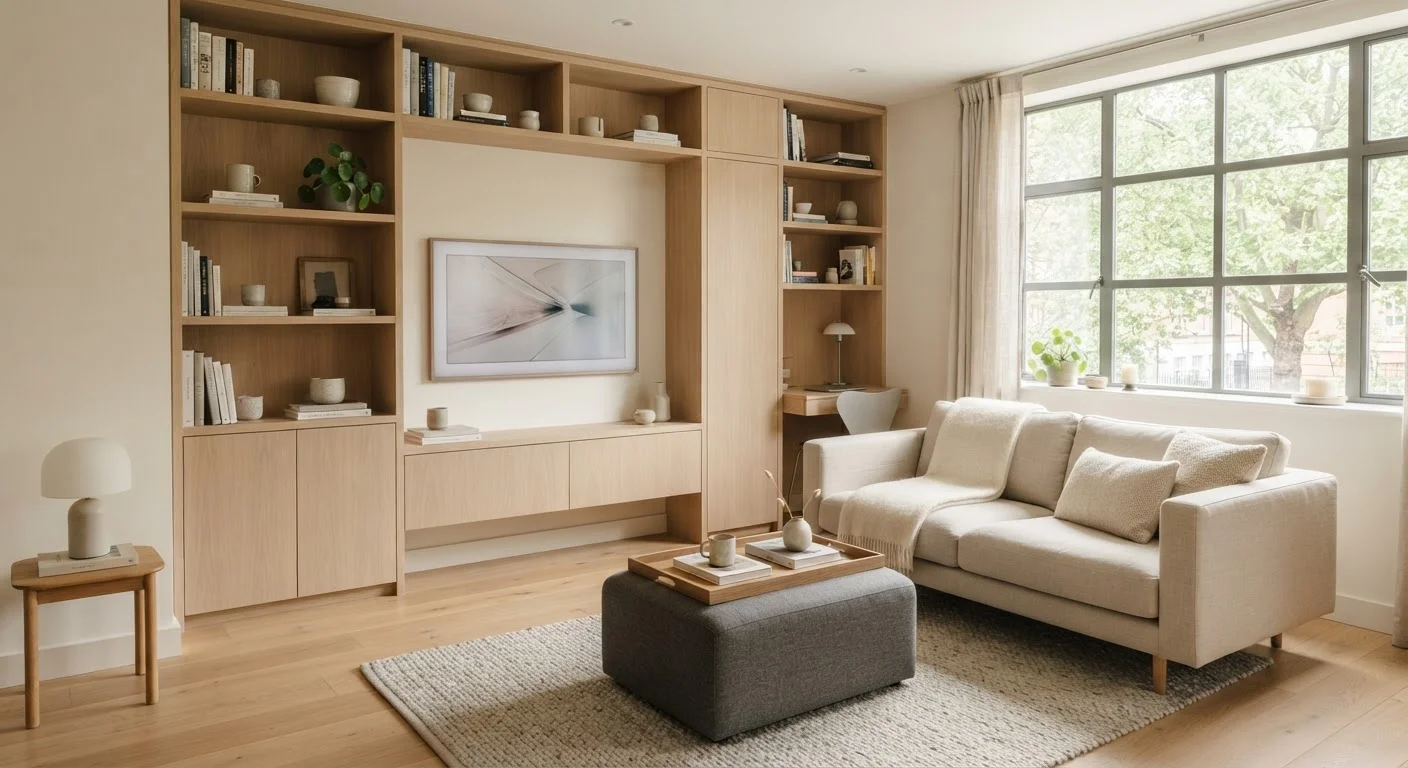
Shelving that runs from mid-wall to ceiling height dramatically increases usable storage without eating into floor area. Open shelving works well in living rooms and kitchens for items you reach for daily; closed cabinets or boxes on higher shelves are better suited for seasonal or infrequently used items.
In the kitchen specifically, a mounted magnetic knife strip, hanging pot rack, or wall-mounted spice shelving can free up entire drawers and cabinet sections. In a bedroom, a tall wardrobe that reaches the ceiling — using the top shelf for off-season items stored in labeled bins — retrieves space that most people simply waste.
When installing any wall shelving or heavy storage, locate wall studs first — even with renter-friendly adhesive solutions, always check the product's stated weight rating before loading the shelf.
Overloaded adhesive hooks and brackets are a leading cause of wall damage and falling storage, which can damage belongings and potentially create safety hazards.
Store items at the frequency you use them: daily-use items at eye level and arm's reach, weekly-use items one step up or down, and rarely-used items in the highest or deepest storage.
Placing frequently needed items in inconvenient spots creates friction that causes people to leave things out rather than put them away, defeating the organizational system.
Multifunctional Furniture and Hidden Storage
Every piece of furniture in a small home should earn its place — ideally by serving more than one purpose. A bed frame with built-in drawers underneath replaces a dresser. An ottoman with interior storage doubles as a coffee table and holds extra blankets. A bench at the entry with a lift-up seat conceals shoes and bags while providing a place to sit when putting them on.
The same logic applies to folding and nesting items: a dining table that collapses when not in use, nesting side tables that tuck away, or a desk that folds flat against the wall. These aren't compromises — they're deliberate design choices that preserve the feeling of open space.
When evaluating whether a furniture piece makes sense for your home, weigh its storage capacity against its footprint. A large sectional sofa with no storage underneath costs more in usable space than it contributes, while a smaller sofa with a storage ottoman achieves both comfort and function.
Zone Your Space to Reduce Daily Chaos
Even in a single room, assigning each activity its own defined zone creates order without requiring walls or dividers. Zoning works by grouping everything related to one activity — sleeping, working, cooking, relaxing — so that items always have a logical home to return to.
In a studio apartment, a bookshelf or open shelving unit can act as a visual divider between a sleeping area and a living area. A rug anchors a seating zone. A small desk in a corner, defined by a pendant light above it, creates a dedicated work area. These cues signal what each part of the room is for, which makes it easier to maintain order.
The zone method is a proven framework for this approach — organizing your home around how you actually live in it, rather than an idealized version of how you think you should.
Editing What You Own: The Real Foundation
No organizational system can overcome having more possessions than your space can reasonably hold. Before investing in shelving, bins, or furniture, the most impactful step is an honest audit of what you own.
Go category by category — clothing, kitchen tools, books, paperwork, hobby items — and ask whether each item earns its space. This isn't about deprivation; it's about proportion. A compact home can hold a full, rich life, but it demands that what stays is genuinely used or genuinely meaningful.
For ongoing maintenance, the one-in, one-out rule is a simple, effective boundary: when something new comes in, something comparable leaves. This prevents the gradual accumulation that undoes even the best organizational setups.
If you're navigating this process with roommates or family members, differing standards around clutter are common. The article on organizing shared spaces with different habits offers practical guidance for finding common ground.
~38%
Americans living in apartments or rentals
According to U.S. Census Bureau data, roughly 38% of occupied housing units in the United States are renter-occupied, a large share of which are apartments and smaller homes.
5 min
Daily reset time to maintain order
Home organization experts commonly recommend a five-minute end-of-day tidy as the minimum effective habit for keeping small spaces from accumulating clutter between deeper cleans.
Renter-Friendly Strategies That Protect Your Deposit
Renters face a specific constraint: most landlords prohibit drilling into walls or making permanent modifications. This rules out fixed shelving brackets and built-in cabinetry — but it doesn't rule out effective organization.
Adhesive wall hooks rated for meaningful weight have improved considerably and work well for hanging bags, coats, lightweight shelving, and kitchen items. Freestanding shelf units, bookcases, and modular storage towers require no wall attachment and can be taken when you move. Over-door organizers — for pantry doors, bathroom doors, and bedroom closets — use existing infrastructure without damaging anything.
Tension rods are another underrated tool: installed inside a cabinet, they create vertical dividers for baking sheets and cutting boards; inside a shower, they hold caddies without drilling. For a comprehensive look at deposit-safe solutions, see our guide to organization for renters.
Maintaining Order in a Compact Home
Organization isn't a one-time project — it's a set of daily habits that keep a small space from sliding back into chaos. In a compact home, a five-minute reset at the end of each day makes a meaningful difference: return items to their zones, clear surfaces, and deal with anything that has landed out of place.
Weekly, take a few minutes to check that high-use areas — the kitchen counter, the entry, the bathroom — haven't accumulated things that don't belong there. Seasonal check-ins (roughly every three months) are a good opportunity to reassess whether your current storage setup still matches how you're actually living.
Building these habits into your daily routines is what separates a home that stays organized from one that only gets organized during a big weekend push. Small, consistent actions are more sustainable than periodic overhauls — and in a compact space, they're more necessary too.
The content on this site is for informational purposes only and is not a substitute for professional advice. Always consult a qualified professional for guidance specific to your situation.