

Why the Drawer Is a Symptom, Not the Cause
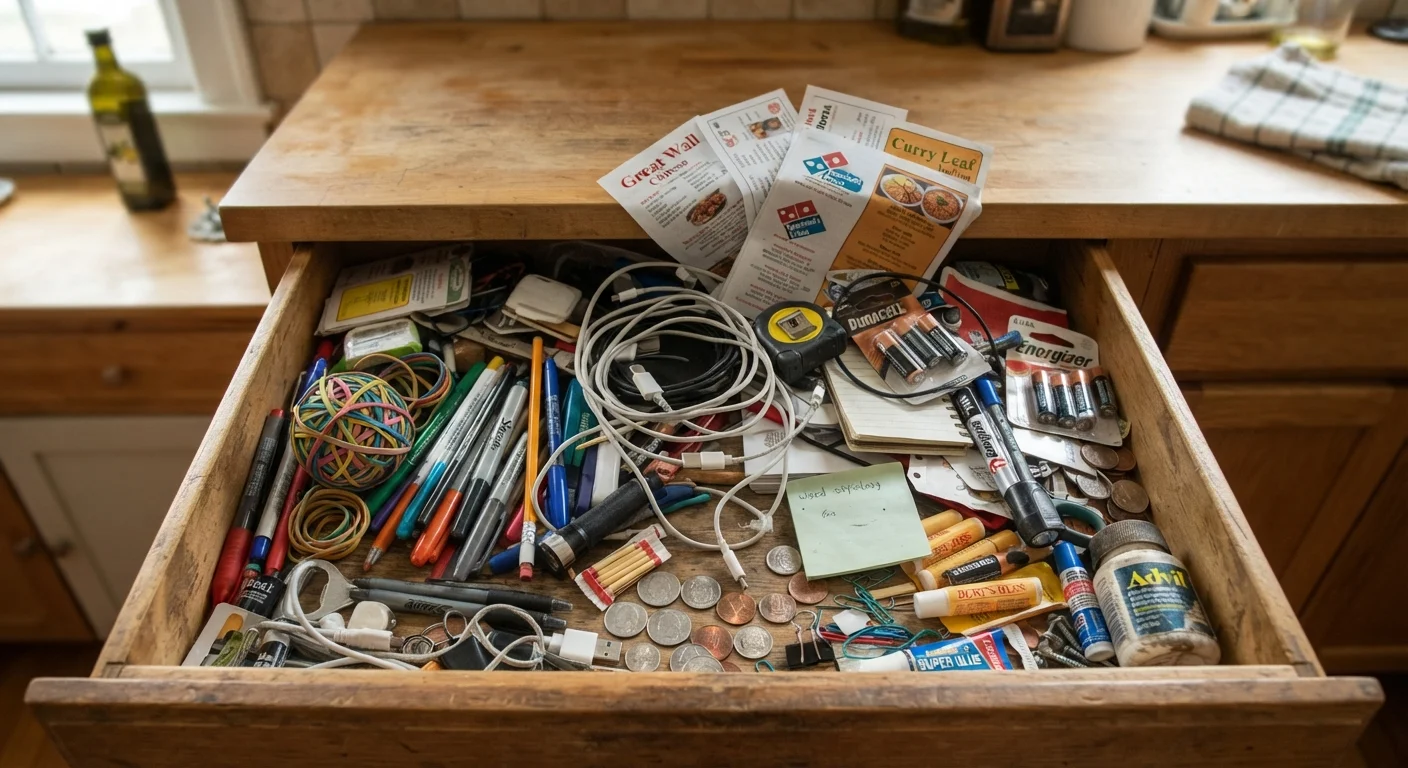
Nearly every American home has one: the catch-all kitchen drawer stuffed with batteries, twist ties, expired coupons, and mystery keys. The instinct is to clean it out and call it done. But if it fills right back up within weeks, the problem isn't the drawer — it's what the drawer is being asked to do.
A junk drawer typically exists because items that arrive in the home don't have a designated place. Without a clear destination, they land in the nearest available container. Fix only the drawer and you're treating the symptom. Fix the system and the drawer stops overflowing in the first place.
The mistakes below are the most common reasons home storage systems break down — and what to do about each one. If you're also dealing with disorganization in other rooms, our room-by-room decluttering guide offers a practical starting point.
Treating the junk drawer as a permanent storage zone rather than a temporary holding area.
Why it happens: Most people designate a junk drawer at move-in and never revisit the decision. Over time it absorbs everything without a clear purpose, and emptying it feels low-priority.
Organizing without first editing — buying containers before deciding what to keep.
Why it happens: The appeal of a fresh set of matching bins is real, but fitting clutter neatly into containers just makes clutter harder to see. It feels productive without actually reducing the volume of stuff.
Storing items based on where they fit rather than where they're used.
Why it happens: When kitchen space is limited, it's tempting to stash things wherever there's room. This creates invisible friction — items are inconvenient to retrieve, so they get left out instead.
Failing to establish a home for incoming paper and mail.
Why it happens: Paper is the fastest-growing category of kitchen clutter. Without a designated landing zone, mail spreads across counters and gets shuffled into drawers unread.
Skipping the 'homeless items' category when organizing.
Why it happens: Most organizing guides focus on what to keep and where to put it, but don't account for the items that genuinely don't belong anywhere — yet keep appearing. These become permanent junk drawer residents.
Building a System That Actually Holds
Correcting individual habits matters, but real stability comes from a coherent system — one your whole household can follow without much thought. The goal isn't a magazine-perfect kitchen; it's a kitchen where things have a logical home and returning them there takes only seconds.
23 min
Average time lost daily searching for misplaced items
Research cited by the National Association of Professional Organizers has suggested Americans lose roughly 23 minutes per day to disorganization-related searching.
80%
Of clutter is caused by disorganization, not lack of space
Professional organizers commonly estimate that the majority of household clutter results from the absence of a system rather than insufficient storage square footage.
Start by identifying the three or four categories of items that end up in your junk drawer most often. Batteries and chargers are common, as are pens, rubber bands, and small tools. Each category deserves its own dedicated spot — not necessarily a labeled bin, but a consistent location. When everyone in the household knows where pens live, pens stop migrating.
Maintenance matters too. A quick weekly reset — five minutes maximum — prevents any single zone from becoming a dumping ground again. Pairing this reset with an existing routine (Sunday night after dinner, for example) makes it stick. For longer-term strategies that prevent clutter from creeping back, simple household rules like one-in, one-out can reinforce the system you've built.
If others share your kitchen, organizing norms are worth a brief conversation rather than a unilateral reorganization. Organizing a home when everyone has different standards explores how to find common ground without friction.
Avoid Over-Organizing in One Burst
Reorganizing an entire kitchen in a single afternoon often leads to a system built around your energy that day — not your actual daily habits. Overly complex systems tend to collapse within weeks. Start with one zone, live with it for a few days, then expand. Small, durable changes outlast ambitious overhauls every time.
The content on this site is for informational purposes only and is not a substitute for professional advice. Always consult a qualified professional for guidance specific to your situation.