

Why Skipping Checked Bags Is Worth the Upfront Effort
Checked bag fees have quietly become one of the most predictable travel expenses — often $30 to $40 each way on domestic flights, and more on international routes. Over a year of even moderate travel, that adds up fast. Going carry-on only cuts that cost entirely while handing you something equally valuable: time. No waiting at baggage claim. No risk of an airline losing your luggage mid-trip.
The tradeoff is real, though. You have to pack deliberately, not just lightly. Shoving less stuff into the same bag doesn't work. What does work is building a system — and that's exactly what this guide walks you through.
If you're new to budget-conscious travel, the grounded starting point for first-time budget travelers is a great companion read for the bigger picture. For international trips specifically, packing light for international travel covers destination-specific nuances this guide doesn't address.
What you will need
How to Actually Do It: Step by Step
Carry-on only travel isn't about deprivation — it's about intentional choices. Work through these steps before your next departure and you'll be amazed how little you actually miss.
Start With a Destination-Specific Packing List
Generic packing lists lead to overpacking. Instead, write down every activity you'll realistically do — flights, dinners, hiking, beach days — and assign one outfit per activity type, not per day. A dinner outfit can repeat. Hiking clothes can be worn twice before washing. This mental shift alone typically cuts your clothing volume by a third.
Build a Capsule Wardrobe Around Neutrals
Choose three to four base colors that mix and match — think navy, white, olive, and gray. Every item you pack should work with at least two others. A good carry-on wardrobe for a week-long trip typically includes: 2 bottoms, 4–5 tops, 1 versatile layer (light jacket or cardigan), 1 pair of comfortable walking shoes, and 1 pair of sandals or dress shoes worn on the plane. Shoes take up the most space and weight, so limit yourself to two pairs maximum.
This approach also aligns well with the personal style principles that translate a flexible wardrobe from everyday life to the road.
Tackle Toiletries With the 3-1-1 Rule in Mind
TSA requires that all liquids, gels, and aerosols in carry-on bags be in containers of 3.4 oz (100ml) or less, all placed in one quart-sized clear zip-top bag. This is where most first-timers struggle. Switch to solid versions of your everyday products — shampoo bars, solid conditioner, and solid sunscreen exist for most major brands. Transfer liquid products you can't replace into small reusable silicone containers.
Use Packing Cubes to Organize and Compress
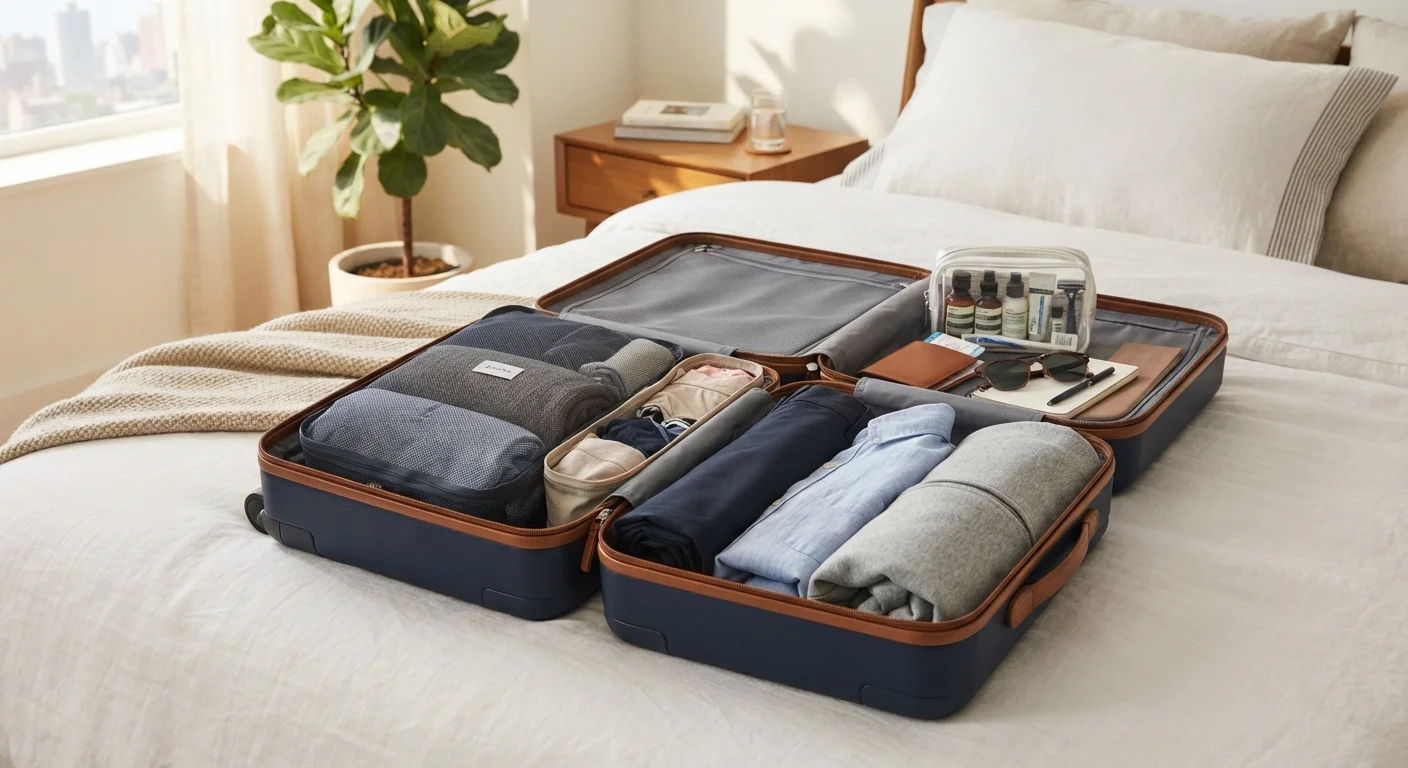
Packing cubes don't create extra space by magic, but they do prevent the dead air pockets that unstructured packing wastes. Roll clothes before placing them in cubes — rolling generally outperforms folding for soft items. Use compression cubes (which have a second zip to squeeze out air) for bulkier items like a light fleece. Organize cubes by category: one for tops, one for bottoms, one for undergarments and socks. This also makes repacking mid-trip fast and stress-free.
Do a Pre-Trip Weight and Size Check
Once packed, lift the bag and carry it around your home for two minutes. If it feels burdensome now, it'll feel brutal after a full travel day. A portable luggage scale (available at most general merchandise stores) helps you verify weight if your airline imposes carry-on weight limits — some international carriers do. Also physically measure your bag against the airline's published dimensions before heading to the airport.
Food Costs Are Another Quick Win
Once you've mastered packing light, food is the next budget lever worth pulling on the road. Carry-on only travel pairs naturally with staying mobile and flexible — and so does eating affordably. The guide to eating well on the road without draining your travel fund has practical, destination-agnostic strategies worth bookmarking.
The Details That Make or Break It
Even experienced light packers get tripped up by a few recurring issues. First: airline size rules. The FAA doesn't set a universal carry-on size, so what fits on one carrier's overhead bin may get gate-checked on another. A bag measuring 22 x 14 x 9 inches generally passes on most major U.S. carriers, but always verify before you fly — especially on budget airlines, which can be stricter.
Second: laundry access. For trips beyond five days, the math only works if you plan to wash clothes at least once. Most hotels will wash a small load for a fee, and many destinations have self-service laundromats. Packing a small bar of travel soap lets you hand-wash essentials in a sink overnight.
Third: souvenirs. A carry-on with no room for the return trip is a common mistake. Either ship items home, buy a flat-rate mailer at a local post office, or pack a lightweight foldable tote that can serve as a second personal item for the flight home.
For a broader look at keeping your whole travel budget on track — not just luggage fees — see the end-to-end budget travel planning framework. And don't overlook pre-trip financial prep: the pre-trip financial checklist covers ATM fees, travel notifications, and other logistics that quietly affect your bottom line.
Gate-Check Fees Can Erase Your Savings
If your bag doesn't fit in the overhead bin — whether because the compartments are full or your bag is oversized — airlines may charge a gate-check fee that rivals a standard checked bag fee. Board as early as your ticket allows to secure overhead space, and keep your bag dimensions within limits to avoid being flagged by gate agents.
The content on this site is for informational purposes only and is not a substitute for professional advice. Always consult a qualified professional for guidance specific to your situation.