

Why Food Is the Budget Line That Surprises Travelers Most
Flights and hotels get all the planning attention, but food spending quietly becomes one of the biggest variables on any trip. Unlike accommodation, meals happen three times a day — every day — and each one is a small decision that compounds quickly.
Food Costs Add Up Faster Than You Think
Industry travel surveys consistently show that dining is one of the top three trip expenses for American travelers, often rivaling accommodation costs. Even modest daily overspending — say, an extra $20 per person — adds up to $140 over a week-long trip before you've noticed. Tracking food spending for even just the first two days of a trip helps calibrate the rest.
The good news: food is also one of the most controllable travel expenses. Unlike a flight you've already booked, every meal is a fresh choice. Whether you're on a US road trip or navigating a new city abroad, the habits that keep food costs in check are learnable and don't require giving up anything that makes travel worth doing.
This guide is part of a broader budget travel planning framework — but food deserves its own focused treatment because the strategies are specific and immediately actionable.
Proven Practices for Eating Well Without Overspending
These approaches work whether you're road-tripping through the Southwest, exploring a coastal city, or landing in an unfamiliar international destination. Apply as many as fit your travel style — even two or three will make a measurable difference.
Stock up at a grocery store or local market within the first few hours of arriving.
Having breakfast foods, snacks, and drinks on hand eliminates the priciest and least satisfying meal decisions — the grab-and-go ones made when you're already hungry. Supermarkets in most U.S. cities and many international destinations offer ready-made options that cost a fraction of café prices.
Eat your largest meal at lunch instead of dinner.
Many sit-down restaurants — including well-regarded local spots — offer lunch menus priced 20–40% lower than their dinner equivalents for the same kitchen and quality. Shifting your splurge meal to midday stretches the budget while still delivering a real dining experience.
Walk two or three blocks away from major tourist corridors before choosing a restaurant.
Eateries on busy tourist streets pay premium rents and price accordingly. Neighborhood spots a short walk away serve the same local food to locals — at local prices. This also tends to result in more authentic, memorable meals.
Pack a reusable insulated bag or small cooler for road trips.
Highway rest stops and roadside convenience stores mark up basic food items dramatically. A small cooler stocked with sandwiches, cut vegetables, cheese, and cold drinks eliminates the need for several stops and keeps the route on schedule.
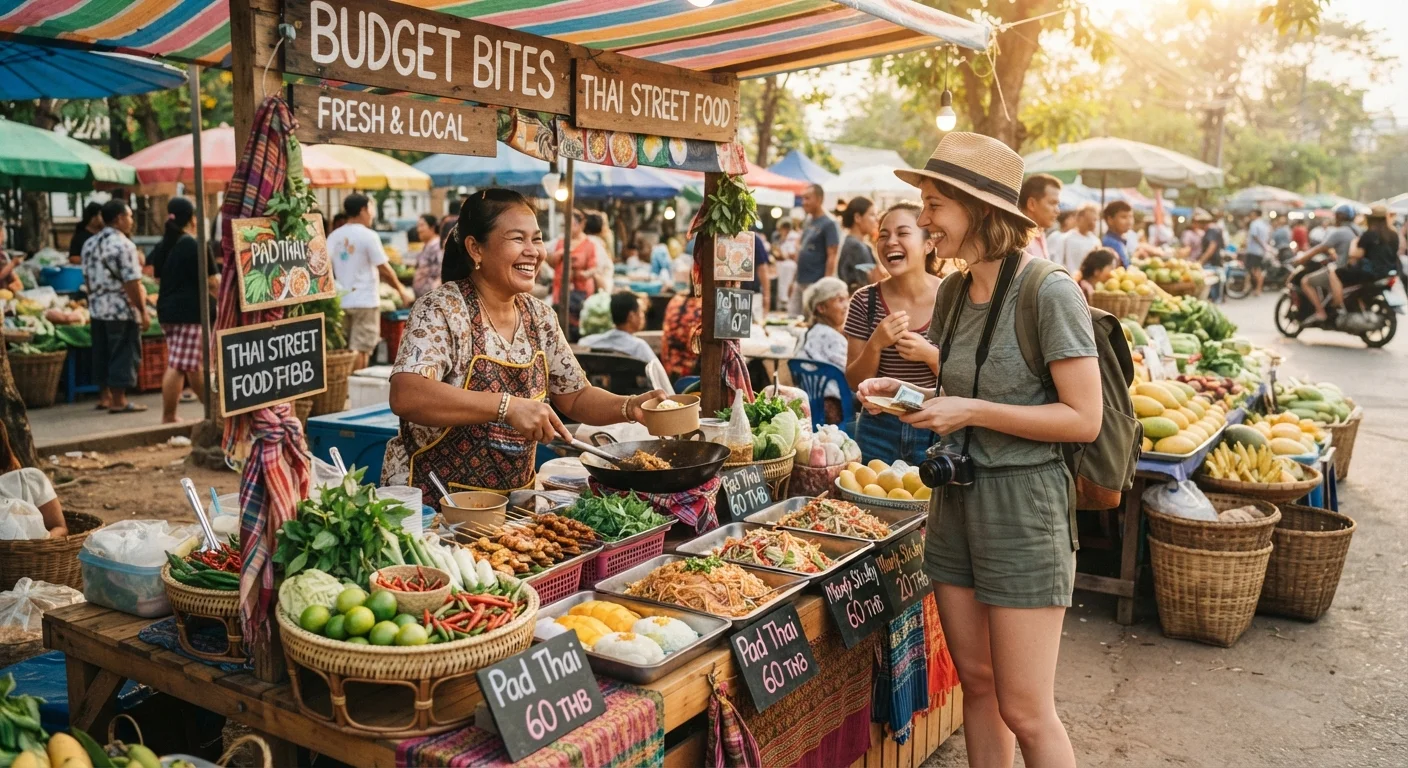
Use food halls, covered markets, and food trucks as your default for dinners in cities.
Urban food halls and street markets offer restaurant-quality food in a casual, lower-overhead environment. Prices are typically lower than full-service restaurants, and the variety means groups or families with different tastes can all find something satisfying.
Set a realistic daily food budget before departure and log spending as you go.
Without a baseline number, it's easy to rationalize overspending meal by meal. A pre-set daily amount — even a rough one — creates a simple mental guardrail and prevents the cumulative drift that derails travel budgets.
Many of these habits mirror strategies covered in meal planning at home — the core logic of buying smarter and eating intentionally travels well.
Quick Actions You Can Take Right Now
Before you even leave home, there are small moves that will pay off the moment you arrive. These aren't elaborate systems — just practical habits that cut the reflexive overspending that hits hardest when you're tired, hungry, and somewhere unfamiliar.
“Travelers who eat where locals eat don't just save money — they have better stories to tell. The best meal of a trip is rarely the one in the guidebook.”
— Pauline Frommer, Travel writer and editor, Frommer's Travel Guides
If you're newer to budget travel and want a broader foundation, this grounded starting point for first-time budget travelers covers planning and logistics alongside food decisions. And for road trips specifically, your food strategy connects directly to choices like whether you're camping or staying in motels — each accommodation type opens different meal-prep options.
Bringing It All Together
Eating well on the road isn't about deprivation — it's about intention. Travelers who spend the most on food aren't necessarily eating the best meals; they're often eating the most convenient ones. Shifting even a few of those convenience decisions toward something slightly more planned pays off in both dollars and satisfaction.
The same principles that help stretch a food budget at home — buying basics, cooking simply, avoiding markup on convenience — apply on the road with minor adjustments for context. For a deeper look at those underlying strategies, this evidence-based guide to eating well on a budget offers useful grounding.
Every trip involves trade-offs. Choosing where to spend and where to save on food is one of the most rewarding ones to get right — because the savings fund the experiences that actually define the adventure.
The content on this site is for informational purposes only and is not a substitute for professional advice. Always consult a qualified professional for guidance specific to your situation.