

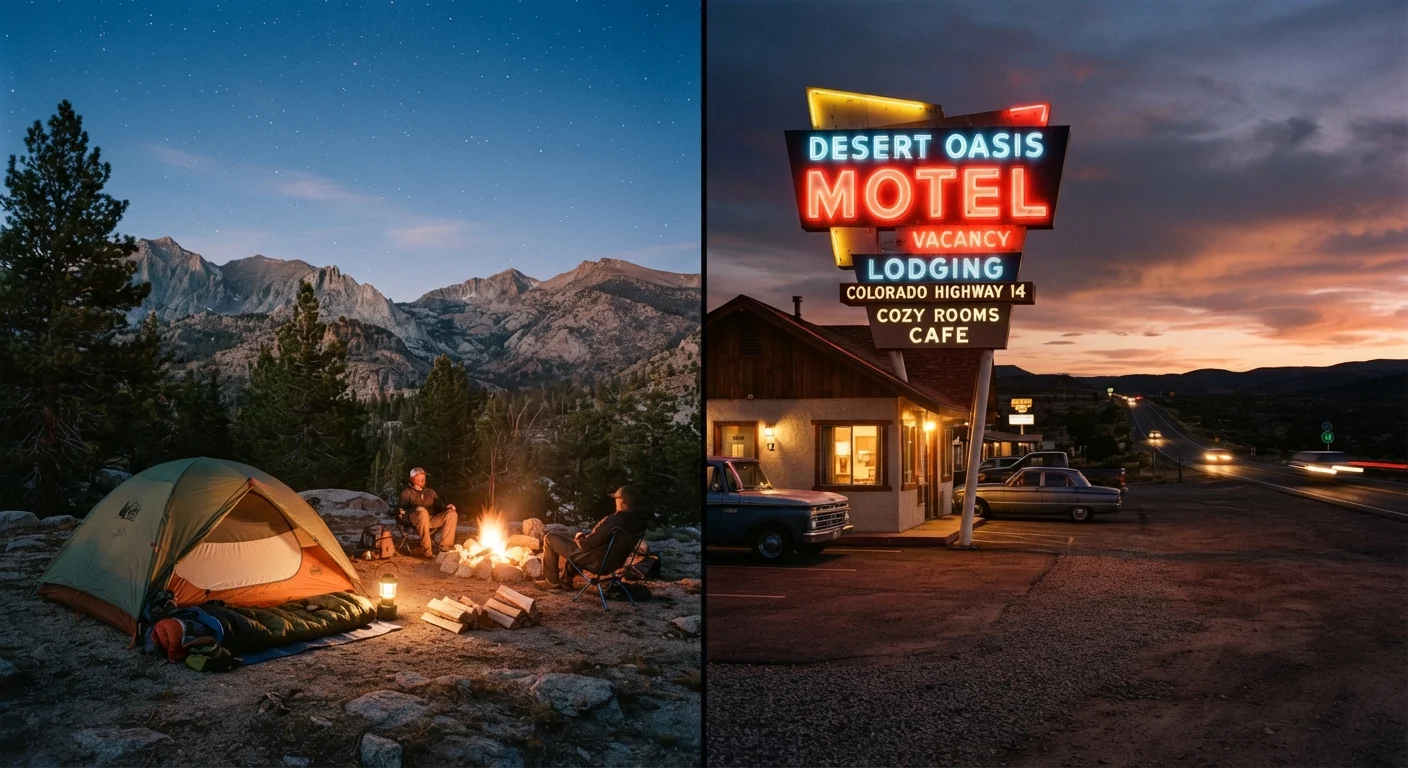
Our Verdict
Neither camping nor motel stays is universally better — the right call depends on your route, budget, travel style, and how much gear you're willing to haul. Camping rewards adventurous, self-sufficient travelers with immersive experiences and lower nightly costs, while motels deliver reliable rest, privacy, and zero setup time. Many road trippers find the smartest approach is mixing both, using campsites where scenery calls for it and motels when a hot shower and firm mattress are genuinely needed.
Camping suits nature-loving, budget-focused road trippers willing to plan ahead, while motels are the better fit for comfort-seekers, families with young children, or anyone driving high-mileage days who needs predictable rest.
How Your Lodging Choice Actually Shapes the Trip
Where you sleep on a road trip does more than shelter you for the night — it sets the pace, defines the budget, and colors every memory you bring home. Choose camping and your evenings expand into stargazing, campfire cooking, and genuine quiet. Choose motels and you trade that wilderness immersion for a hot shower, a TV remote, and the ability to check in at 10 p.m. without pitching a tent in the dark.
The good news: you don't have to commit to one or the other for the whole journey. Most experienced road trippers use both, matching accommodation to the landscape and the day's energy level. Understanding the real trade-offs upfront is what allows you to make that call confidently rather than reactively. For a broader look at how these options stack up against other budget-friendly accommodation types, see our guide on understanding your lodging options.
The Case for Camping: Immersion, Savings, and Flexibility
Camping is often the default romance of American road tripping — pulling into a site at a national forest, waking to birdsong, and sipping coffee while the rest of the world is still booting up. Beyond the atmosphere, the financial case is real: established campsite fees commonly run between $10 and $35 a night, significantly less than a mid-range motel in the same region.
Significantly lower nightly costs in most regions
Established campsite fees typically range from $10–$35 per night, and free dispersed camping on BLM land is widely available in the West, making multi-week trips far more affordable.
Deeper immersion in landscapes and nature
Sleeping under the stars in a national forest or waking at a canyon rim creates experiences a motel room simply can't replicate, which is often the point of a road trip in the first place.
More flexibility on remote or rural routes
In stretches where motels are sparse or overpriced, camping fills the gap — especially when you're traveling through public lands where designated sites are plentiful.
Encourages a slower, more engaged travel pace
Setting up camp naturally anchors you to a location for longer, prompting hikes, conversations with fellow campers, and a richer sense of place than a one-night motel stop allows.
The catch is that camping front-loads your costs. Tents, sleeping bags, cooking gear, and a reliable cooler represent a meaningful outlay if you don't already own them. There's also the planning reality: popular spots in national parks like Yellowstone, Zion, or the Great Smoky Mountains routinely sell out months ahead, especially in summer. If spontaneity is part of your road trip identity, dispersed camping on Bureau of Land Management (BLM) land — which is free in many areas — can be a pressure-free alternative, though it requires more navigation and self-sufficiency.
For solo drivers especially, camping adds a layer of logistical consideration worth thinking through before you go. Our article on solo road tripping across America covers lodging choices and safety habits that apply directly here.
The Case for Motels: Convenience, Comfort, and Reliable Rest
There's a reason the American roadside motel became iconic: it solves the most immediate problem a tired driver has. Pull in, pay, sleep, leave. No setup, no teardown, no wondering whether last night's rain soaked your sleeping bag.
High upfront gear costs for new campers
A quality tent, sleeping bags rated for the temperatures you'll encounter, a sleeping pad, and cooking equipment can easily total several hundred dollars before the trip begins.
Popular sites require advance reservations
Campgrounds in heavily visited national parks often book out months ahead, limiting spontaneity and requiring careful planning that motel stays generally don't demand.
Setup and teardown adds time each day
Packing a tent, organizing cooking gear, and finding or creating a proper site adds 30–60 minutes to both ends of your day — time that compounds across a long trip.
Weather and comfort are unpredictable
Rain, insects, heat, and cold can significantly affect sleep quality and morale, and there's no reliable fix in the field the way an air-conditioned motel room offers.
Motel costs vary considerably by region and season. Rural stretches of the Southwest or Midwest often offer rooms under $80 a night, while coastal routes or popular tourist corridors can push rates well past $150 — sometimes higher in peak season. That variability makes budgeting trickier. What motels reliably offer, though, is predictability: a locked door, a real bed, climate control, and a bathroom with running hot water. For drivers logging 400-plus miles a day, that recovery quality matters more than it might seem on paper.
$10–$35
Typical nightly campsite fee range
National Park Service and U.S. Forest Service campground fees vary by site type and amenities; many dispersed BLM sites charge nothing at all.
~$100+
Average US motel nightly rate
According to travel industry data, average US lodging rates vary widely by region and season, with budget motels in rural areas often running below $80 and coastal or peak-season properties considerably higher.
One underrated motel advantage is food flexibility. Kitchenette rooms allow you to store groceries and prepare simple meals, which can meaningfully cut overall trip costs. Our companion piece on eating well on the road explores exactly how to manage food costs across different accommodation types.
Making the Hybrid Approach Work
The most practical road trip strategy for most Americans is a deliberate mix. Camp where the landscape rewards it — near a trailhead, on a coastal bluff, deep in a forest — and use motels on high-mileage days, in urban areas where camping isn't accessible, or whenever genuine rest is the priority over experience.
Mixing It Up Requires a Loose Plan
If you're blending camping and motel nights, try to map your campsite stops at least a few weeks in advance — especially for national park campgrounds that use the Recreation.gov reservation system. Leave motel nights more open, since last-minute motel availability is generally much easier to find, even in busy seasons. Apps that aggregate campsite availability can help you spot open spots along your route without over-committing your itinerary.
Planning your route with both options in mind requires a little more up-front thinking, but it's not complicated. Map your overnight stops early, identify which nights have a campsite worth the effort, and keep a short list of backup motels for nights when plans shift. Weather, fatigue, and changing road conditions are real variables — and one of the most persistent road trip myths is that a rigid plan equals a better trip. Building flexibility into your lodging strategy is itself a form of smart preparation.
Keeping overall trip costs in perspective also helps. Lodging is just one line in the budget. Compare it against your fuel, food, and activity spending to see where the hybrid approach genuinely saves money versus where the convenience of a motel is worth every dollar.
The content on this site is for informational purposes only and is not a substitute for professional advice. Always consult a qualified professional for guidance specific to your situation.