

Why Solo Road Tripping Deserves Its Own Playbook
Driving across America alone is fundamentally different from going with friends or family. You make every call — when to stop, where to sleep, which detour to take — but you also carry every responsibility. There's no co-pilot to watch the map, no travel companion to stay alert while you grab a coffee. That independence is exactly what makes solo road tripping so compelling, and it's also what makes thoughtful preparation non-negotiable.
The good news: millions of solo drivers navigate US highways safely every year. The practices below are drawn from that collective experience — not to scare you off, but to help you travel smarter. Whether you're planning a first cross-country run or a regional loop, these habits make the difference between a stressful slog and an genuinely great trip.
Before any long haul, check out our guide to road trip myths — some widely held assumptions about fuel costs, rural coverage, and highway speeds can catch solo drivers off guard.
Safety and Communication Habits That Actually Matter
Solo safety isn't about fear — it's about systems. Build these into your routine before you leave the driveway.
Share your route and a daily check-in schedule with someone at home.
If something goes wrong and you can't call for help, someone who knows your plan can act quickly. A simple text at each overnight stop is enough to create a meaningful safety net.
Download offline maps and carry a paper backup for low-coverage regions.
Rural cell coverage in the American West, Great Plains, and parts of the South can disappear for long stretches. Going offline mid-navigation is genuinely disorienting and potentially dangerous.
Set a firm daily mileage ceiling and stick to it regardless of conditions.
Fatigue degrades judgment and reaction time in measurable ways, and solo drivers have no one to flag when they're pushing too hard. A consistent stopping point removes the temptation to keep going.
Choose well-lit, established lodging or campgrounds — book at least one night ahead.
Arriving tired in an unfamiliar area and searching for last-minute lodging introduces unnecessary risk. Pre-booked accommodation with good reviews and visibility eliminates this pressure.
Keep a fully charged power bank and a car charger accessible at all times.
Your phone is your navigation, emergency contact, and backup resource — letting the battery die removes multiple safety layers at once.
Lodging, Fatigue, and the Art of Knowing When to Stop
One of the most underestimated risks on a solo trip is driver fatigue. Without a passenger to keep you honest, it's easy to push past the point where your judgment and reaction time have already slipped. Most road safety experts suggest limiting solo driving days to 300–400 miles, with genuine breaks every two hours — not just fuel stops.
37%
of fatal crashes involving drowsy driving
According to the National Highway Traffic Safety Administration, drowsy driving contributes to tens of thousands of crashes annually, with fatigue-related impairment peaking on long monotonous highway stretches.
300–400 mi
Recommended solo daily driving range
Road safety organizations and long-distance driving guides commonly suggest this range as a practical daily ceiling for solo drivers to reduce fatigue risk.
Where you sleep matters beyond comfort. Well-lit motels near interstate exits offer easy access without requiring you to navigate unfamiliar neighborhoods after dark. If you prefer camping, established campgrounds with hosts or rangers on-site provide more security than dispersed backcountry sites for solo travelers new to the format. See our comparison of camping vs. motels on a road trip to weigh what fits your trip.
Booking at least one night ahead — especially in national park corridors or popular summer destinations — prevents the stressful scramble of searching for lodging when you're already exhausted.
Navigation, Connectivity, and Getting Un-Lost
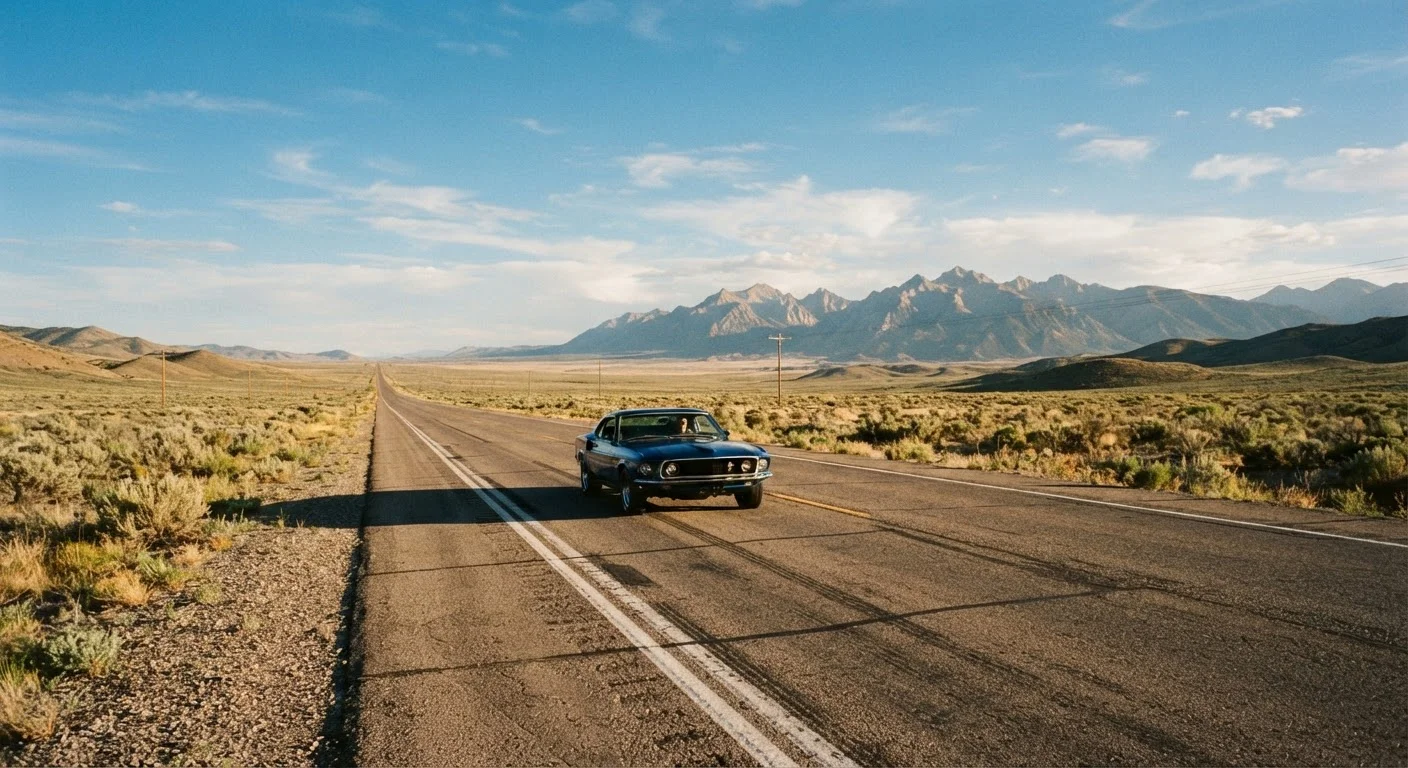
Cell coverage across rural America is patchy in ways that surprise even experienced travelers. Stretches of Nevada, West Texas, eastern Montana, and parts of the Southwest can go dozens of miles without a usable signal. Relying entirely on a live navigation app in these areas is a genuine risk.
Download offline maps for your entire route before departure — several mapping apps support this. Carry a printed or PDF backup of your key route segments, especially through low-coverage areas. A basic atlas isn't overkill; it's a legitimate backup that weighs almost nothing.
Consider a dedicated GPS device if you're covering remote territory. Satellite communicators — handheld devices that send location pings and SOS signals independently of cell networks — are worth researching for travelers venturing into desert or mountain regions. Our guide to rest stops and welcome centers also covers where you can reliably find Wi-Fi and assistance along major US corridors.
Vehicle Readiness and What to Carry
A breakdown on a solo trip — especially in a remote area — is a very different situation than the same problem with companions. Getting your car checked before departure isn't optional; it's foundational. Tires (including the spare), brakes, fluids, belts, battery, and lights should all be assessed. Our pre-trip vehicle inspection checklist walks through the essentials in detail.
In the car, carry: a basic roadside kit (jumper cables or a jump starter, reflective triangles, a flashlight), a first-aid kit, at least one gallon of water, snacks, and a phone charger that works from your car's port. In remote regions, extra fuel in an approved container can be genuinely useful — gas stations can be 50+ miles apart in parts of Nevada and the rural Southwest.
If budget is a consideration on your trip, the budget travel starting point guide has grounded advice on managing costs without cutting corners on preparation.
The content on this site is for informational purposes only and is not a substitute for professional advice. Always consult a qualified professional for guidance specific to your situation.