

Our Verdict
Neither option is universally superior — the right choice depends on your phone, your destination, and how you travel. Roaming wins on convenience for short trips or multi-country itineraries; local SIMs win on value for longer stays in a single country. For many modern travelers, an eSIM splits the difference neatly.
| Best for | Recommended |
|---|---|
| Short trips or multi-country routes where swapping SIMs is impractical | International Roaming (or eSIM) |
| Longer stays in one country with heavy data needs | Local Prepaid SIM Card |
| Travelers with a modern unlocked phone who want flexibility without a physical swap | eSIM (digital SIM) |
| First-time international travelers who want zero setup stress | International Roaming Add-On |
Why Your Default Plan Can Sting You Overseas
If you've ever come home from a trip abroad to a phone bill with a jaw-dropping surprise, you're far from alone. Using your U.S. number internationally without any plan adjustment can trigger per-minute call charges, per-text fees, and data rates that charge by the megabyte — not the gigabyte. Even casual use like checking maps and messaging can add up fast.
Most major U.S. carriers now offer international day passes or travel add-ons that give you a daily flat fee for using your existing plan abroad. These typically run anywhere from roughly $5 to $15 per day depending on your carrier and destination. That's manageable for a weekend trip but can become expensive on a two-week vacation. Before you leave, check your carrier's international page and confirm exactly what's included — voice, data speed, and texting — and what isn't. See our pre-departure checklist for a broader list of things to confirm before you fly.
How Local SIM Cards Work — and When They Shine
A local prepaid SIM card is a small chip you purchase after landing (often at the airport, a convenience store, or a mobile carrier shop) and swap into your phone. It gives you a local number and typically a generous data allowance at local rates — often dramatically cheaper than roaming fees for the same amount of data.
The catch: your phone must be unlocked. A locked phone is tied to your U.S. carrier and won't accept another carrier's SIM. You can request an unlock from your carrier before your trip — most will do it for free once you've fulfilled your contract terms, but it can take a few days to process, so don't wait until the night before departure.
Local SIMs shine brightest when you're spending a week or more in a single country and expect to use navigation, streaming, or video calls regularly. They're also handy for destinations where Wi-Fi is inconsistent. The trade-off is a temporary new number, which means contacts who text or call your U.S. number won't reach you unless you're using an app like WhatsApp or FaceTime.
| International Roaming Add-On | Local Prepaid SIM | eSIM (International Provider) | |
|---|---|---|---|
| Setup effort | Very low — activate via app or call | Moderate — buy and swap in-country | Low — install digitally before departure |
| Phone compatibility | Works with any carrier-locked phone | Requires unlocked phone | Requires eSIM-capable unlocked phone |
| Relative data cost | Typically higher per GB | Often lowest per GB | Mid-range per GB |
| Keeps U.S. number active | Yes | No (new local number) | Yes, if dual SIM supported |
| Best trip length | Short trips (1–4 days) | Longer stays (5+ days) | Any length, especially multi-country |
| Multi-country use | Usually yes, varies by plan | One country at a time | Regional plans available |
The eSIM: A Newer Option Worth Knowing
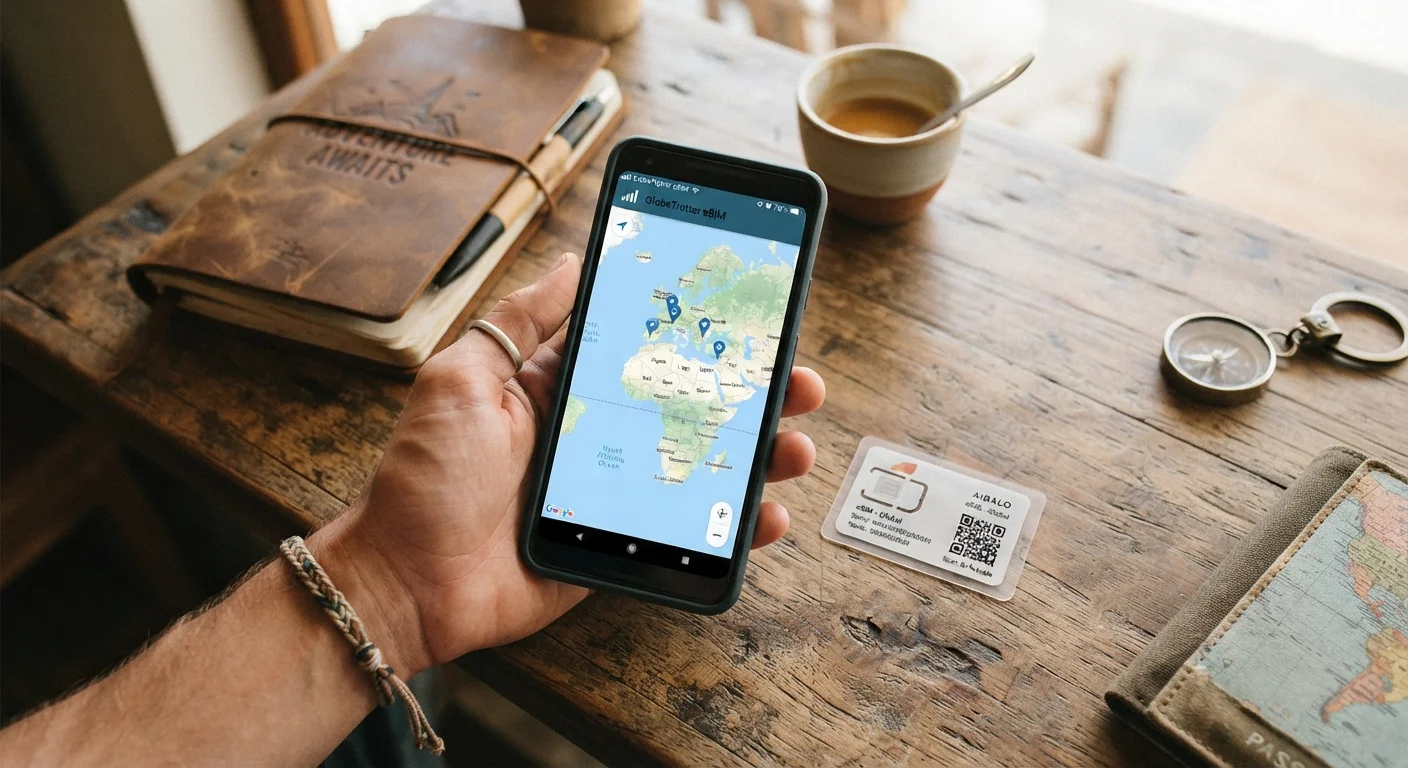
Many smartphones released in the last several years support eSIM — a digital SIM embedded in the phone that can be activated without physically swapping a card. Several international data providers now offer eSIM plans you can purchase and install before you even board your flight, meaning you land with data already active.
eSIMs are particularly useful for travelers visiting multiple countries, since some providers offer regional plans covering Europe, Southeast Asia, or Latin America under one purchase. You also keep your U.S. number active on the same device (on carriers that support dual SIM), so you don't miss important calls or texts. The main limitation is price — eSIM plans from international data providers are generally cheaper than carrier roaming day passes but often slightly pricier per gigabyte than a local physical SIM purchased in-country.
Install Your eSIM Before You Board
eSIM activation often requires a data or Wi-Fi connection. Set it up at home or at the airport before you clear security, so you're not scrambling to find Wi-Fi in a foreign arrivals hall. Most eSIM providers send a QR code by email — scan it in your phone's settings to activate.
Key Factors to Compare Before You Decide
No single option wins for every trip. Run through these questions before you commit:
- How long is your trip? A two-day business trip rarely justifies hunting down a local SIM. A 10-day vacation probably does.
- How many countries are you visiting? Buying a new SIM in each country is doable but inconvenient. Roaming or a regional eSIM plan may simplify things.
- How data-heavy is your itinerary? Relying on maps, ride-share apps, and streaming? Prioritize a plan with generous high-speed data. Mostly on hotel Wi-Fi? A modest roaming add-on may suffice.
- Is your phone unlocked? If not, a local SIM isn't an option until you sort that out.
- Do you need to be reachable on your U.S. number? Roaming or a dual-SIM eSIM setup keeps that number live; a local SIM swap does not.
Managing your connectivity costs is just one piece of the travel budget puzzle. Check out other common ways travelers overspend abroad to make sure you're not leaving money on the table elsewhere.
~$10/day
Typical U.S. carrier international day pass cost
Most major U.S. carriers advertise international day passes in roughly the $5–$15 range; verify your carrier's current rate before traveling.
55%+
Smartphones globally supporting eSIM
Industry analyst estimates suggest a majority of new smartphones shipped now include eSIM capability, though carrier activation policies vary.
Practical Tips Before You Land
A little prep goes a long way. Here's what to handle before departure:
- Contact your carrier to confirm your phone's unlock status and request an unlock if needed — allow several business days.
- Review your current carrier's international add-on options in writing, not just over the phone.
- Research whether your destination country has widely available prepaid SIMs at airports (most do, but some require passport registration at purchase).
- If you're considering eSIM, confirm your phone model supports it and check that your carrier hasn't disabled the eSIM slot.
- Download offline maps (Google Maps and others support this) before you leave, so navigation works even if data is limited.
Getting around once you're connected is its own adventure — our guide to ground transportation options abroad can help you plan how to move once you're there.
This article is for general informational purposes only. Carrier plans, pricing, and phone compatibility vary and change frequently — verify all details directly with your provider and check official sources before traveling.
The content on this site is for informational purposes only and is not a substitute for professional advice. Always consult a qualified professional for guidance specific to your situation.