

Option A
Visa on Arrival
The at-the-border option for spontaneous travelers.
Best for: Travelers who prefer to handle entry paperwork upon landing and are comfortable with in-person queues at the destination airport.
Option B
E-Visa
The pre-approved digital entry solution.
Best for: Travelers who want entry permission confirmed before they leave home, with all paperwork completed online in advance.
What Each Entry Permission Actually Means
When you cross an international border, you typically need permission from the destination country to enter. For many Americans, that permission comes in one of two common forms: a visa on arrival or an e-visa. They're easy to confuse because both are legitimate entry documents — but they work very differently in practice.
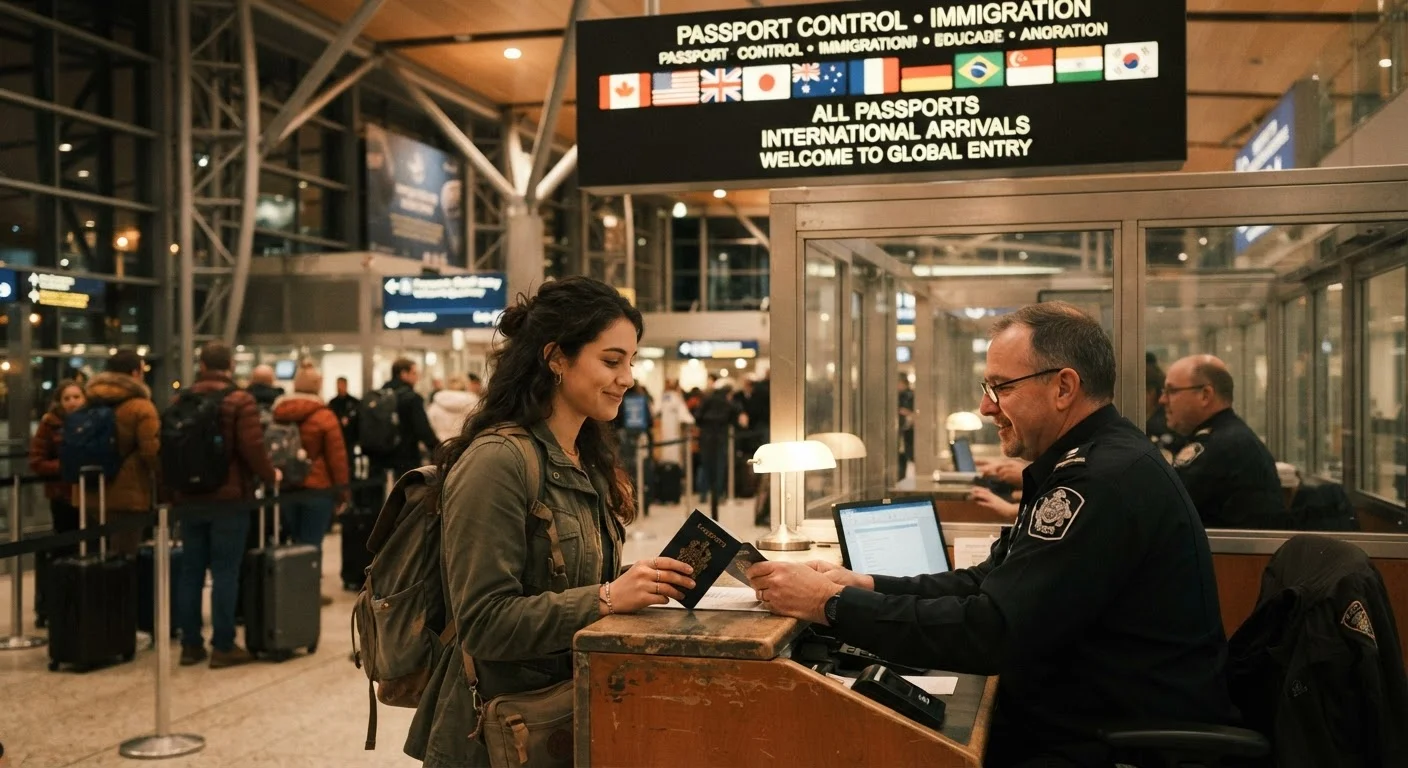
A visa on arrival (VoA) means you don't arrange anything before you board your flight. Instead, you join a designated queue at the destination airport (or occasionally a land or sea port), fill out paperwork on the spot, pay a fee, and receive a physical stamp or sticker in your passport. The entire process happens after you've already traveled.
An e-visa (electronic visa) is handled entirely online before you leave. You submit an application through the destination country's official government portal, upload any required documents (passport photo, itinerary, etc.), pay a fee digitally, and receive an approval — usually by email — that you print or save to your phone. At the border, you simply present it alongside your passport.
Neither is inherently superior; what matters is which one your destination offers, whether you're eligible, and how much runway you have before departure. For a broader look at pre-trip logistics, see our first international trip checklist for everything you should confirm before you fly.
Key Differences Side by Side
The practical distinctions between these two systems affect your planning timeline, your peace of mind, and what you need to bring to the airport.
| Criterion | Visa on Arrival | E-Visa |
|---|---|---|
| When you apply | At the destination border | Before you leave home |
| Format | Physical stamp or sticker in passport | Digital approval document (email/PDF) |
| Advance planning needed | Minimal — just bring required docs | Days to weeks ahead of travel |
| Payment method | Cash (USD, local currency, or euros) | Credit or debit card online |
| Queue time at border | Potentially long, especially peak season | Usually faster — pre-approved |
| Confirmation before flying | None — approved at destination | Yes — confirmed before departure |
| Typical validity | 15–30 days (varies by country) | 15–90 days (varies by country) |
One detail worth highlighting: visa-on-arrival counters typically only accept cash — often in U.S. dollars, euros, or local currency — and the exchange rates on offer at the airport are rarely favorable. Coming with the exact fee amount in an accepted currency is strongly advisable. E-visas, by contrast, are paid by card online, and your approval is documented digitally before you ever set foot on a plane.
195+
Countries with unique entry requirements for visitors
Each nation sets its own visa rules — there is no universal system, which is why destination-specific research is essential for every trip.
~3–5 days
Typical e-visa processing time for popular destinations
Processing windows vary widely; some countries approve e-visas within 24 hours, while others require a week or more during busy periods.
How Eligibility Works for American Travelers
Holding a U.S. passport opens doors in many countries — but it doesn't guarantee access to every visa-on-arrival or e-visa program. Each country sets its own rules, and eligibility can change based on diplomatic relations, reciprocity agreements, and policy updates.
For example, Thailand has historically offered visa-on-arrival access to American passport holders, while countries like India and Sri Lanka have moved toward e-visa systems as their primary route for U.S. visitors. Some destinations — like Japan and most of Europe's Schengen Area — don't require a visa at all for short American stays (though always verify current rules).
The critical takeaway: never assume your eligibility. Check the official embassy or consulate website of your destination country, or the U.S. State Department's travel information pages, well before you book. Entry requirements can shift, and airlines may deny boarding to passengers who don't have the correct documentation — even if the destination country would have let you in.
If your trip involves tight scheduling, our guide on planning international travel around a limited vacation window can help you build in the right buffer time for visa processing.
Which Option Makes More Sense for Your Trip?
The honest answer is: it depends on what's available and how you prefer to travel. That said, a few scenarios tend to tip the decision.
Choose an e-visa when you can. The ability to confirm your entry permission before departure removes a genuine variable from your trip. No queuing at a border counter after a long flight, no scrambling for exact cash, no wondering whether the process will take 20 minutes or two hours. If a destination offers an e-visa for Americans, applying in advance is almost always worth the modest additional planning effort.
Understand visa on arrival for what it is. It's a perfectly functional system used by millions of travelers every year. Countries like Indonesia (Bali) and Cambodia have well-practiced visa-on-arrival processes at major international airports. If that's your route, come prepared: bring the fee in the right currency, have a passport photo handy (some counters still ask), and know your accommodation address to fill out arrival forms.
Entry documentation is just one of several logistics that can catch travelers off guard. Our article on decisions that complicate international trips covers other common planning gaps worth reviewing before you go.
This article is for general informational purposes only. Entry requirements, visa fees, and eligibility rules change frequently. Always verify current requirements with official government and embassy sources before traveling.
The content on this site is for informational purposes only and is not a substitute for professional advice. Always consult a qualified professional for guidance specific to your situation.