

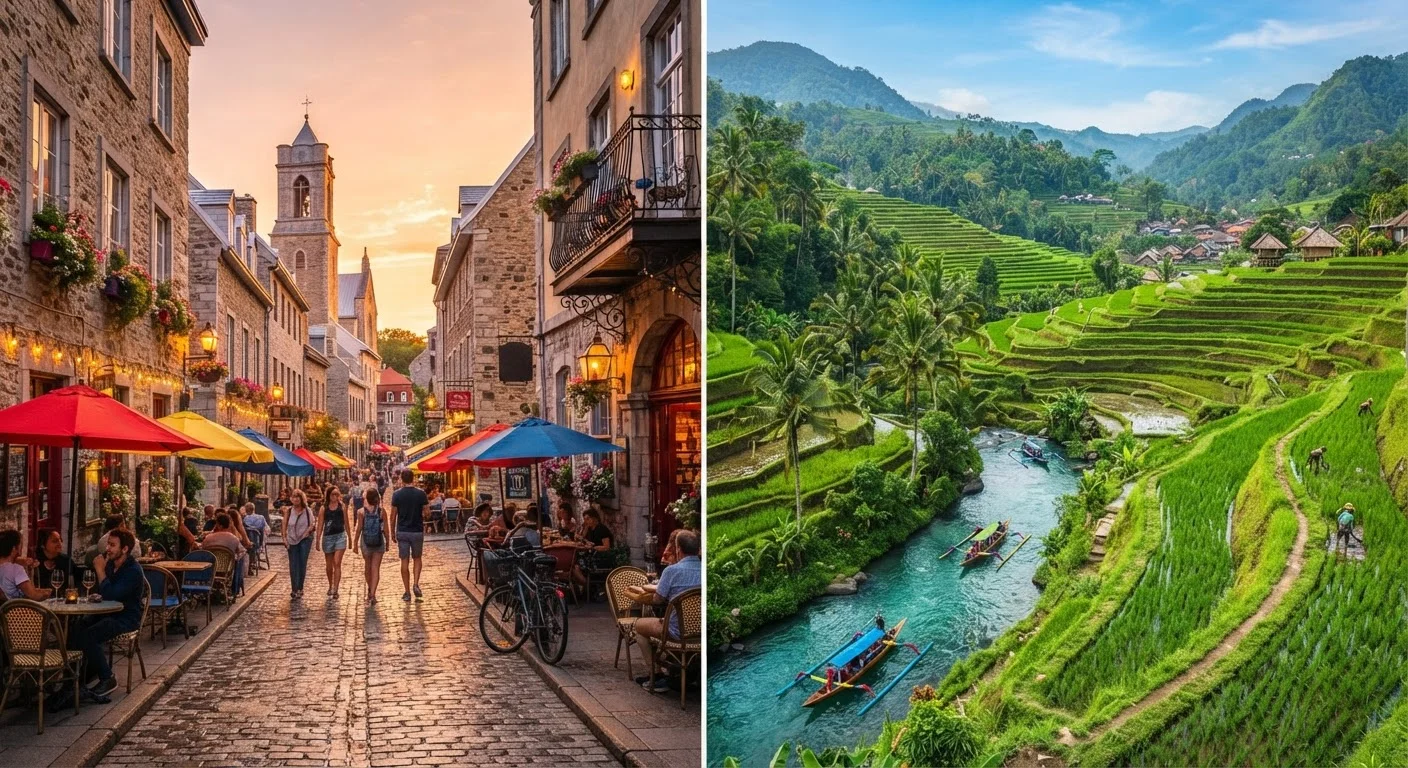
Our Verdict
Western Europe tends to be the smoother on-ramp for first-time international travelers who want familiarity, straightforward logistics, and easy connections. Southeast Asia rewards those who are flexible, budget-conscious, and eager for a more immersive cultural departure from everyday American life. Neither region is inherently better — they simply suit different priorities.
| Best for | Recommended |
|---|---|
| First-timers who want easy logistics and cultural familiarity | Western Europe |
| Budget-focused travelers who can handle more planning complexity | Southeast Asia |
| Those with limited vacation days needing efficient flight times from the East Coast | Western Europe |
| Travelers prioritizing immersive cultural experiences and cuisine diversity | Southeast Asia |
The Core Question: What Kind of Trip Do You Actually Want?
Before comparing flight prices or visa requirements, start with an honest gut check. Western Europe and Southeast Asia are both beloved first-time destinations, but they deliver very different experiences. Europe tends to feel familiar — English is widely spoken, infrastructure is reliable, and the cultural gap from American life is relatively modest. Southeast Asia, by contrast, offers a more striking departure: rich culinary traditions, ancient temples, entirely different languages, and a pace of life that can feel exhilaratingly new.
Ask yourself: Are you looking for your first step outside the US, or are you ready to feel genuinely transported? Your honest answer to that question will do more to narrow this down than any budget spreadsheet. See our first international trip checklist for the logistics groundwork that applies to either destination.
Cost: Where Your Dollar Goes Further
This is where Southeast Asia wins clearly. Daily travel costs — accommodation, meals, local transportation — are dramatically lower across Thailand, Vietnam, Cambodia, and Indonesia than in France, Italy, Spain, or Germany. A solid guesthouse meal in Chiang Mai or Hanoi might run $3–6; a similar meal in Paris or Amsterdam could easily be $20–40. Budget travelers willing to stay in hostels or mid-range guesthouses can often travel Southeast Asia for $50–80 per day, while Western Europe typically runs $150–250+ for a comparable experience.
That said, the flight cost often narrows the gap. Flights from US cities to Western Europe (especially from the East Coast) tend to be shorter and, at times, competitively priced. Flights to Southeast Asia from most US hubs run 16–24 hours with at least one connection, and fares can be higher depending on the season. Factor total trip cost — flights plus daily spend — not just one side of the equation. Budget travel strategies can help stretch your dollar in either region.
~$80/day
Typical mid-range daily spend in Southeast Asia
Estimates from long-running traveler cost databases suggest mid-range travelers in Thailand or Vietnam average around $60–100 per day including accommodation, food, and transport.
27 countries
Nations in the Schengen Area accessible without border stops
US passport holders can travel the Schengen Area for up to 90 days within a 180-day period without separate visas for each country.
Logistics and Ease of Travel
Western Europe has a clear edge here. The Schengen Area allows Americans to travel across 27 countries without border stops for up to 90 days. Rail networks are extensive and intuitive. English signage is common. Payment infrastructure mirrors the US. For a first-time traveler already managing the stress of navigating an unfamiliar place, these friction reducers matter.
Southeast Asia is more logistically varied. Entry requirements differ country to country — some offer visa-on-arrival, others require an e-visa arranged in advance. Always verify current entry requirements directly with official government sources and the US State Department before traveling, as rules change. Ground transportation ranges from excellent (Singapore's MRT) to chaotic (motorbike-heavy traffic in Ho Chi Minh City). Multi-country itineraries require more research and flexibility. That said, common international planning gaps apply to both regions equally. If you have limited vacation time, our guide on planning around a tight schedule is worth a read before you commit.
| Western Europe | Southeast Asia | |
|---|---|---|
| Avg. daily budget (mid-range) | $150–$250+ | $50–$100 |
| Flight time from US East Coast | 7–10 hours | 18–24 hours |
| Visa complexity for Americans | Minimal (Schengen, 90 days) | Varies by country; check ahead |
| English widely spoken | Yes, in most areas | Variable; less so in rural areas |
| Best travel season | Spring and fall (shoulder) | November through February |
| Logistics difficulty | Low to moderate | Moderate to high |
| Cultural immersion intensity | Moderate | High |
Climate, Timing, and Health Considerations
Western Europe has relatively predictable seasons that most Americans intuitively understand: summer is warm and crowded, shoulder seasons (spring and fall) offer a better balance of weather and crowds. Southeast Asia's climate is more complex. The region spans multiple climate zones, and the monsoon season — which varies by country and even by coast — can significantly affect travel plans. Generally, November through February is considered dry season across much of the region, making it the most popular time to visit.
Health preparations may differ too. Some Southeast Asian destinations recommend or require certain vaccinations. Always consult a travel medicine professional or your doctor well before departure — ideally 4–6 weeks out — to discuss what's appropriate for your itinerary. This is general guidance only; a qualified healthcare provider should advise on any personal health decisions related to travel.
If you're drawn to exploring slowly and letting a destination reveal itself over time, slow travel suits both regions well — but Southeast Asia especially rewards travelers who aren't rushing.
Cultural Experience and Personal Growth
Both regions are culturally rich, but they challenge travelers differently. Western Europe rewards history lovers, museum-goers, architecture enthusiasts, and food travelers who want refinement alongside novelty. Southeast Asia delivers sensory intensity — street food that's genuinely unlike anything back home, spiritual traditions on daily display, landscapes that feel cinematic, and a warmth of local hospitality that many first-timers find deeply moving.
Neither experience is superior. But if cultural immersion is your primary motivation for traveling internationally, Southeast Asia offers a steeper and more memorable learning curve. If you want to ease into international travel while still experiencing world-class history and cuisine, Europe is a highly capable starting point.
Note: Entry requirements, health recommendations, and travel advisories can change. Always verify current conditions with the US State Department (travel.state.gov) and official destination-country sources before booking or departing.
The content on this site is for informational purposes only and is not a substitute for professional advice. Always consult a qualified professional for guidance specific to your situation.