

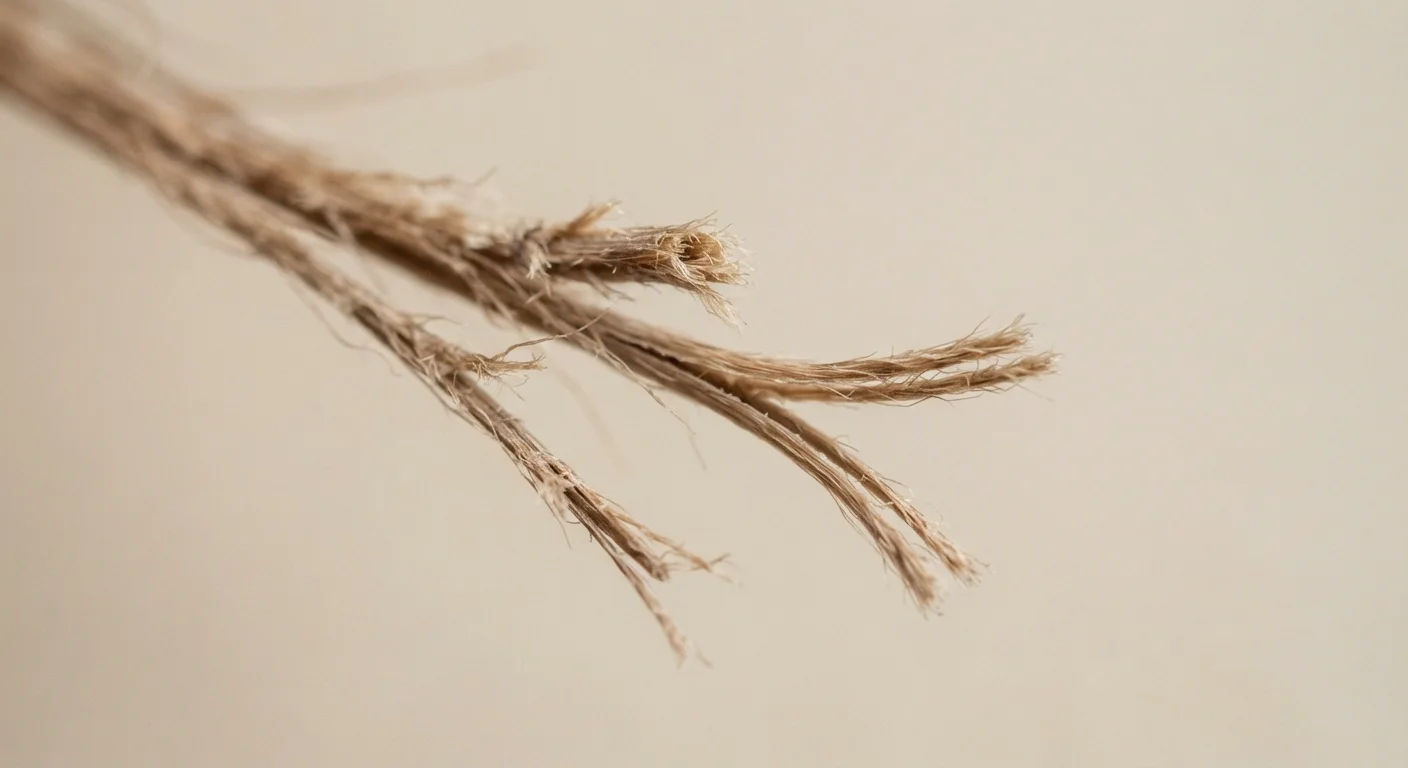
Why Breakage Is a Signal Worth Paying Attention To
If you're noticing short, wispy strands around your hairline, finding snapped pieces on your pillow, or watching your ends look perpetually ragged no matter how much conditioner you use, your hair is sending a clear signal — something in your routine isn't working.
Breakage and shedding are different things. Shedding involves the full strand, root and all, and is a normal part of the hair cycle. Breakage means the strand itself is snapping somewhere along the shaft — a sign of structural weakness. Pinpointing where on the strand the break occurs can help identify the cause: breaks near the ends suggest dryness or friction, while breaks closer to the root often point to tension or chemical stress.
Understanding your hair's own characteristics — like its elasticity and porosity — can help you interpret these signals more accurately. Our guide on porosity, elasticity, and density explains how these properties shape your hair's needs.
Using heat tools without a heat protectant — or on already-stressed hair.
Why it happens: Many people assume heat protectants are optional or cosmetic. In reality, direct heat above 300°F can disrupt the protein bonds in the hair shaft, weakening it with every use.
Wearing tight hairstyles — like high ponytails, slicked buns, or braids — too frequently or for too long.
Why it happens: Tension styles are convenient and polished-looking, so it's easy to default to them daily without realizing the cumulative stress they place on the follicle and strand.
Brushing or detangling hair aggressively, especially when wet.
Why it happens: Wet hair is significantly more elastic and vulnerable — it can stretch and snap under force that dry hair might withstand. Rushing through knots with the wrong tool compounds the damage.
Over-washing or using a shampoo that strips natural oils from the scalp and strand.
Why it happens: Squeaky-clean hair feels thorough, but frequent washing with harsh sulfate-heavy formulas can deplete the natural oils that keep hair flexible and resistant to breakage.
Over-processing with chemical treatments — coloring, bleaching, relaxing, or perming — without adequate recovery time.
Why it happens: Each chemical process alters the hair's protein structure. Overlapping treatments or repeating them too frequently doesn't give the hair shaft time to stabilize, making breakage almost inevitable.
Skipping protein treatments when hair is over-conditioned and limp, or skipping moisture when hair is stiff and brittle.
Why it happens: The protein-moisture balance is often misunderstood — people reach for more conditioner when hair breaks, not realizing that hair can also be weakened by too little protein or too much of either element.
How to Build a Routine That Actually Protects Your Hair
Once you've identified which mistakes are contributing to your breakage, the path forward is less about adding more products and more about removing the habits causing harm. The most durable improvements come from consistency — a simplified, gentler routine beats an elaborate one performed carelessly.
~100
Strands shed daily on average
The American Academy of Dermatology notes that losing up to 100 strands per day is considered within the normal range — breakage is a separate, preventable concern.
30%
Increase in hair fragility when wet
Research in hair fiber biomechanics has shown that wet hair can be roughly 30% weaker than dry hair, making detangling technique especially important.
If heat tools are part of your regular routine, learning how to use them safely is non-negotiable. Temperature, preparation, and technique all factor in — our article on heat styling without the damage covers what genuinely works. And since hair's needs shift with age and hormonal changes, it's worth revisiting your approach periodically — how hair care priorities evolve over the decades is a useful reference as your texture or density changes.
Traction Alopecia Is Cumulative and Can Be Permanent
Repeated tension from tight styles — particularly along the hairline — can lead to traction alopecia, a form of hair loss caused by chronic pulling. Early signs include tenderness, small bumps, or thinning at the temples and edges. If caught early, hair may recover with reduced tension, but prolonged traction can cause permanent follicle damage. If you're noticing consistent hairline recession, consult a dermatologist or trichologist.
The goal isn't perfection — it's reducing the cumulative stress that adds up over time. Even one or two changes from this list, applied consistently, can meaningfully slow breakage and give your hair a chance to recover.
This article is for general informational purposes only and is not a substitute for advice from a licensed dermatologist or trichologist. If you are experiencing significant or sudden hair loss, consult a qualified healthcare professional.
The content on this site is for informational purposes only and is not a substitute for professional advice. Always consult a qualified professional for guidance specific to your situation.