

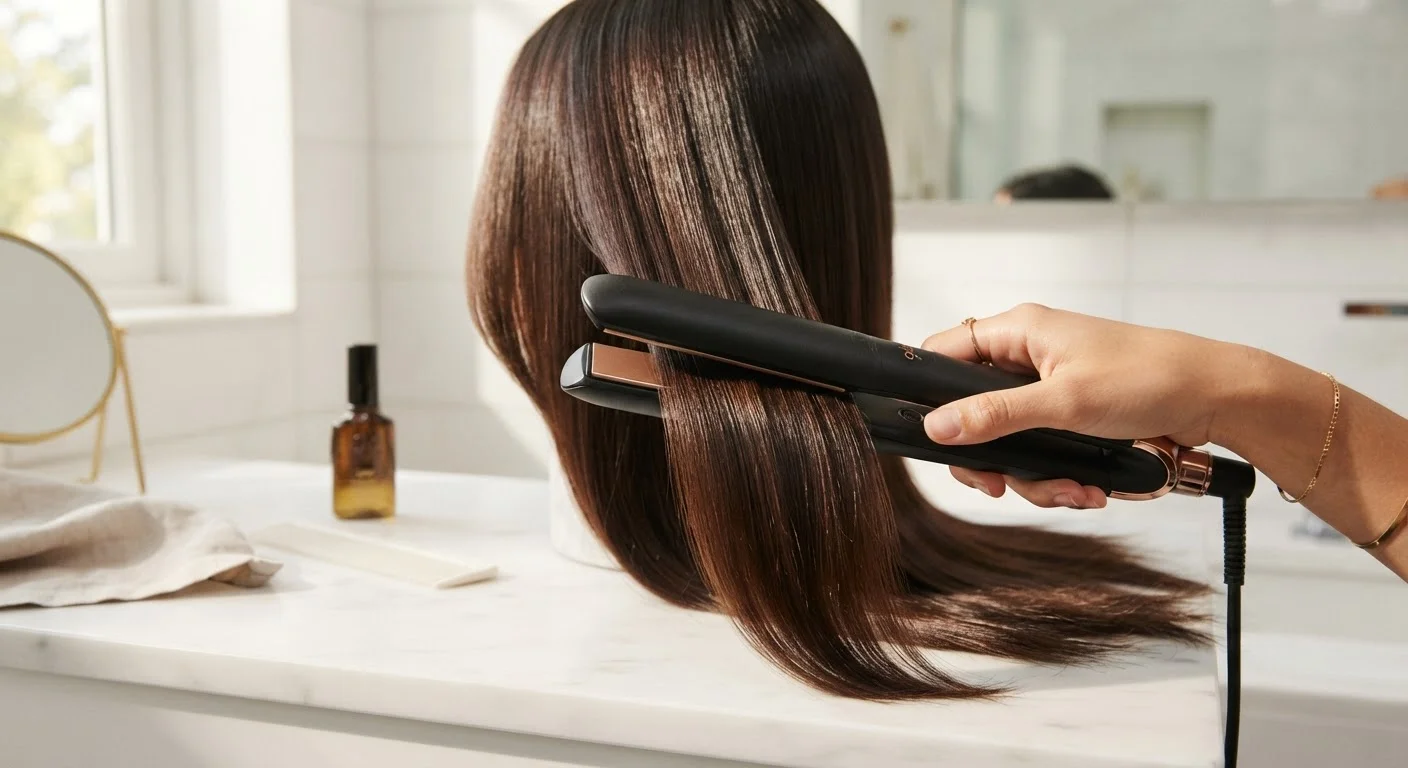
Why Heat Damage Happens in the First Place
Heat tools work by temporarily breaking the hydrogen bonds in hair strands, allowing you to reshape them. The problem is that high, repeated heat exposure also degrades the hair's protein structure — particularly keratin — and strips away the cuticle layer that keeps moisture sealed in. The result is hair that looks dull, snaps more easily, and resists styling over time.
Understanding this process matters because it shifts the goal from "avoiding heat entirely" to "using heat more intelligently." If you want to go further on the side of caution, the science behind air drying versus blow drying offers useful context on how different drying methods stack up.
Apply a heat protectant every single time before using a heat tool
Heat protectants form a barrier on the hair shaft that slows moisture evaporation and reduces direct thermal contact with the cuticle. Skipping this step — even occasionally — compounds damage over time, especially for fine or chemically treated hair.
Use the lowest effective temperature for your hair type
Higher temperatures aren't always more effective — they're just faster. Fine or color-treated hair can typically be styled below 350°F, while coarser textures may need up to 400°F. Exceeding what your hair actually requires accelerates cuticle degradation with no styling benefit.
Ensure hair is completely dry before using a flat iron or straightener
Applying a flat iron to damp hair creates steam inside the hair shaft, which can cause what's sometimes called "bubble hair" — microscopic bubbles that structurally weaken the strand and make it highly prone to snapping.
Keep each section moving — don't hold the tool in one spot
Pausing a flat iron or curling wand on a single section concentrates heat exposure on the same strands repeatedly, which is far more damaging than a single smooth pass at moderate temperature.
Limit heat styling to the frequency your hair can reasonably recover from
Hair has no self-repair mechanism once the cuticle is damaged; the fiber is physically altered. Giving hair rest days between styling sessions allows the moisture balance to stabilize and reduces the accumulation of thermal stress.
The Practices That Actually Protect Your Hair
These aren't vague tips — they're specific habits backed by how hair responds to thermal stress. Implementing even a few of them consistently can make a visible difference in hair condition over weeks.
What Deep Conditioning Has to Do With It
Heat styling and moisture loss are directly linked. Every pass of a flat iron or curling wand draws water out of the hair shaft. Replenishing that moisture isn't optional if you use heat regularly — it's part of the maintenance equation.
Regular deep conditioning treatments help restore elasticity and suppleness, making hair more resilient the next time heat is applied. If you're unsure which products actually serve this purpose, it helps to understand how a deep conditioner differs from a standard conditioner or hair mask — they aren't interchangeable.
450°F
Temperature at which irreversible hair protein damage begins
Research published in hair science literature suggests that temperatures above 450°F cause measurable structural changes to the keratin in hair fibers.
~30%
Reduction in breaking strength from repeated heat without protection
Studies on thermal hair stress suggest that repeated high-heat exposure without protective products can meaningfully reduce the tensile strength of hair strands over time.
Hair that is already compromised — color-treated, chemically relaxed, or previously heat-damaged — is more vulnerable to additional thermal stress. If you're combining heat styling with chemical treatments, the guide to chemical straightening and relaxing covers the compounded risks and how to manage them responsibly.
Recognizing When Heat Damage Is Already Present
Heat-damaged hair often gets misidentified as simply "dry" hair, which leads to the wrong interventions. Specific signs that point to heat damage include: strands that stretch and don't return to their natural shape, ends that feel gummy or mushy when wet, a significant change in curl pattern (for naturally curly hair), and persistent tangles even after conditioning.
These signs overlap with breakage from other causes — tension, dryness, or mechanical damage — so it's worth knowing the full picture. The reasons behind recurring hair breakage can help you identify what's actually driving the problem before you adjust your routine.
Heat Damage Is Permanent — But Manageable
Unlike dryness or temporary frizz, structural heat damage to the hair shaft cannot be reversed — only the new growth coming in is unaffected. This doesn't mean your hair is beyond help; conditioning treatments can improve the appearance and manageability of damaged hair significantly. But the most effective long-term strategy is preventing further damage while supporting new growth.
On days when a full wash-and-style isn't realistic, reducing heat exposure entirely is a practical option. Hairstyles that work on unwashed hair offer a low-effort alternative that gives your hair recovery time between heat sessions.
This article is for general informational purposes only and does not constitute medical or professional hair care advice. If you are experiencing significant hair loss or scalp concerns, consult a qualified dermatologist or trichologist.
The content on this site is for informational purposes only and is not a substitute for professional advice. Always consult a qualified professional for guidance specific to your situation.