

Our Verdict
Interview attire and casual workplace clothing are not opposites — they exist on the same spectrum. The interview look simply moves a few steps toward formality, polish, and intentionality. With a foundation of well-fitted, neutral-toned staples, most people can serve both contexts from the same wardrobe by adjusting one or two elements rather than starting from scratch.
| Best for | Recommended |
|---|---|
| Those entering a formal or corporate industry | Interview attire worn as a baseline, relaxed slightly once hired |
| Those joining a casual or creative workplace | Smart-casual daily wear, elevated for interviews with a single tailored layer |
| Those building a wardrobe on a limited budget | Versatile neutral staples that cross both contexts with minor adjustments |
| Career changers or frequent interviewers | A small interview-ready capsule that layers over existing everyday pieces |
Why the Two Contexts Ask Different Things of You
A job interview and a casual workplace aren't just different dress codes — they serve different communication goals. When you walk into an interview, you are an unknown quantity. Your clothing functions as a first signal: it tells a hiring manager you take the role seriously, that you've done some homework, and that you can present yourself with intention. That signaling work happens before you say a single word.
A casual workplace, on the other hand, is a place where you've already been accepted. Daily work clothing shifts from signaling to belonging. The goal moves from impressing to functioning — fitting into the team's culture while remaining comfortable enough to do your actual job for eight or more hours. The stakes feel lower because trust has already been established.
Understanding this distinction matters because it tells you what problem each outfit needs to solve, not just what clothes to pick. Once that's clear, the choices become simpler. For guidance on building outfits that hold up across multiple situations, repeatable outfit formulas offer a practical starting point.
Where Interview Attire and Everyday Work Wear Overlap
The most useful insight for building a practical wardrobe is that the two dress contexts share significant common ground. Both reward clean, well-fitted clothing over trendy or ill-fitting pieces. Both are undermined by visible wear, wrinkles, or strong fragrance. And in most industries today, neither requires a formal suit or a uniform.
| Criterion | Interview Attire | Casual Workplace Wear | |
|---|---|---|---|
| Primary goal | Signal professionalism and intent | Fit culture, stay comfortable | |
| Formality level | One step above workplace norm | At or slightly above daily baseline | |
| Fit priority | Precise, tailored look essential | Relaxed fit acceptable if clean | |
| Color palette | Neutral, conservative tones preferred | More flexibility with color and print | |
| Key finishing details | Polished shoes, minimal accessories | Clean shoes, casual layers acceptable | |
| Grooming expectations | High — tidy hair, minimal fragrance | Moderate — neat but relaxed | |
| Flexibility with trends | Low — classic silhouettes are safer | Higher — personal style more welcome |
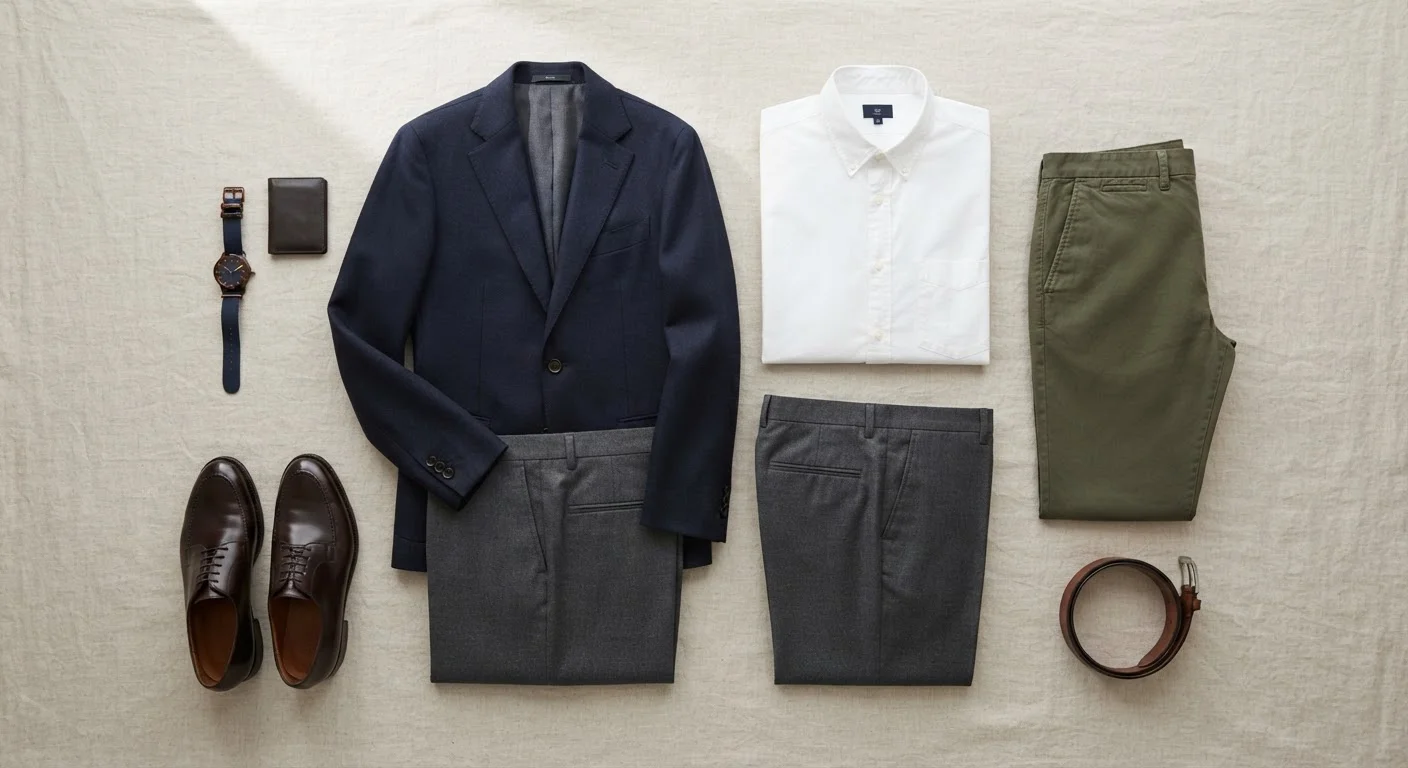
The overlap zone — sometimes called smart casual or business casual — is where most American workplaces and most interview situations now meet. A tailored chino, a structured knit, a well-fitted blazer, or a clean button-down shirt can work in both settings. The difference is usually in how many of those elements you stack together at once and how precisely groomed the overall look is.
Overlooked wardrobe staples — like a quality leather belt, well-maintained shoes, or a structured bag — often do the heaviest lifting in shifting an outfit from everyday to interview-ready without requiring a full outfit change.
How to Calibrate Each Look Intentionally
A reliable rule of thumb: for an interview, dress one visible step above what you observe or research about the company's day-to-day culture. If employees wear jeans daily, wear chinos or structured trousers. If they wear business casual, add a blazer or a more structured top. The goal is not to look out of place — it's to look like the most polished version of someone who fits there.
Research the Company Before You Dress
Before your interview, look at the company's website, social media, and employee LinkedIn profiles to gauge the actual dress culture. A startup with team photos in hoodies signals something different than a financial services firm. Dressing one step above what you see — not five steps — shows you've paid attention without looking out of touch.
For everyday work wear in a casual environment, the inverse applies: start from the interview baseline and soften it. Swap the blazer for an unstructured layer. Move from leather shoes to clean, minimal sneakers. Allow slightly more relaxed fits while keeping the clothing free of visible damage or loud graphics that can read as unprepared.
Fit remains the single greatest differentiator at both ends. Clothing that fits well looks intentional and put-together regardless of its price point. This is worth prioritizing over adding more items. For principles that stretch a limited clothing budget without sacrificing polish, see dressing well on a tight budget.
It also helps to be skeptical of overcomplicated style rules. Some widely repeated style rules add confusion rather than clarity, especially when applied too rigidly across different settings.
Building One Wardrobe That Handles Both
The practical goal for most people is a wardrobe that can flex — not two separate closets for two separate contexts. A small foundation of well-chosen pieces makes this achievable. Neutral colors (navy, charcoal, white, tan, black) in simple, classic silhouettes transfer most easily between formal and casual settings. Structured outer layers like blazers or cardigans function as the primary dial: add one to elevate, remove one to relax.
Before a new job's first week, spend time observing or researching the team's actual dress habits — look at company photos, LinkedIn profiles of current employees, or ask during the offer stage. This removes guesswork and prevents the common mistake of either overdressing every day (which can signal disconnection from culture) or underdressing in a way that affects how colleagues perceive your professionalism.
If your sense of personal style feels like it doesn't yet have a clear foundation, understanding what should guide your style choices first can help clarify where to start before investing in new pieces.
The line between interview attire and casual work wear is real, but it's narrower than most people assume — and far more navigable than building two separate wardrobes from scratch.
The content on this site is for informational purposes only and is not a substitute for professional advice. Always consult a qualified professional for guidance specific to your situation.