

What Motor Oil Actually Does Inside Your Engine
Your engine contains hundreds of metal components moving against each other at high speed—pistons, crankshafts, camshafts, and bearings among them. Without a continuous film of oil between those surfaces, the friction and heat generated would destroy the engine within minutes.
Motor oil does several jobs simultaneously: it lubricates moving parts to reduce friction, carries heat away from areas the cooling system can't reach, suspends and transports combustion byproducts to the oil filter, and helps seal gaps between pistons and cylinder walls. Fresh oil handles all of this effectively. Old oil does not.
Over time, oil oxidizes, loses viscosity, and accumulates contaminants—metal shavings, combustion gases, acids, and carbon deposits. The additives that give oil its protective qualities get depleted. What's left is a thickened, compromised fluid that can cause more harm than good. Understanding this is the foundation for understanding why skipping a change matters. For a deeper look at how oil formulations hold up differently under stress, see our guide to synthetic vs. conventional motor oil.
The Progressive Damage of Skipping an Oil Change
Missing one oil change by a small margin—say, a few hundred miles past the recommended interval—is unlikely to cause immediate, noticeable harm in most modern vehicles. But that's not a reason for complacency. The damage from neglected oil changes is cumulative, not sudden.
$4,000+
Typical cost of engine sludge-related repairs
Engine sludge removal and related repairs—such as replacing oil passages or addressing valve train damage—commonly run into thousands of dollars, far exceeding the cost of routine oil changes.
7,500–10,000 mi
Common synthetic oil change interval
Many vehicle manufacturers now specify intervals of 7,500 to 10,000 miles or more for full synthetic oil, though the appropriate interval always depends on the specific vehicle and driving conditions.
~$30–$100
Typical cost of a routine oil change
The general cost of a standard oil change—a fraction of what deferred maintenance can ultimately cost in engine damage and repairs.
Here's what unfolds in stages when oil goes too long without being replaced:
- Increased friction and heat: Degraded oil forms a thinner, less effective film between metal parts. Friction rises, generating more heat than the cooling system is designed to handle alone.
- Accelerated component wear: Bearings, camshaft lobes, and cylinder walls begin wearing faster than they should. This wear is largely irreversible—metal removed is metal gone.
- Sludge formation: As oil breaks down and mixes with combustion byproducts, it can thicken into sludge—a tar-like substance that clogs narrow oil passages and restricts flow to parts that need it most.
- Oil starvation: In advanced cases, blocked passages prevent oil from reaching critical components at all. Parts running without lubrication overheat rapidly and can seize entirely.
These stages don't happen overnight, but they progress reliably with each interval missed. Drivers who consistently push well past service intervals often face repair bills that dwarf what regular maintenance would have cost. See how this fits into a larger pattern in our look at maintenance habits that lead to expensive repairs.
Check Your Oil Between Changes
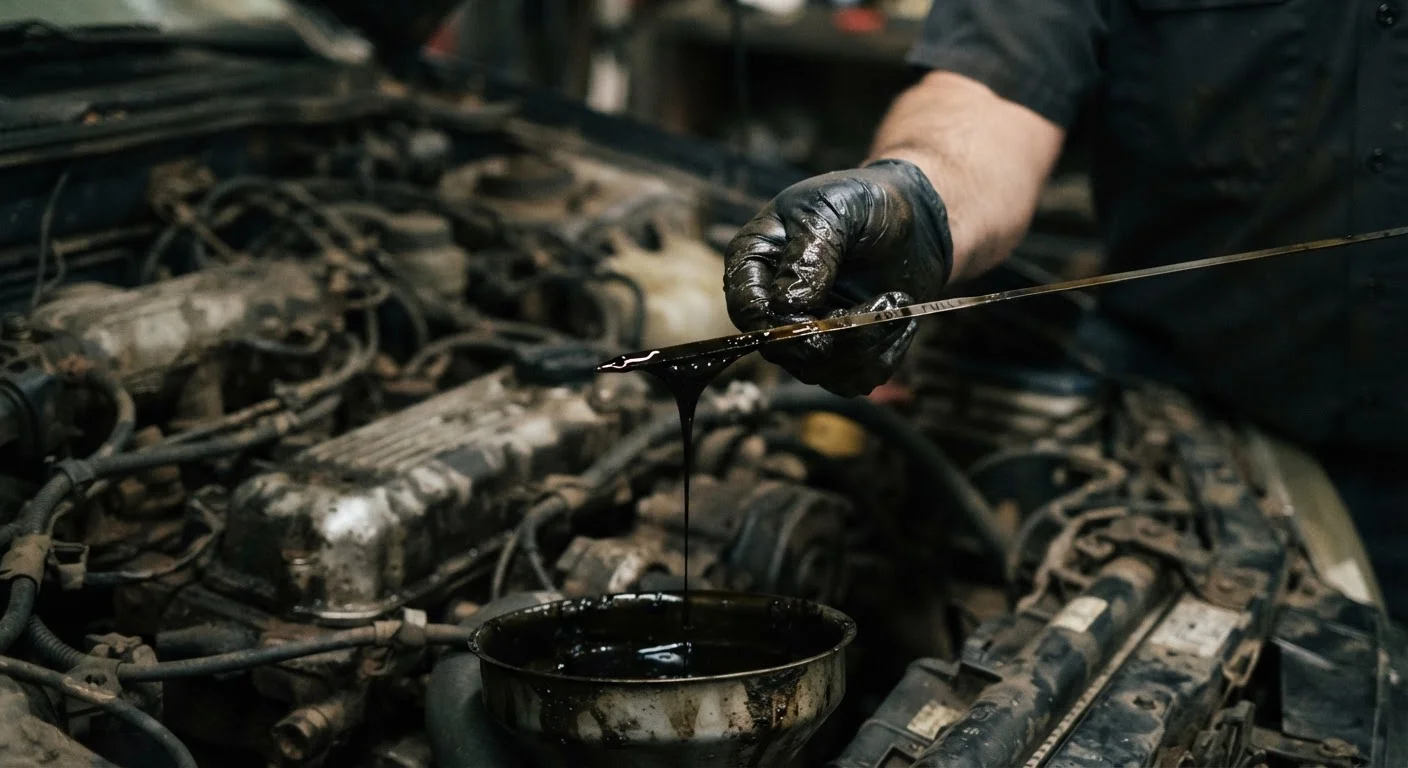
You don't have to wait for a service appointment to know what's going on with your oil. Pulling the dipstick every few weeks takes less than two minutes and can catch low levels or severe degradation before they become a problem. If the oil looks very dark or gritty, it's worth having it evaluated sooner than your next scheduled interval.
How to Know When Your Oil Actually Needs Changing
One of the most persistent myths in car ownership is the universal 3,000-mile oil change rule. While it made sense for older vehicles running conventional oil, it doesn't reflect how most modern engines and oil formulations perform. Our article on car maintenance myths that cost drivers real money covers this in detail.
The most reliable sources for your actual oil change interval are:
- Your owner's manual: Manufacturers specify intervals based on the actual engineering of your engine. This is the most authoritative source.
- Your vehicle's oil life monitor: Many modern vehicles calculate oil life based on driving conditions—not just mileage—and alert you when a change is genuinely needed.
- The dipstick: Pull it, wipe it clean, reinsert, and pull again. Oil that looks very dark, smells burnt, or has a gritty texture is overdue for a change. Our fluid checks guide walks through what to look for.
Keeping a simple maintenance log also pays off—both for catching overdue service and for protecting resale value and warranty claims. Learn more about why in our piece on keeping maintenance records.
Frequently Asked Questions
Skipping a single oil change typically won't destroy an engine, but it does allow oil to degrade further than it should. Over time, dirty oil loses its lubricating properties and starts collecting contaminants that accelerate wear on internal engine parts. The risk compounds with each missed interval.
It depends on your vehicle, driving conditions, and oil type. Many modern vehicles using full synthetic oil can safely go 7,500 to 10,000 miles or more between changes. Older vehicles or those using conventional oil typically need service every 5,000 miles or so. Always follow your owner's manual rather than a one-size-fits-all rule.
Yes, over time. Chronic oil neglect leads to sludge buildup, accelerated wear on bearings and cylinder walls, and ultimately engine seizure in severe cases. This type of failure is rarely sudden—it develops gradually as protection erodes with each missed service.
Engine sludge is a thick, tar-like substance that forms when oil breaks down and mixes with combustion byproducts. It tends to collect in oil passages and the valve cover area. If you remove an oil cap and see a thick, dark, mayonnaise-like residue, sludge buildup is likely present.
It can. Many manufacturer warranties and extended service contracts require documented proof of routine maintenance, including oil changes. Failing to keep records of service may complicate or invalidate a warranty claim related to engine damage.
For most modern vehicles, no. The 3,000-mile interval was developed for older engines and conventional oil formulations. Most current vehicles and synthetic oils support longer intervals. Check your owner's manual or onboard oil life monitor for the most accurate guidance.
The content on this site is for informational purposes only and is not a substitute for professional advice. Always consult a qualified professional for guidance specific to your situation.