

Why Fluid Checks Matter Between Service Visits
Your vehicle relies on a collection of fluids to keep every major system running — from the engine and brakes to the steering and cooling systems. Most service appointments happen every 5,000 to 10,000 miles, but a lot can change in between. Fluids can leak, degrade, or get contaminated without triggering any dashboard warning light until the problem is already serious.
Doing a quick visual inspection once a month takes less time than a coffee stop and gives you an early warning system that no dashboard can fully replace. It also gives you context: if your mechanic says you need a brake fluid flush, you'll already know whether your reservoir has been running low. For a broader view of how this fits into year-round upkeep, see our seasonal car maintenance checklist.
What you will need
How to Check Each Fluid Step by Step
Work through these checks in order. Park on a flat surface and, where noted, let the engine cool before you open anything. Keep a clean rag or paper towels handy throughout.
Check the Engine Oil
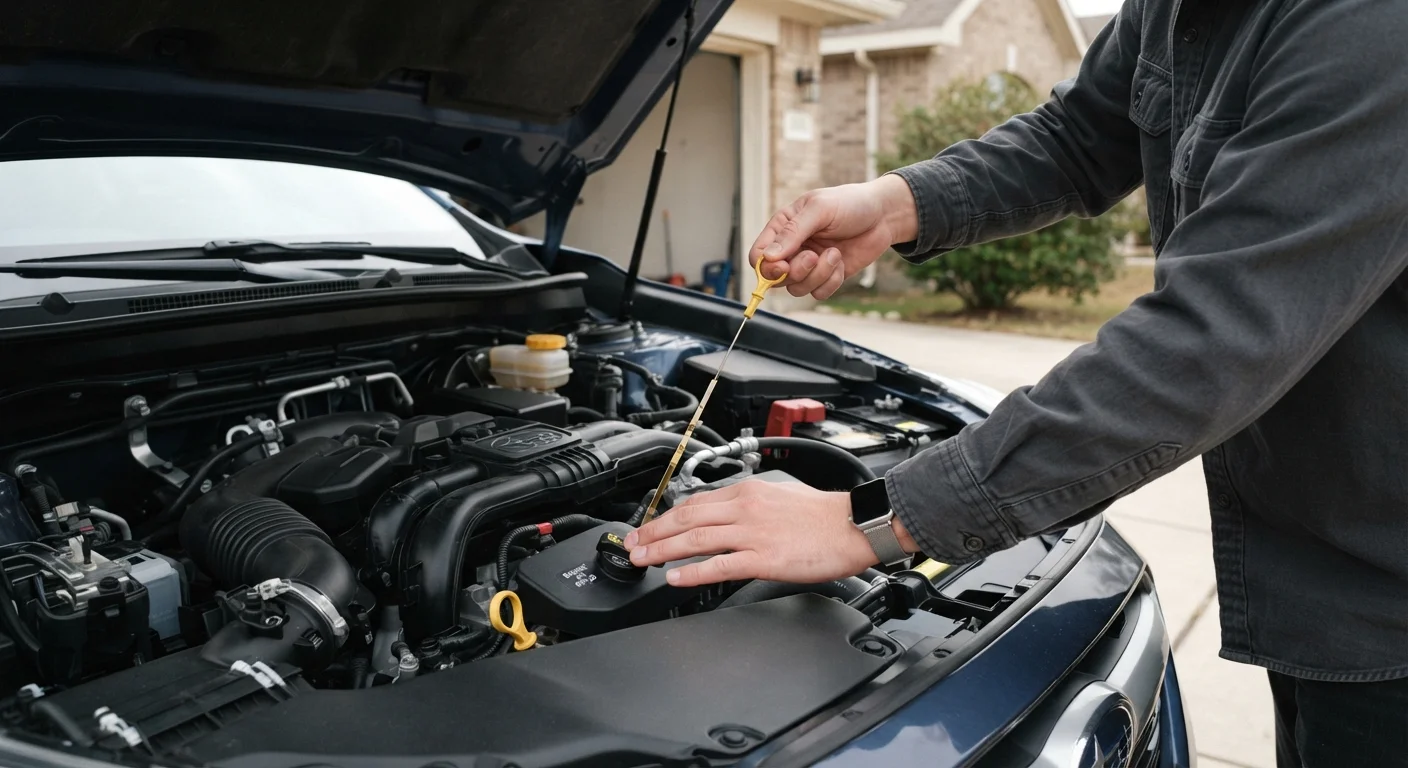
With the engine off and cool, locate the oil dipstick — typically a brightly colored ring near the front of the engine. Pull it out, wipe it clean with a rag, reinsert it fully, then pull it out again. The oil level should fall between the two marks (MIN and MAX, or similar). The oil itself should be amber to brown and relatively translucent. Dark, gritty oil or oil at or below the MIN mark needs attention.
Inspect the Coolant Level
Only check the coolant when the engine is completely cold — opening a hot radiator cap releases pressurized steam and can cause serious burns. Locate the translucent coolant reservoir (usually labeled with a temperature symbol). The level should sit between the LOW and FULL marks. The coolant itself should be bright green, orange, or pink depending on the type — never rusty or murky.
Examine the Brake Fluid
The brake fluid reservoir is typically a small, semi-transparent plastic container near the firewall on the driver's side. Without removing the cap, check that the level sits between MIN and MAX. Brake fluid should be pale yellow to nearly clear. Dark brown fluid is a sign it's absorbed moisture over time and has lost effectiveness. If the level is noticeably low, have the brakes inspected — brake fluid doesn't evaporate, so a drop in level can point to a leak or worn brake pads. For related symptoms to watch for, our article on brake warning signs is worth reading.
Check Power Steering Fluid
If your vehicle has traditional hydraulic power steering (not electric power steering, which is increasingly common), there will be a power steering fluid reservoir — often near the engine's accessory belt area. Many reservoirs have a dipstick built into the cap; others have MIN/MAX markings on the side. The fluid should be within range and appear pink or clear, not dark or cloudy. Difficulty steering or a whining noise when turning can both indicate low fluid.
Top Off Windshield Washer Fluid
The windshield washer reservoir is the one fluid you can check and fill without any safety concerns at any time. It's typically marked with a windshield and spray symbol. Use a washer fluid formulated for your climate — in winter regions, choose a freeze-resistant formula rated for the coldest temperatures you expect. Plain water is not a substitute; it can freeze in the lines and won't cut through road grime or insects effectively.
Build It Into a Monthly Habit
The easiest way to remember fluid checks is to tie them to something you already do regularly — like the first of each month or every other fill-up at the gas station. A consistent routine, even an informal one, keeps small problems from becoming big ones. Our guide on building a maintenance routine that actually sticks has practical advice for making upkeep less of a chore.
Reading the Signs: What Different Fluid Conditions Mean
Fluid levels tell you one part of the story — color and consistency tell another. Engine oil that looks black and gritty has broken down and needs changing soon; if it's milky or foamy, that can indicate coolant contamination, which requires prompt attention from a mechanic. Coolant that appears rusty or contains floating particles suggests the system needs flushing. Brake fluid that's dark brown rather than pale yellow or clear is past its useful life and should be replaced. If any fluid reservoir is consistently low between your monthly checks, that points to a leak rather than normal consumption — a reason to have the vehicle inspected rather than simply topping off repeatedly. For more on what happens when engine oil gets neglected, see what actually happens if you skip an oil change.
Not every fluid-related problem is a DIY fix. Our guide on DIY vs. shop repairs can help you decide when it's time to hand the job to a professional. Once you establish a routine, logging what you find each month takes just a moment and pays off — especially at trade-in time. Learn more in keeping maintenance records.
Repeatedly Low Fluid Warrants a Mechanic Visit
If you find yourself constantly topping off any fluid — especially engine oil, coolant, or brake fluid — don't treat it as normal consumption. Most vehicle fluids operate in a closed system and should hold their level between changes. Persistent drops almost always signal a leak or internal problem that a qualified mechanic should diagnose.
The content on this site is for informational purposes only and is not a substitute for professional advice. Always consult a qualified professional for guidance specific to your situation.