

Summary
28 items · 30–60 minutes per seasonal review
Why Seasonal Checks Matter More Than Most Drivers Realize
Your car doesn't experience the year the same way you do. While you're layering up in January or cranking the AC in July, your vehicle's battery, tires, fluids, and seals are each responding to temperature extremes, road conditions, and usage patterns that shift dramatically between seasons. Skipping a seasonal review doesn't just risk inconvenience — it can accelerate wear that turns a minor fix into a major repair bill.
The good news is that most seasonal checks are straightforward. You don't need a mechanic's toolkit or a lift. You need about 30 minutes, decent lighting, and a willingness to look closely at a handful of systems. For a broader foundation on keeping your car in shape year-round, see our First-Time Car Owner's Guide.
Use the checklist below every time the season changes — that's four reviews per year, ideally completed before the harshest conditions of each season arrive.
Tire Pressure Gauge
Accurately checks tire inflation against the manufacturer's recommended PSI.
Flashlight or Headlamp
Illuminates the engine bay, undercarriage, and tire sidewalls for close inspection.
Digital Multimeter or Battery Tester
Tests battery voltage to identify weakened batteries before they fail in cold or heat.
Penny (for tread depth test)
Provides a quick, no-cost check of whether tire tread has worn to an unsafe level.
Microfiber Cloth
Useful for wiping dipsticks cleanly before checking oil level and condition.
Vehicle Owner's Manual
Provides manufacturer-specific fluid specifications, service intervals, and tire pressure recommendations.
The Seasonal Maintenance Checklist
Items are grouped by the season when they're most critical, though many overlap. Complete all items in the relevant season's group, and revisit the Every Season group each time.
Every Season (Repeat 4× per year)
Spring
Summer
Fall
Winter
Don't Rely on Visual Checks Alone for Brakes
Brake pads can appear adequate through the wheel spokes but still be dangerously thin in areas you can't see without removing the wheel. If you notice squealing, grinding, vibration when braking, or a longer stopping distance than usual, take the vehicle to a qualified mechanic for a full brake inspection. Never defer brake concerns to the next oil change.
How to Use This Checklist Effectively
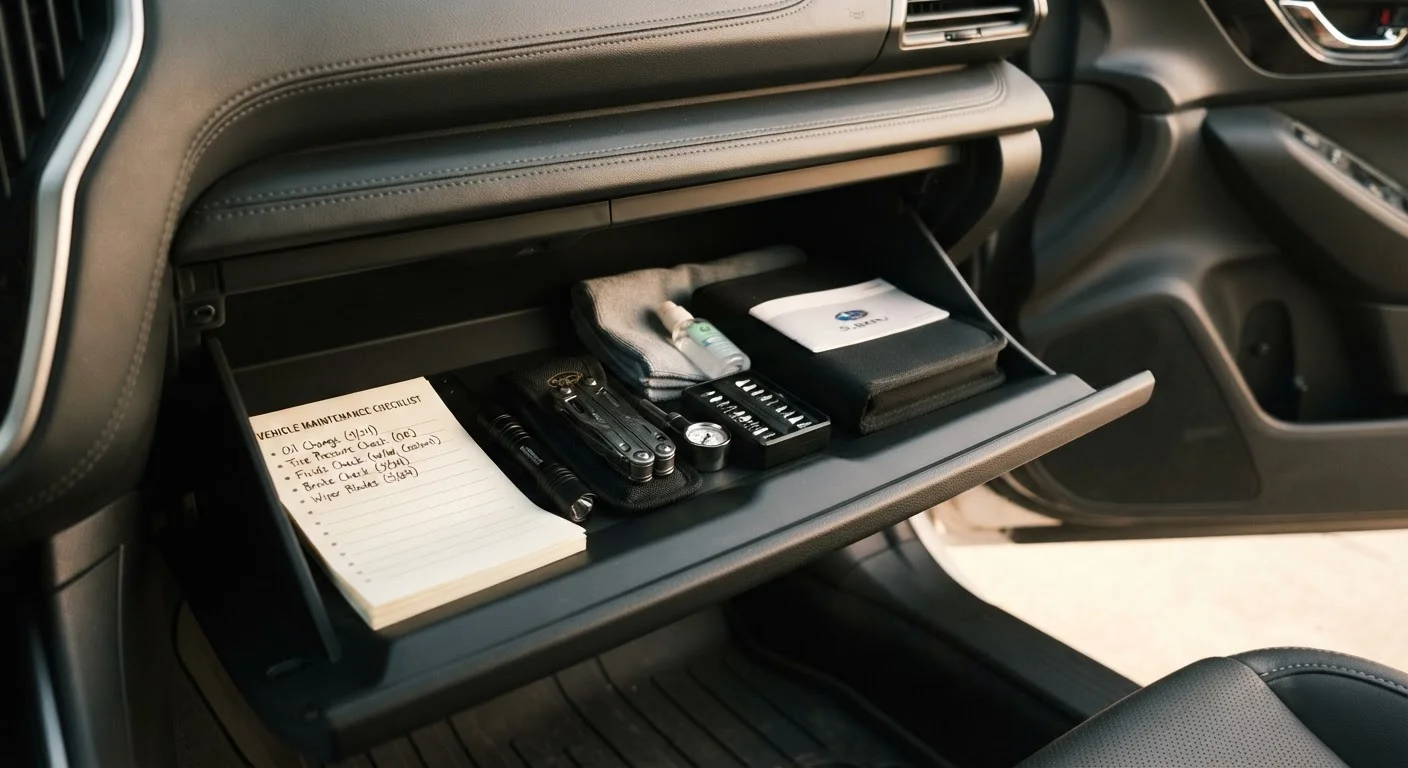
Print this checklist and fold it into your glove box alongside your registration and insurance card — for a full list of what belongs in there, check out Documents Every Car Owner Should Keep in the Glove Box.
Work through the checklist methodically rather than from memory. If you notice something unexpected — an unfamiliar dashboard light, fluid that looks dark or low, a tire that keeps losing pressure — don't defer it. Our guide to warning lights, decoded can help you interpret what your dashboard is telling you before you visit a shop.
For tasks flagged here as requiring professional attention, bring your notes to a qualified mechanic. Describing what you observed (the color of a fluid, the location of a noise, the mileage since the last service) makes diagnosis faster and more accurate. Building seasonal checks into a consistent routine is one of the most reliable ways to extend your vehicle's life — Building a Maintenance Routine That Actually Sticks offers practical habits for doing exactly that.
Know When a Task Exceeds a DIY Check
Several items on this checklist — such as brake inspection, refrigerant checks for AC systems, and suspension assessment — involve safety-critical systems that require professional tools and training to evaluate properly. If you're uncertain about what you're seeing during any inspection, the right call is always to consult a qualified mechanic. A short shop visit for peace of mind is far less costly than a roadside failure or accident.
The content on this site is for informational purposes only and is not a substitute for professional advice. Always consult a qualified professional for guidance specific to your situation.