

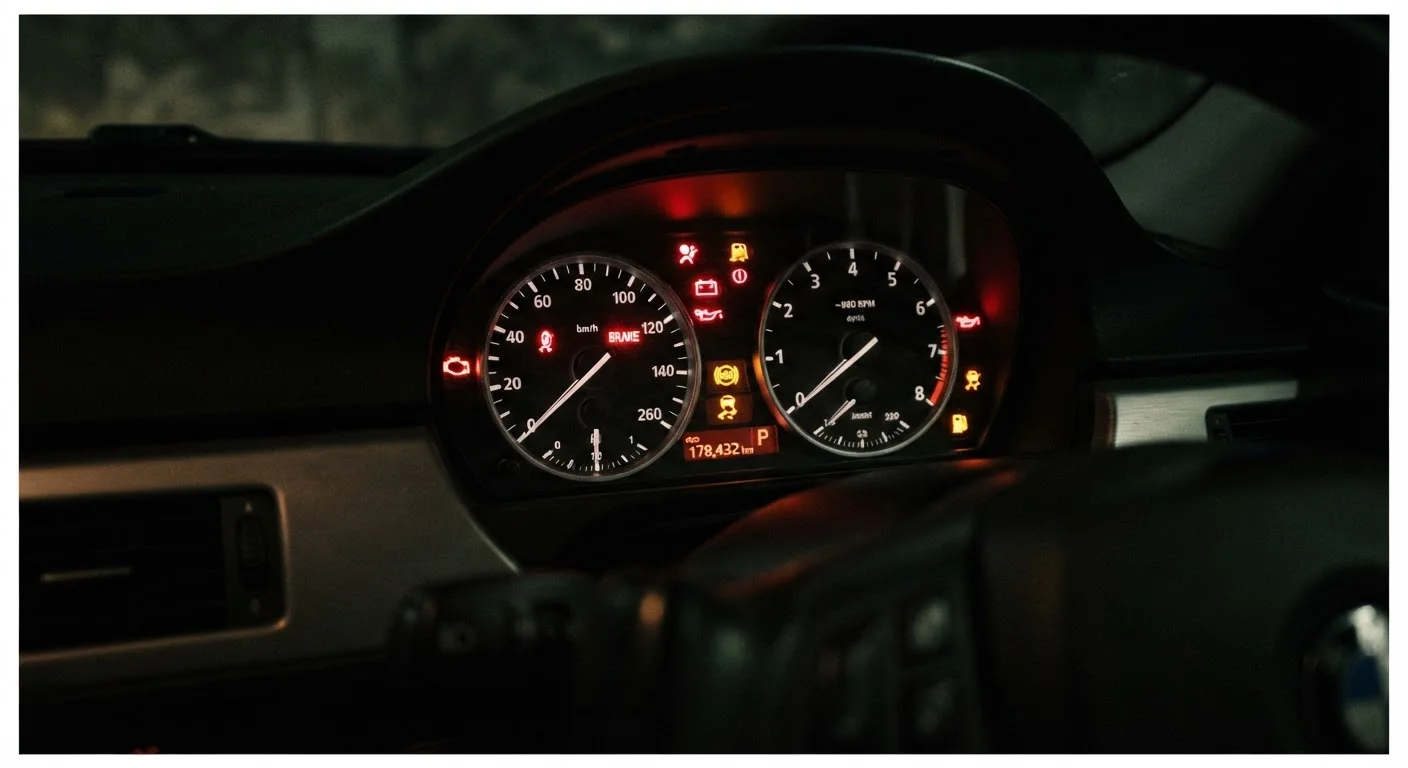
What Warning Lights Are Actually Telling You
Every modern vehicle uses a standardized set of dashboard warning lights to flag issues before they become serious problems. These symbols are part of your car's onboard diagnostics system — a network of sensors that constantly monitors engine performance, fluid levels, braking systems, and more. When something falls outside normal parameters, a light turns on.
Color is your first clue. Red lights signal urgent issues that typically require you to stop driving or act immediately. Amber or yellow lights indicate something needs attention soon but may not demand you pull over right now. Green or blue lights are usually informational — confirming that a system like your headlights or turn signal is active.
Don't ignore a warning light assuming it will go away on its own. Some will — a loose gas cap can trigger the check engine light, for example — but many signal conditions that worsen the longer you drive. Treating every light as worth investigating is simply good ownership practice.
| Red light urgency | Stop or act immediately |
| Amber light urgency | Attention needed soon |
| Most serious light | Oil pressure (red oil can) |
| TPMS trigger threshold | 25% below recommended pressure (U.S. NHTSA TPMS standard) |
| CEL flash vs. steady | Flashing = urgent; steady = schedule service |
| Correct tire inflation source | Driver's door jamb sticker |
The Most Common Warning Lights, Explained
Here's a plain-language breakdown of the lights most drivers will encounter at some point:
- Check Engine (CEL): This amber engine-shaped icon can mean dozens of things, from a loose gas cap to a misfiring cylinder. If it's steady, schedule a diagnostic scan soon. If it's flashing, reduce speed and see a mechanic promptly — a flashing CEL often indicates an active misfire that can damage the catalytic converter.
- Battery: A red battery symbol usually means the charging system isn't maintaining proper voltage. Your car may continue running briefly on battery power alone, but you should head to a shop or safe location without delay. Turn off non-essential electronics to preserve power.
- Oil Pressure: One of the most serious lights on any dashboard. A red oil can symbol means engine oil pressure has dropped dangerously low. Pull over safely and shut off the engine as soon as possible. Continuing to drive can cause irreversible engine damage within minutes.
- Coolant Temperature: A thermometer icon in red means your engine is overheating. Pull over, turn off the engine, and let it cool before checking the coolant reservoir. Never open a hot radiator cap.
- Tire Pressure (TPMS): An amber horseshoe-shaped icon with an exclamation point indicates one or more tires is significantly underinflated. Check tire pressure when convenient and inflate to the figure listed on your driver's door jamb — not the number on the tire sidewall. For more on reading tire information, see our tire sidewall guide.
- Brake System: A red circle with an exclamation mark (or the word BRAKE) can indicate low brake fluid, a system fault, or that the parking brake is engaged. If the parking brake is off and the light remains, have your brakes inspected. Learn more about brake warning signs in When Brakes Start Talking.
- ABS: Anti-lock braking system warning. Your standard brakes still work, but the ABS — which prevents wheel lockup during hard stops — may be disabled. Have it checked before your next long drive.
- Traction Control / Stability Control: If this flashes while driving, it means the system is actively working to maintain grip. If it stays on steady, the system may be disabled or faulty.
OBD / Onboard Diagnostics
A standardized system built into all vehicles sold in the U.S. since 1996 that monitors engine and emissions components. When a fault is detected, it stores a diagnostic trouble code and may trigger a warning light.
TPMS
Tire Pressure Monitoring System. A federally mandated sensor system that alerts drivers when one or more tires drops significantly below the recommended inflation level.
ABS
Anti-lock Braking System. A safety feature that prevents wheels from locking up during hard braking, allowing the driver to maintain steering control. An ABS warning light means this system may be inactive.
Catalytic Converter
An emissions control device in the exhaust system that converts harmful gases into less harmful substances. A misfiring engine can overheat and damage the catalytic converter, which is why a flashing check engine light warrants prompt attention.
Fault Code
A alphanumeric code stored by the vehicle's computer when a sensor reading falls outside normal range. A mechanic or diagnostic scanner can read these codes to identify the specific cause of a warning light.
When to Pull Over Immediately vs. Schedule a Visit
Not every warning light is a crisis, but knowing which ones are can protect both you and your vehicle.
Pull over right away if you see: the oil pressure light, a coolant temperature warning in the red zone, or the battery light combined with dimming lights and power loss. These point to conditions that can strand you or cause mechanical damage quickly.
Schedule a shop visit within a few days if you see: a steady check engine light, the ABS warning, or a service-required reminder. These are serious enough to address promptly but generally don't require stopping mid-trip.
Monitor and address when convenient: TPMS alerts (check pressure at your next stop), low fuel warnings, and maintenance reminder lights like oil life indicators.
Before a road trip, taking a few minutes to verify no warning lights are active is one of the simplest ways to reduce breakdown risk. Our road trip readiness checklist walks through the full pre-departure routine. For ongoing maintenance, the seasonal maintenance checklist is a useful companion reference.
When in doubt, a diagnostic scan at an auto shop can read the exact fault code behind a check engine light. This is typically a quick, low-cost service and removes the guesswork entirely.
The content on this site is for informational purposes only and is not a substitute for professional advice. Always consult a qualified professional for guidance specific to your situation.