

The Squeal: Not Always Cause for Panic
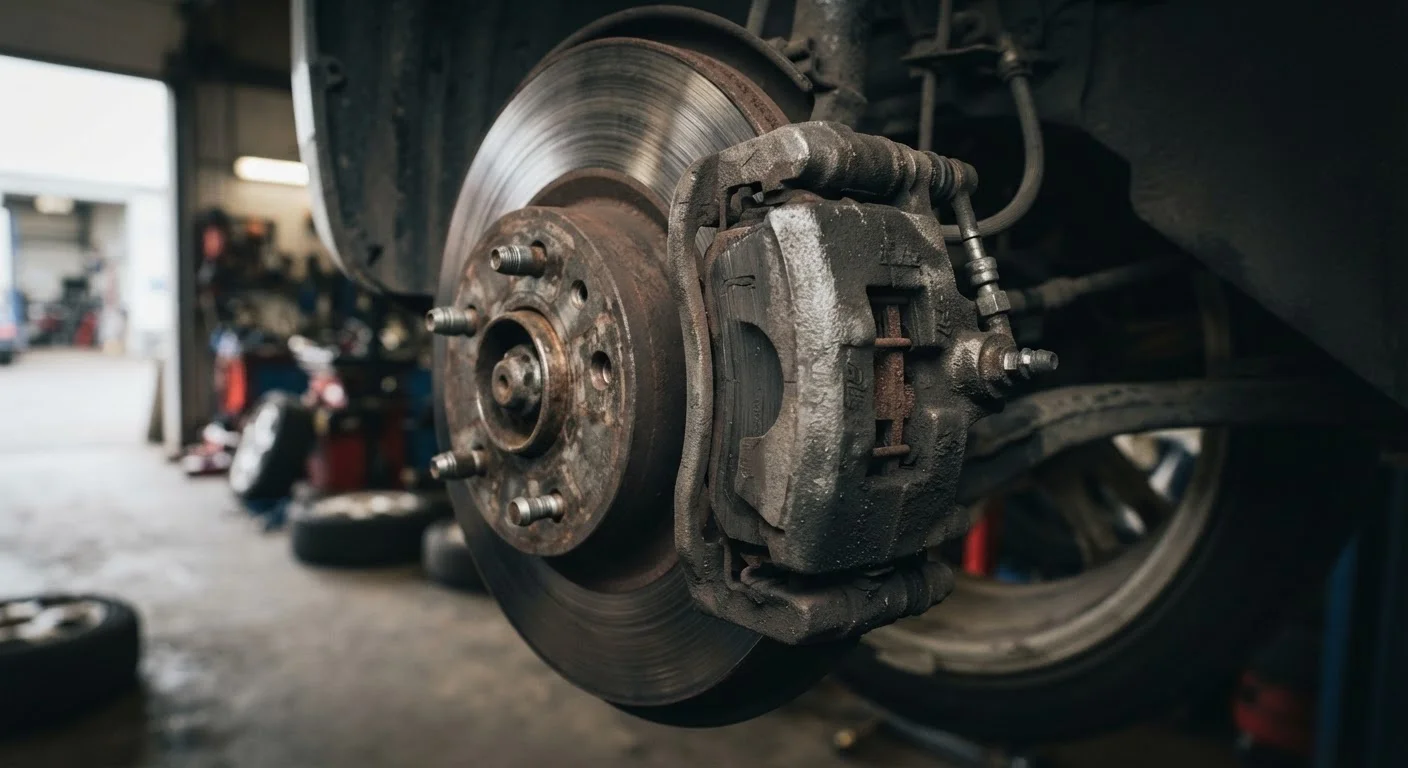
That high-pitched squeal when you slow down is the most common brake complaint drivers report — and fortunately, it's also the most straightforward. Most modern brake pads include a small metal tab called a wear indicator. When the friction material wears down to a certain thickness, that tab contacts the rotor and produces a squealing sound. It's a deliberate design feature, not a malfunction.
However, not every squeal is a wear indicator. Glazed pads (caused by sustained heat from riding the brakes), dust or debris caught between the pad and rotor, and even cold temperatures can all produce similar sounds. The key distinction: a wear-indicator squeal tends to occur consistently during normal braking and doesn't go away after a few stops. If the noise disappears after the first mile in the morning but comes back midway through your commute, have a mechanic take a look.
Quick Self-Check Between Shop Visits
You can get a rough visual on front brake pads without removing wheels on many vehicles — look through the wheel spokes at the pad pressed against the rotor. If you see less than a quarter inch of pad material, it's time for an inspection. This isn't a substitute for a professional check, but it's a useful early warning tool.
Grinding: When the Conversation Gets Serious
A grinding or growling sound — often accompanied by a vibration you can feel through the pedal — is a more urgent message. It typically means the brake pad material has worn completely through, leaving metal pressing against metal. At this stage, the rotor itself is being damaged with every stop.
Grinding can also indicate a small stone or piece of road debris lodged between the pad and rotor. In that case, the noise may resolve on its own within a short distance. But if it persists, assume the worst-case scenario and get it checked. Rotor damage adds considerably to repair costs compared to a straightforward pad replacement.
~22%
Brake-related crashes linked to brake failure
According to a NHTSA large-truck crash causation study, brake problems were among the most commonly identified vehicle factors in crashes — underscoring why early brake maintenance matters.
2–3x
Cost increase when rotors need replacement vs. pads alone
Industry repair data consistently shows that replacing rotors in addition to pads — often required when grinding is ignored — roughly doubles or triples the overall repair bill compared to a pad-only job.
25–65K miles
Typical brake pad lifespan range
The AAA and automotive industry sources note that brake pad life varies widely depending on driving style, vehicle weight, and pad material — making regular inspection more reliable than mileage alone.
The Pedal Tells Its Own Story
How the brake pedal feels underfoot is just as informative as any sound. Here's what different sensations typically indicate:
- Soft or spongy pedal: The pedal sinks further than usual before engaging, or feels mushy throughout. This often points to air or moisture in the brake lines — both reduce hydraulic pressure. Low brake fluid or a slow leak in the system can cause the same feeling. Check your fluid level as part of a routine inspection; our article on fluid checks between service appointments covers how to do this safely.
- Pulsating or vibrating pedal: If the pedal pulses under your foot during normal braking (not just during hard ABS activation), warped rotors are the most common culprit. Rotors can warp from sustained heat or from tightening lug nuts unevenly.
- Hard or stiff pedal: Requires unusual force to slow the vehicle. This can signal a failing brake booster — the vacuum-assisted component that multiplies your pedal input.
Pulling and Vibration: Directional Clues
If your vehicle drifts to one side when you apply the brakes, the braking force isn't being applied evenly. Common causes include a stuck or seized brake caliper on one side, unevenly worn pads, or a collapsed brake hose that restricts fluid flow to one corner. Pulling can also be caused by front suspension or alignment issues, so a full inspection is worthwhile.
Brake-related vibration through the steering wheel — rather than just the pedal — tends to point to front rotor issues specifically, since front brakes carry the majority of stopping load in most vehicles.
For a broader picture of vehicle health signals, it's worth understanding how brake issues can overlap with dashboard alerts. See our guide to warning lights for context on when your instrument panel is also trying to get your attention.
ABS Pulsation Is Normal Under Hard Braking
If your brake pedal pulses rapidly and the car makes a rumbling sound during a sudden, hard stop, that's almost certainly your Anti-lock Braking System (ABS) working as designed. ABS rapidly pumps the brakes to prevent wheel lockup, and the pedal feedback is intentional. This is different from the steady pulsation of a warped rotor during routine, moderate braking.
What to Do When Your Brakes Speak Up
The appropriate response depends on the severity of what you're experiencing. A consistent squeal that's been present for a day or two warrants a brake inspection at your next available opportunity — not an emergency, but don't postpone it for weeks either. Grinding, a soft pedal, or significant pulling under braking are situations where driving to a mechanic should happen sooner rather than later.
In the meantime, avoid riding the brakes on long downhill stretches (use engine braking or lower gears instead), and leave extra following distance so you're not relying on hard stops. If the pedal ever feels like it might go to the floor, or if stopping distance increases noticeably, treat it as a safety emergency and have the vehicle towed rather than driven.
Brakes are your vehicle's most important safety system. Early attention to these signals almost always results in a simpler, less expensive repair — and keeps you and others on the road safer.
Frequently Asked Questions
Light surface rust can form on rotors overnight, especially in humid conditions. A brief squeal during the first few stops is usually normal and clears quickly. If squealing persists throughout your drive, worn pads or a stuck wear indicator is more likely.
Grinding typically means brake pads have worn through and metal is contacting the rotor directly. This significantly reduces stopping power and can damage the rotor rapidly. It's generally not safe to continue driving — have the vehicle inspected by a qualified mechanic as soon as possible.
A spongy or soft pedal often indicates air or moisture in the brake lines, which compresses under pressure and reduces hydraulic effectiveness. Low brake fluid or a fluid leak can also cause this. A qualified mechanic should inspect the brake system promptly.
It depends on how worn the pads already are, but squealing wear indicators are designed to give you advance notice — not unlimited extra miles. Continuing to drive for weeks without addressing the issue risks rotor damage, which makes the repair significantly more costly.
Yes. A brake warning light can illuminate due to low brake fluid, a pressure imbalance in the hydraulic system, or the parking brake being engaged. See our <a href="/cars-driving/car-maintenance/your-cars-warning-lights-decoded">guide to dashboard warning lights</a> for more detail on what each indicator means.
Most manufacturers recommend checking brake fluid at every oil change and replacing it every two to three years, though your owner's manual is the authoritative source. Brake fluid absorbs moisture over time, which lowers its boiling point and can reduce braking performance.
The content on this site is for informational purposes only and is not a substitute for professional advice. Always consult a qualified professional for guidance specific to your situation.