

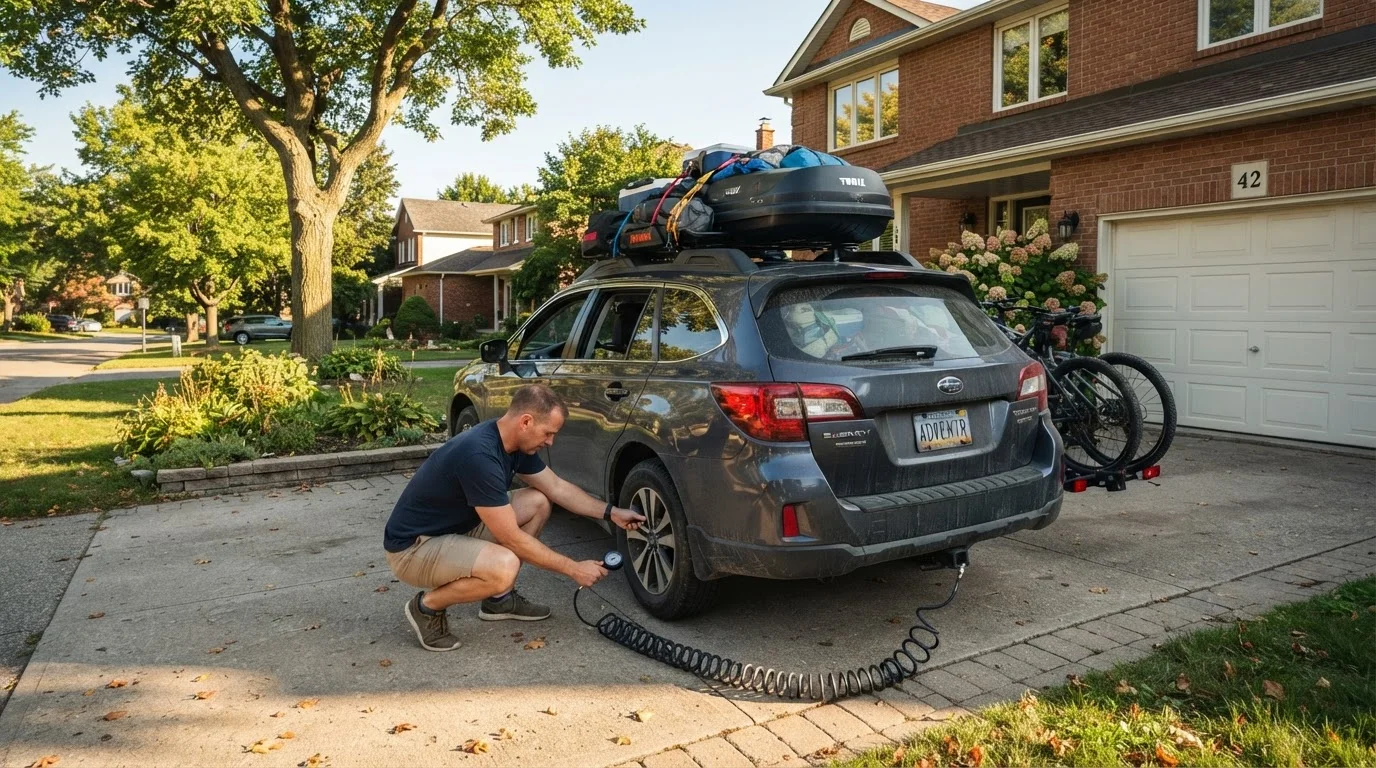
Summary
22 items · 30–60 minutes
Why a Long Drive Is Different From Your Daily Commute
Your car might feel perfectly fine on a ten-minute drive to the grocery store while quietly harboring a slow tire leak, low brake fluid, or a belt that's one highway hour from snapping. Short trips rarely stress a vehicle enough to expose those problems. Sustained highway speeds, heavy cargo loads, and hours of continuous engine heat are a different story entirely.
This checklist is designed for any driver planning a trip longer than two or three hours. Work through it the day before departure — not the morning you leave — so there's time to address anything that needs attention. For complementary advice on the financial side of trip prep, see pre-trip financial checklist.
Tires
Fluids
Lights and Visibility
Brakes and Steering
Under the Hood and Dashboard
Emergency Kit and Cabin
Tools and Supplies You'll Want on Hand
Most checks below require nothing more than your eyes and a few minutes. A small handful benefit from an inexpensive gauge or tool. Gather these before you start so you're not hunting for them mid-inspection.
Tire pressure gauge
Measures exact PSI in each tire so you can inflate to the vehicle manufacturer's specification — not the maximum listed on the tire sidewall.
Penny (or tread depth gauge)
Used to perform the basic Lincoln head tread-depth test; a dedicated gauge gives a more precise reading.
Portable jump starter
Allows you to restart a dead battery without needing another vehicle nearby, especially useful in remote locations.
Flashlight or headlamp
Essential for inspecting under the hood in low light and for roadside safety if a breakdown happens after dark.
Microfiber cloths
Useful for cleaning the windshield interior, checking dipstick oil condition, and wiping battery terminals.
Don't Skip the Spare Tire Check
Many drivers confirm their four main tires are ready and never open the trunk. A spare that's been sitting for years can be flat or dangerously deteriorated. Spare tires — especially compact "donut" spares — have speed and distance limits typically printed on the sidewall. Know what yours is rated for before you need it at the side of a highway.
On the Road: What This Preparation Actually Protects
Working through a pre-departure checklist isn't about distrust of your vehicle — it's about giving yourself a baseline. When you know your tire pressure was correct at departure, a sudden pressure-monitoring alert mid-trip means something, rather than possibly meaning nothing. That kind of confident context makes roadside decisions faster and clearer.
Preparation also stacks. A vehicle in good mechanical shape, driven by someone who's reviewed wet-weather driving technique and knows how to handle freeway merging confidently, is meaningfully safer than either factor alone. If this is your first extended drive, planning your first long-distance road trip offers a solid companion overview. And if you're heading out solo, the solo road trip guide covers additional safety habits worth reviewing before you go.
Warning Lights Mean Stop, Not Wait
A check engine or oil pressure warning light that appears during the trip should not be ignored until you reach your destination. Continued driving can turn a manageable repair into significant engine damage. Pull over safely when it is possible to do so, consult your owner's manual for guidance specific to that warning, and contact a mechanic or roadside assistance service before continuing. See more context on related vehicle safety considerations in our car maintenance guides.
This article provides general vehicle maintenance information for educational purposes. It is not a substitute for advice from a licensed mechanic. If you are uncertain about any aspect of your vehicle's condition, have it inspected by a qualified professional before departure.
The content on this site is for informational purposes only and is not a substitute for professional advice. Always consult a qualified professional for guidance specific to your situation.