

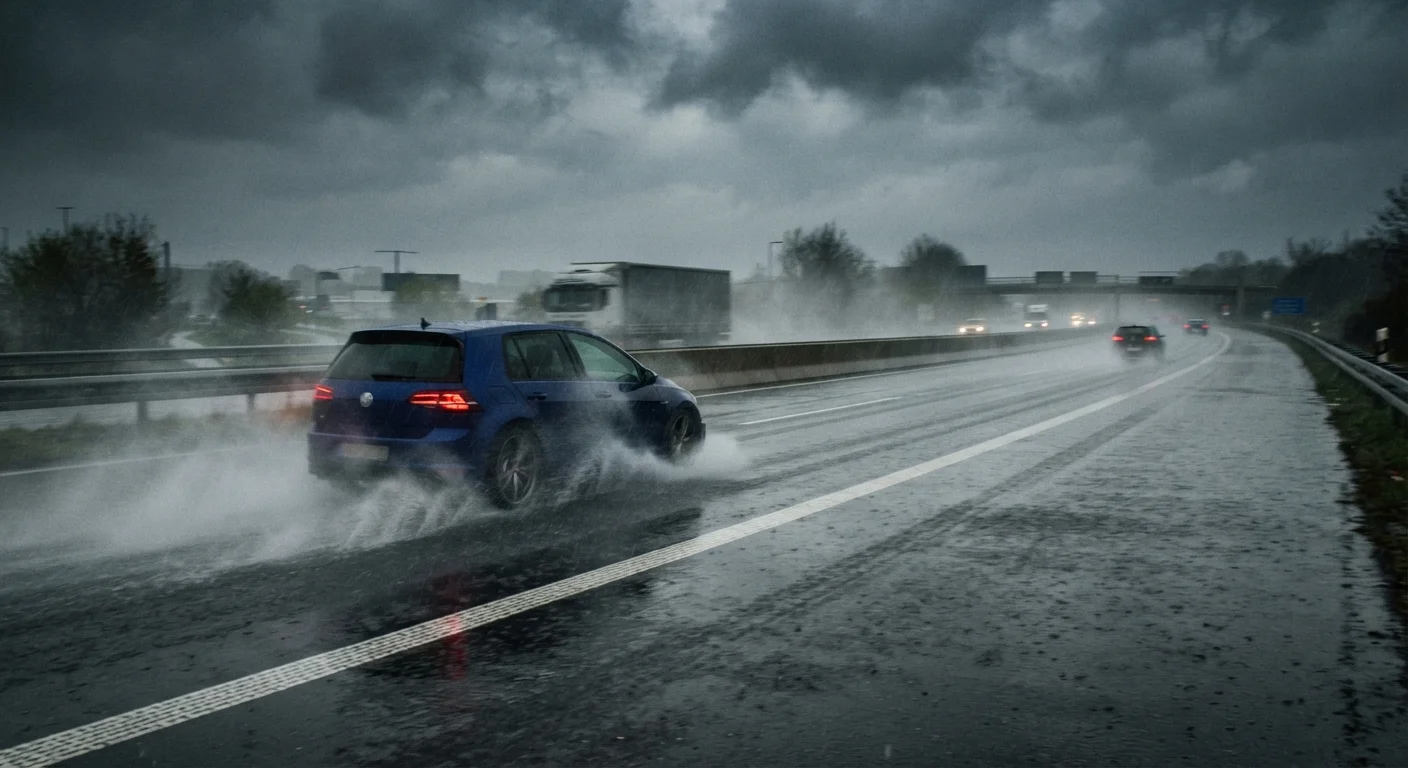
Why Rain Exposes Habits You Don't Know You Have
Rain doesn't create entirely new driving challenges — it amplifies the ones already present. Drivers who follow too closely, brake late, or skip pre-trip checks get away with those habits most of the time. Wet roads shrink the margin for error and surface those habits fast.
According to the Federal Highway Administration, wet pavement is a factor in roughly 70% of weather-related crashes in the United States each year. That number holds up partly because rain is common, but also because many drivers treat a rainy commute the same as a clear-sky one. Understanding where the adjustments need to happen is the first step toward genuinely safer wet-weather driving. For a broader framework of hazard awareness, see our guide to defensive driving on American roads.
Not turning on headlights in the rain.
Why it happens: Many drivers associate headlights with darkness rather than visibility. During daytime rain, they assume their car is visible enough without them.
Maintaining dry-road following distances on wet pavement.
Why it happens: The three-second rule becomes so automatic that most drivers apply it regardless of surface conditions, without consciously accounting for longer stopping distances in rain.
Driving through standing water at normal speed.
Why it happens: It's difficult to judge water depth visually from inside a moving vehicle, and many drivers assume puddles are shallow and harmless.
Overcorrecting when the vehicle begins to hydroplane.
Why it happens: Hydroplaning — when tires ride on a film of water rather than gripping the road — triggers a panic response, and drivers instinctively jerk the wheel or stab the brakes.
Ignoring worn wiper blades before driving in rain.
Why it happens: Wiper blades degrade gradually, so drivers rarely notice the decline until they're already in a downpour with streaky, smeared visibility.
Driving at the posted speed limit regardless of rain intensity.
Why it happens: Speed limits feel like the target rather than the legal maximum, and drivers often treat slowing down in rain as overly cautious or unnecessary.
The Specific Mistakes That Put Drivers at Risk
Each of the errors below follows the same basic pattern: a behavior that feels normal becomes genuinely risky the moment the road surface is wet. Recognizing that pattern makes all six mistakes easier to remember and correct.
~70%
Weather-related crashes on wet pavement
The Federal Highway Administration estimates that wet pavement contributes to approximately 70% of all weather-related traffic crashes in the U.S. annually.
35 mph
Speed at which hydroplaning can begin
Research indicates that hydroplaning can begin at speeds as low as 35 mph when tires are significantly worn and standing water is present on the road surface.
2×
Increase in stopping distance on wet roads
Wet pavement can roughly double stopping distances compared to dry conditions, varying by speed, tire condition, and road surface type.
Tire health deserves special mention. Tread depth directly controls how quickly water is channeled away from the contact patch between your tire and road. Bald or significantly worn tires cannot displace water fast enough at highway speeds, which is why hydroplaning risk climbs sharply as tires age. Check the car maintenance hub for guidance on inspection intervals. And because braking physics shift significantly in wet conditions, it's worth understanding how stopping distances change at highway speeds before you need that knowledge on the road.
Don't Rely Solely on All-Wheel Drive in Rain
All-wheel drive (AWD) improves traction during acceleration but does not significantly reduce stopping distances on wet roads. Many AWD drivers feel a false sense of security and follow too closely or drive too fast for conditions. Braking performance depends on tires and physics — not drivetrain type. Adjust your behavior accordingly regardless of what your vehicle's badge says.
Following distance adjustments are equally critical. The standard three-second rule applies to dry roads — in rain, doubling that gap to six seconds gives your braking system the room it actually needs. For a fuller breakdown of how conditions change the math, see our article on safe following distances in different driving conditions.
Rain is also one part of a larger seasonal picture. If you want to understand how road conditions shift across the whole year, our seasonal driving guide covers each phase in detail.
The content on this site is for informational purposes only and is not a substitute for professional advice. Always consult a qualified professional for guidance specific to your situation.