

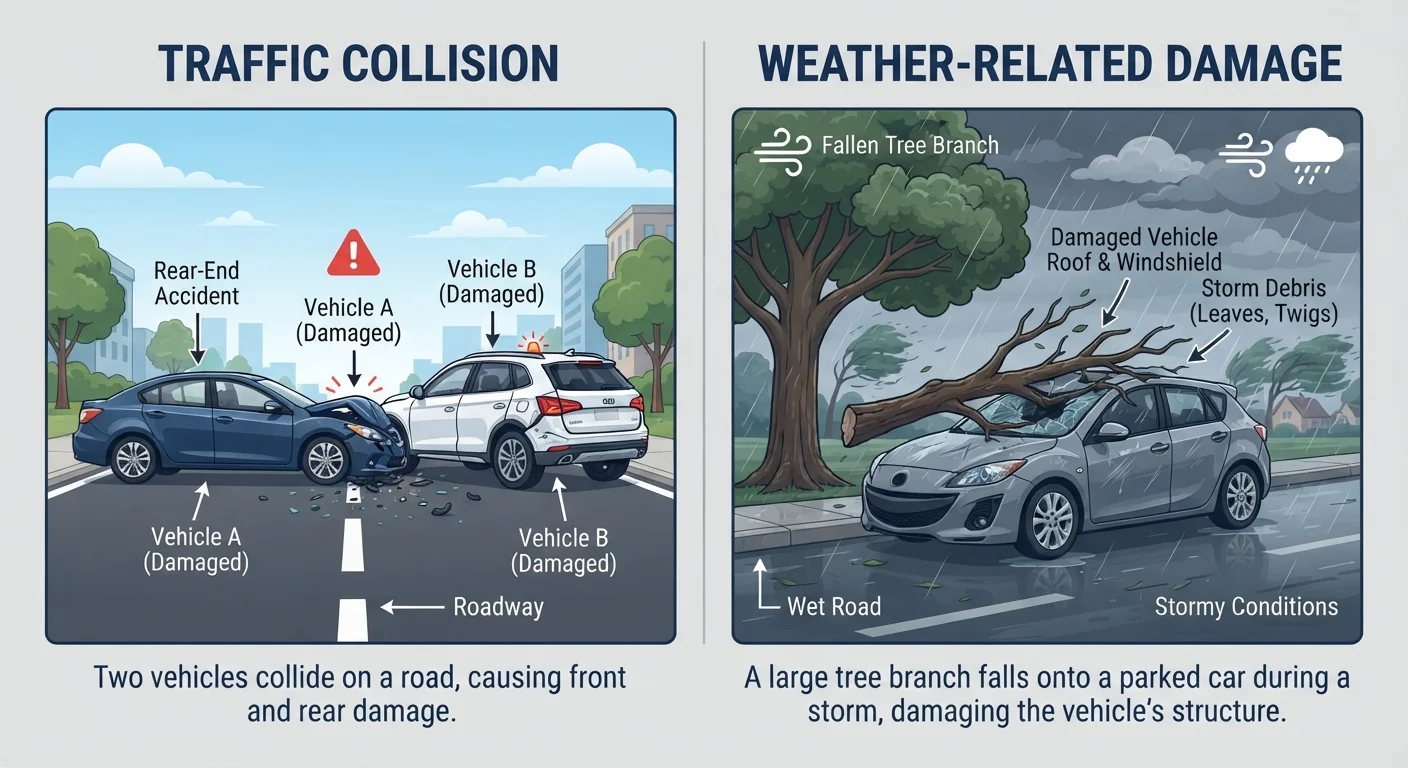
Option A
Comprehensive Coverage
Protection against events outside your control.
Best for: Drivers who want coverage for theft, weather, animals, and other non-collision incidents.
Option B
Collision Coverage
Protection specifically for impact-related damage.
Best for: Drivers who want their vehicle repaired after hitting another car, a guardrail, or any solid object.
Why Drivers Mix These Two Up
Comprehensive and collision coverage both protect your physical vehicle — the metal, glass, and mechanics — rather than other people or property. That shared purpose is exactly why so many drivers treat them as synonyms. They're not. Each one is triggered by a completely different category of event, and filing a claim under the wrong one can slow your payout or lead to unexpected out-of-pocket costs.
Both are optional coverages you add on top of your state-required liability insurance, though lenders and leasing companies commonly require both if you're financing a vehicle. For a broader look at how all the pieces of an auto policy fit together, see our Car Insurance Explained guide.
| Criterion | Comprehensive | Collision |
|---|---|---|
| Trigger event | Non-collision incidents (theft, weather, animals) | Physical impact with an object or vehicle |
| Deer strike | Covered | Not covered |
| Hitting a guardrail | Not covered | Covered |
| Hail damage | Covered | Not covered |
| Vehicle theft | Covered | Not covered |
| Rollover accident | Not covered | Covered |
| Fault required? | No — event-based | No — impact-based |
| Separate deductible | Yes | Yes |
| Required by law? | No (lenders may require) | No (lenders may require) |
What Comprehensive Coverage Actually Covers
Despite the name, comprehensive doesn't cover everything — it covers a defined set of non-collision events. Think of it as protection against things that happen to your car rather than things your car runs into.
- Theft — your vehicle is stolen or stripped for parts
- Weather damage — hail, flooding, wind, ice, or tornado damage
- Fire — including wildfires and electrical fires
- Falling objects — trees, branches, debris
- Animal collisions — hitting a deer is covered under comprehensive, not collision
- Vandalism — keyed paint, broken windows, intentional damage
One point that surprises many drivers: a deer strike is categorized as a comprehensive claim because the animal moved into your path — it's treated similarly to a falling object rather than a traditional crash. If you're wondering whether dropping this coverage is ever a smart move, our article on situations where skipping comprehensive coverage can backfire breaks down the specific scenarios where that decision tends to hurt.
~80%
Of insured U.S. drivers carry collision coverage
According to the Insurance Research Council, collision is one of the most widely purchased optional coverages among U.S. private passenger vehicle owners.
~77%
Of insured U.S. drivers carry comprehensive coverage
The Insurance Research Council also reports that comprehensive coverage is slightly less common than collision among optional add-ons, though both are widely held.
$2B+
Annual U.S. losses from deer-vehicle collisions
State Farm's annual deer-vehicle collision report estimates U.S. drivers collectively incur over $2 billion in vehicle damage from deer strikes each year — all comprehensive claims.
What Collision Coverage Actually Covers
Collision coverage pays for damage to your vehicle caused by a physical impact — regardless of who caused it. The key distinction is that there must be contact between your vehicle and something else.
- Rear-ending another vehicle
- Being rear-ended by another driver
- Side-swipe collisions in traffic or parking lots
- Hitting a guardrail, pole, fence, or wall
- Rolling over — single-vehicle rollovers are covered under collision
- Hitting a pothole that causes significant suspension or tire damage
One common misconception: if another driver hits you and they're at fault, their liability insurance should cover your repair — but if they're uninsured or underinsured, your collision coverage becomes the backstop. It pays first, and you can pursue reimbursement later. For a clear-eyed look at how liability-only and full coverage policies compare, the Liability vs. Full Coverage breakdown is worth reading alongside this one.
Deductibles, Payouts, and What Neither Coverage Does
Both comprehensive and collision require you to pay a deductible — a set amount you cover before insurance pays the rest. Common deductible amounts range from $250 to $1,500. Higher deductibles mean lower premiums, but more out-of-pocket cost when you file a claim. Importantly, comprehensive and collision each carry their own separate deductible, so carrying both means you have two distinct thresholds.
Neither coverage handles:
- Your own medical bills after an accident (that's what personal injury protection or medical payments coverage addresses)
- Damage to another driver's vehicle or property (that's liability coverage)
- Mechanical breakdowns or routine wear
- Personal belongings stolen from inside your car (typically a homeowners or renters insurance matter)
Understanding these boundaries prevents the frustrating discovery that a claim you expected to be covered actually falls outside your policy. For a closer look at common misunderstandings that lead to real financial consequences, our piece on auto insurance myths that cost drivers real money is a useful companion read.
This article provides general educational information about auto insurance coverage types. It is not a substitute for advice from a licensed insurance professional. Policy terms, exclusions, and requirements vary by state and insurer — always review your specific policy documents and consult your insurance provider for guidance on your individual situation.
The content on this site is for informational purposes only and is not a substitute for professional advice. Always consult a qualified professional for guidance specific to your situation.