

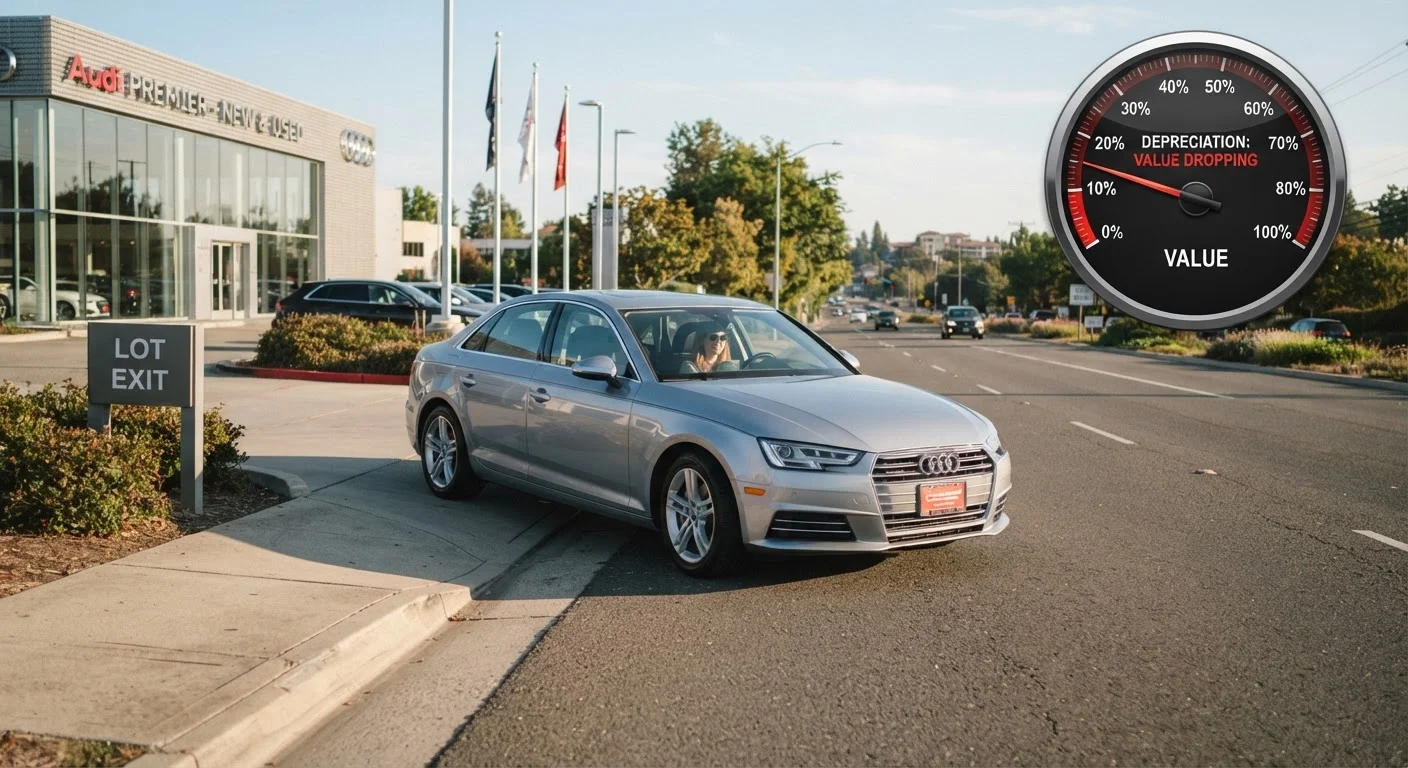
The Moment the Clock Starts Ticking
The phrase "driving off the lot" isn't just a figure of speech — it marks the precise moment depreciation begins. Once a vehicle is titled in your name, it transitions from new inventory to a used vehicle in the eyes of every future buyer and pricing guide. That shift can represent thousands of dollars in lost value before you've even merged onto the highway.
Most financial analyses estimate that a new vehicle loses somewhere between 15% and 25% of its purchase price within the first twelve months alone. By year five, many vehicles have shed roughly 40–60% of their original value — though this varies considerably by make, model, and market conditions.
This is why depreciation is often called a hidden cost. It doesn't show up on a bill. But when you eventually sell or trade in, the difference between what you paid and what you receive is very real. For a thorough picture of what car ownership actually costs, see the true cost of owning a car beyond the sticker price.
~20%
Average first-year value loss for new vehicles
Industry pricing data from sources like Edmunds and Kelley Blue Book consistently estimate new vehicles lose roughly 15–25% of purchase price within the first year.
~50%
Typical value remaining after five years
Many standard vehicles retain only 40–60% of their original purchase price after five years, depending on brand, condition, and mileage.
Year 1–3
Steepest period of depreciation
The first three years of ownership account for the largest absolute dollar losses in a vehicle's depreciation lifecycle.
What Drives the Rate of Depreciation
Not all vehicles depreciate at the same speed. Several factors determine how quickly — or slowly — a car sheds value:
- Brand and model reputation: Vehicles associated with long-term reliability and low ownership costs tend to hold value better. Conversely, models with known reliability issues often depreciate faster as buyers factor in future repair costs.
- Mileage: Higher mileage signals greater mechanical wear. Pricing guides typically apply measurable deductions for vehicles above the average annual usage of roughly 12,000–15,000 miles.
- Condition: Accident history, cosmetic damage, and deferred maintenance all reduce resale value. A clean maintenance record and service history can work in your favor at trade-in time.
- Market demand: Supply and demand dynamics shape used car prices significantly. During periods of low used-car inventory, depreciation can temporarily slow — but these conditions don't last indefinitely.
- Fuel type and technology: As consumer preferences shift, older powertrain technology or features that have been superseded can accelerate value loss.
Service Records Add Real Dollar Value
When it's time to sell or trade in, a documented maintenance history is one of the strongest signals you can offer a buyer or dealer. Keep receipts, use a single trusted shop where possible, and hold onto any records showing scheduled services were completed on time. This paper trail can meaningfully improve your trade-in offer.
Understanding these levers helps you think ahead. Good maintenance habits don't just prevent breakdowns — they protect the investment you've made in your vehicle.
How Depreciation Affects Real Ownership Decisions
Depreciation shapes three of the biggest choices drivers make: when to buy, what to buy, and when to sell.
Buying used vs. new: Purchasing a vehicle that's two to three years old allows you to let the original owner absorb the steepest part of the depreciation curve. You get a vehicle that still has substantial useful life, often with remaining factory warranty coverage, but at a meaningfully lower price than new.
Leasing: A lease is essentially a structured way of paying for a vehicle's depreciation during the lease term. Monthly lease payments reflect the expected value drop over that period. This can make monthly costs lower than financing a purchase, but you don't build equity and mileage caps apply.
Selling timing: Holding a vehicle well past its steepest depreciation period — typically years one through three — means you've spread the biggest losses over more miles of use. Selling before major maintenance milestones or known reliability concerns emerge can also help you recover more value.
For first-time owners getting to grips with the full ownership picture, this plain-language guide to car ownership covers the essentials, including costs that are easy to overlook.
Practical Steps to Preserve Your Car's Value
You can't stop depreciation — but you can influence its pace. A few consistent habits make a measurable difference when the time comes to sell or trade in:
- Follow your maintenance schedule: A documented service history is tangible proof to future buyers that the vehicle was cared for. Don't fall for common maintenance myths that can lead to neglect in disguise.
- Protect the exterior and interior: Paint damage, worn upholstery, and neglected interiors all lower resale appraisals. Simple habits like regular washing and using floor mats cost little but signal care.
- Keep mileage reasonable: Where possible, consolidating trips or using alternative transportation for short errands can moderate annual mileage accumulation.
- Address small issues promptly: Minor chips, warning lights, and odd sounds that get ignored often become larger and costlier problems — and show up in inspection reports at trade-in time.
Depreciation also ripples into adjacent costs. Your vehicle's current market value influences how your insurance premium is calculated, as comprehensive and collision coverage is typically tied to the car's replacement cost. Understanding these connections helps you see your vehicle as the financial asset it actually is.
Frequently Asked Questions
A new car can lose roughly 10–15% of its value the moment it's driven off the lot. Within the first year, total depreciation often reaches 15–25%. This drop occurs because the vehicle is no longer classified as "new" once it's been titled to an owner.
Vehicles with strong brand reliability reputations, high demand, and limited supply tend to depreciate more slowly. Trucks, certain SUVs, and models known for longevity generally hold value better than luxury sedans or technology-heavy vehicles whose features go out of date quickly.
Yes — mileage is one of the strongest predictors of resale value. High-mileage vehicles are assumed to have more wear on mechanical components. Most market pricing guides apply significant value deductions for mileage above the average of roughly 12,000–15,000 miles per year.
With a lease, you essentially pay for the depreciation that occurs during your lease term rather than owning a depreciating asset. Whether that's financially advantageous depends on your specific usage, lease terms, and long-term goals — a general financial advisor can help assess your situation.
You can't stop depreciation, but you can slow it. Keeping up with scheduled maintenance, avoiding accidents, limiting unnecessary mileage, and keeping the interior and exterior in good condition all help preserve resale value over time.
There's no single universal answer, but many financial analysts note that the steepest losses occur in years one through three. Selling before major service milestones or before reliability concerns emerge can help maximize what you recover.
The content on this site is for informational purposes only and is not a substitute for professional advice. Always consult a qualified professional for guidance specific to your situation.