

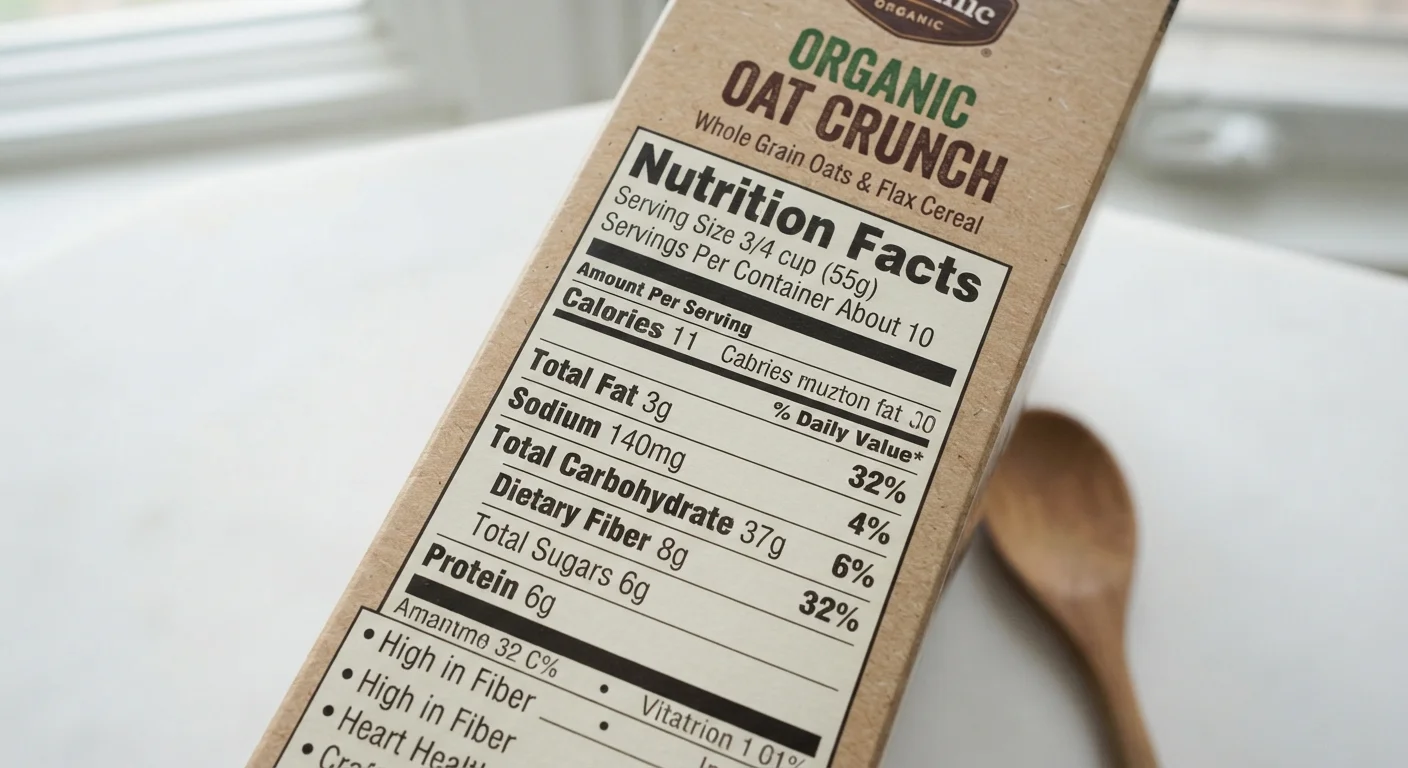
What the Total Fiber Number Actually Represents
When you glance at the Nutrition Facts panel, the "Total Dietary Fiber" line looks straightforward — a single gram count. But that number is a composite. It adds together two distinct categories: fiber that is naturally present in the food's whole ingredients, and fiber that has been extracted from another source and mixed into the product during manufacturing.
This distinction matters because those two fiber types can produce meaningfully different effects in the body. The fiber naturally woven into a piece of whole-grain bread, a cup of black beans, or an apple exists inside a matrix of other nutrients — vitamins, minerals, antioxidants, and water — that influence how your body processes it. Isolated fibers are chemically similar but stripped of that surrounding context.
For a deeper look at how all the numbers on a Nutrition Facts panel fit together, see our guide to what nutrition labels are actually telling you.
~7g
Average daily fiber intake for American adults
Research consistently shows most Americans fall well short of the recommended 28 grams per day, according to USDA dietary data.
9
Isolated fibers FDA has approved as dietary fiber
The FDA has reviewed and approved a specific list of non-digestible carbohydrates that qualify as dietary fiber based on demonstrated physiological benefits.
28g
Daily fiber target for a 2,000-calorie diet
The 2020–2025 USDA Dietary Guidelines for Americans set this as the Daily Value reference for dietary fiber on Nutrition Facts labels.
Intact Fiber vs. Added Isolated Fiber: Why the Source Matters
Nutritional science has built its strongest case for fiber benefits — improved digestive regularity, better blood sugar management, reduced LDL cholesterol — largely on studies of intact dietary fiber from whole plant foods. The fiber in oats, lentils, broccoli, and berries has decades of research behind it.
Added isolated fibers are a different story. The FDA now requires that any isolated or synthetic non-digestible carbohydrate included in the fiber count must demonstrate a physiological benefit to human health. So far, the agency has approved a defined list that includes fibers like psyllium husk, pectin, locust bean gum, and several others. Some have solid evidence; others have only preliminary data.
Common added fibers you'll spot in ingredient lists include inulin, chicory root extract, soluble corn fiber, oat fiber, and pea fiber. Their effects — on gut bacteria, satiety, blood sugar, and digestion — differ from one another and are not always interchangeable with those of intact plant fiber.
Quick Label Hack for Fiber Quality
Divide the grams of fiber by the total grams of carbohydrates on the label. If fiber makes up less than 10% of the carb total in a grain-based product, the product likely isn't a strong whole-grain source. Pairing this ratio check with a scan of the ingredient list gives you a fast, reliable read on fiber quality.
How to Read Labels More Critically
The Nutrition Facts panel alone won't tell you what kind of fiber a product contains. That information lives in the ingredient list, which appears separately on the package. Use both together.
Step 1 — Check the ingredient list first. Look for whole food sources near the top: whole wheat, oats, beans, lentils, or fruit. These indicate the fiber is largely intact.
Step 2 — Look for isolated fiber terms. Inulin, chicory root extract, soluble corn fiber, fructooligosaccharides (FOS), and similar names indicate added isolates. Their presence isn't a red flag, but it signals the fiber gram count is partially inflated by supplemental sources.
Step 3 — Consider the overall nutritional picture. A product with 10 grams of fiber sourced mostly from inulin is nutritionally different from one with 10 grams from whole wheat and oats — even though the label looks identical. Also look at sodium, added sugars, and the ingredient list length for broader context. Our article on added sugars vs. total sugars on nutrition labels applies similar label-reading logic to the sugar line.
Building Fiber Intake on a Solid Foundation
The most research-backed strategy for meeting your fiber needs is to build meals around whole plant foods — vegetables, fruits, legumes, nuts, seeds, and whole grains. These naturally deliver a mix of soluble and insoluble fiber alongside the broader nutrient package that supports overall health.
That doesn't mean avoiding every product with an added fiber. Fiber-enriched foods can be a practical tool, especially for people who genuinely struggle to meet their daily target. But they work best as a complement to, not a replacement for, whole food sources.
If you're unsure how to adjust your eating patterns to boost fiber intake or have a digestive condition that affects how you tolerate certain fiber types, speaking with a registered dietitian or your healthcare provider is a smart first step. General nutrition information is not a substitute for personalized guidance.
This article is for general informational purposes only and does not constitute medical or dietary advice. Consult a qualified healthcare professional for guidance tailored to your individual health needs.
Frequently Asked Questions
Yes. The total dietary fiber figure combines fiber that occurs naturally in ingredients with any isolated fiber a manufacturer has added. Both count toward the number you see, even though they may behave differently in your digestive system.
Isolated fiber is extracted or synthesized and added to food to boost its fiber count. It isn't necessarily harmful, but the research supporting its benefits varies widely by type. Some, like psyllium husk, have strong evidence; others have limited data.
Check the ingredient list. If whole grains, legumes, fruits, vegetables, nuts, or seeds appear prominently — especially early in the list — the fiber is largely intact from those foods. Ingredients like "chicory root extract," "inulin," or "soluble corn fiber" signal added isolated fibers.
The 2020–2025 USDA Dietary Guidelines recommend about 28 grams of fiber per day for adults on a 2,000-calorie diet, though individual needs vary by age and sex. Most Americans consume well below this target.
They can contribute to your daily total, but it depends on where the fiber comes from. Products that rely heavily on added isolated fibers deliver a different nutritional package than whole-grain or legume-based foods. Read both the label and the ingredient list together.
Soluble fiber dissolves in water and can help manage blood cholesterol and blood sugar levels. Insoluble fiber adds bulk to stool and supports digestive regularity. Most whole plant foods contain both types, which is one reason whole food sources are broadly recommended.
The content on this site is for informational purposes only and is not a substitute for professional advice. Always consult a qualified professional for guidance specific to your situation.