

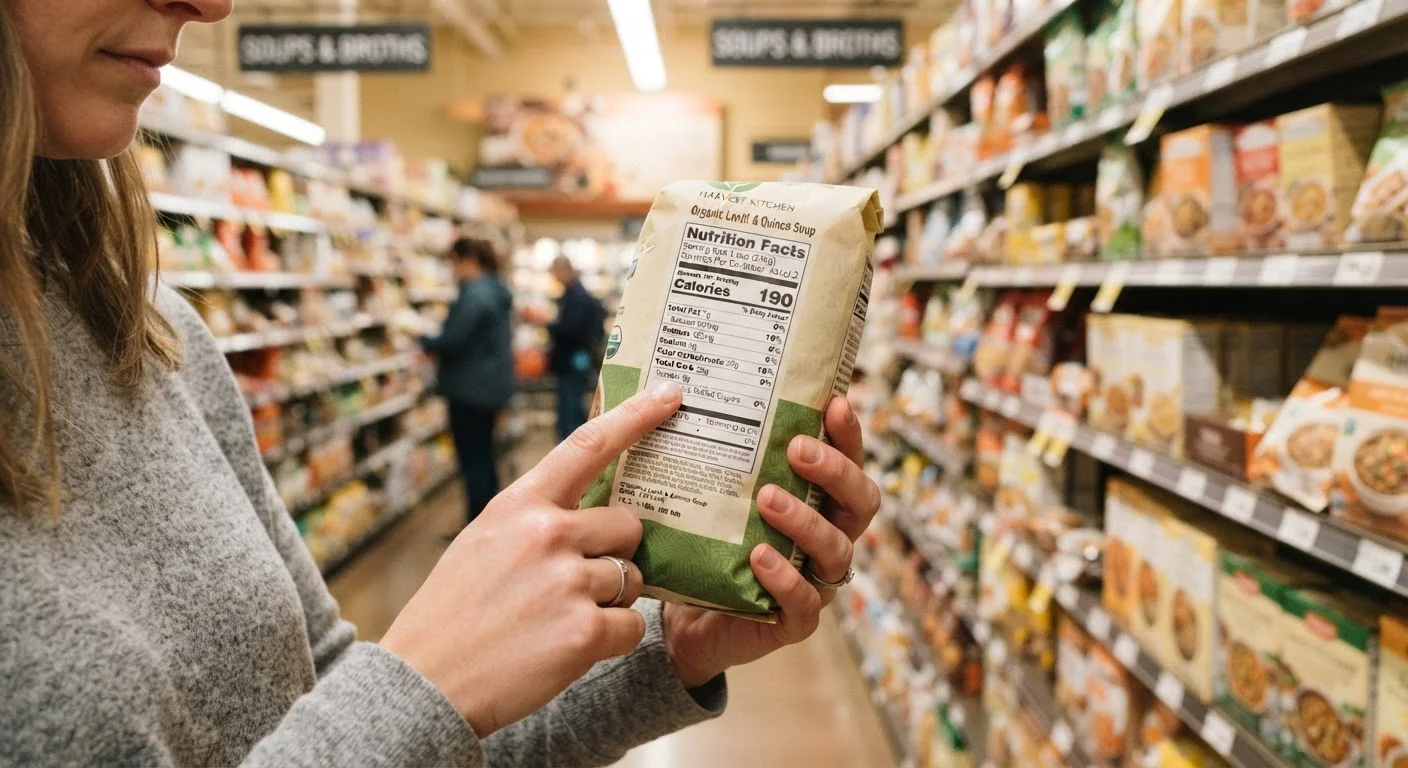
Why Nutrition Labels Exist — and What They're Actually For
The Nutrition Facts panel on packaged food isn't decoration. It's a standardized disclosure regulated by the U.S. Food and Drug Administration (FDA), designed to give you consistent, comparable information regardless of which brand or product you're holding. The challenge is that most of us were never taught how to read it efficiently — so we either ignore it entirely or fixate on the wrong numbers.
This guide walks you through the label section by section, so you know exactly what you're looking at and which parts actually matter for everyday food decisions. For a broader look at everything on American food packaging — including health claims and allergen notices — see Understanding Food Labels From Start to Finish.
The Panel Is Always More Reliable Than the Front
Front-of-package design uses color, font size, and selective claims to shape first impressions. The Nutrition Facts panel is regulated and standardized — it's the most trustworthy part of any package. Make it your default starting point rather than the marketing copy on the front.
What You Need Before You Start
You don't need any special tools or background knowledge to read a nutrition label — just the packaged food itself and a basic understanding of a few terms defined below. This guide uses standard U.S. label format as updated under FDA rules that took effect for most manufacturers in 2020.
What you will need
Step-by-Step: Reading the Label
Follow these steps each time you pick up a packaged food. Once this becomes habit, the whole process takes under a minute.
Start with serving size — before anything else
Every number on the label — calories, fat, sodium, vitamins — applies to one serving, not the whole package. The serving size is listed at the very top of the panel in both a common household measure (e.g., "1 cup") and grams. If you eat two servings, you double every number. The FDA updated serving sizes in 2020 to better reflect how much people actually eat, so portions are now more realistic than older labels.
Look at calories in context
Calories measure the energy a food provides per serving. The label now displays this number in bold, large type. Rather than judging a calorie count as "good" or "bad" in isolation, consider it relative to the food's nutritional contribution. A 200-calorie serving of nuts delivers protein, healthy fat, and fiber; 200 calories of a sweetened snack may offer little else. Calorie needs vary significantly by age, sex, activity level, and health status — the 2,000-calorie baseline on the label is a general reference, not a universal prescription.
Use % Daily Value as a quick benchmark
The % Daily Value (%DV) column shows what percentage of a recommended daily amount one serving provides, based on a 2,000-calorie diet. A general rule of thumb recognized by the FDA: 5% DV or less is considered low for a nutrient; 20% DV or more is considered high. Use this to quickly identify whether a food is a meaningful source of a nutrient you want more of (like fiber or calcium) or one to limit (like sodium or saturated fat).
Identify nutrients to limit
The label calls out specific nutrients most Americans tend to consume too much of: saturated fat, sodium, and added sugars. Saturated fat and sodium are linked to cardiovascular risk when consumed in excess over time. Added sugars — now broken out separately from total sugars — represent sugars introduced during processing, distinct from naturally occurring sugars in fruit or dairy. A food's total sugar line can look reasonable while its added sugar line reveals a significant portion comes from sweeteners.
Note nutrients to get enough of
Below the nutrients to limit, the panel lists nutrients many Americans fall short on: dietary fiber, vitamin D, calcium, iron, and potassium. These are included because public health data suggest inadequate intake is common. A %DV of 20% or higher for these nutrients means a food is a substantial source — useful when you're trying to add variety or fill specific gaps in your diet.
Read the ingredient list as a second source of truth
Ingredients are listed in descending order by weight — the first ingredient is present in the largest amount. A product listing "whole wheat flour" first and "enriched flour" fourth is substantively different from one that reverses that order, even if the front of the package says "made with whole grains." Scan for added sugars under their many names (corn syrup, dextrose, maltose, cane juice, etc.) and look for recognizable whole-food ingredients near the top. For definitions of confusing ingredient-list terms, A Glossary of Confusing Food Label Terms is a practical reference.
Once you're comfortable reading a single label, the next skill is comparison. Our guide on what to look for when comparing two packaged foods shows you how to apply this knowledge side by side.
Front-of-Package Claims: Marketing vs. Regulation
Terms like "natural," "wholesome," and "made with real fruit" appear on the front of packages because they attract buyers — not because they carry precise legal definitions. Some terms do have regulated meanings: "low sodium," "reduced fat," and "fat-free" must meet specific FDA thresholds. But even products that qualify for those labels can still be high in added sugar or calories. See the label language of fat for how those definitions work in practice.
The Nutrition Facts panel on the back or side is always the more reliable source. If a front-of-package claim interests you, verify it against the actual numbers inside the panel. For a deeper look at how packaging design shapes perception, How Food Manufacturers Use Labels to Shape Perception covers the full picture.
Allergen Information Requires Separate Attention
The Nutrition Facts panel does not include allergen disclosures — those appear separately, typically in a "Contains" statement or bold text within the ingredient list. If you or someone in your household has a food allergy, check the allergen section explicitly. Note that "may contain" warnings are voluntary and not federally required. For full detail, see what federal law requires on allergen disclosures.
This article provides general nutrition education and is not a substitute for personalized dietary advice. If you have specific health conditions, dietary restrictions, or allergies, consult a registered dietitian or qualified healthcare professional.
The content on this site is for informational purposes only and is not a substitute for professional advice. Always consult a qualified professional for guidance specific to your situation.