

Summary
18 items · 10–20 minutes per comparison
Why Label Comparisons Go Wrong
Most people pick up two boxes, glance at the calorie count, and call it done. But that single number tells you almost nothing in isolation — especially when the serving sizes differ, which they frequently do. A granola brand listing 150 calories per serving looks favorable until you notice its serving is one-third of a competitor's. Suddenly the comparison is meaningless.
Food marketing adds another layer of confusion. Terms like "multigrain," "made with real fruit," and "all-natural" appear on front labels but carry no standardized legal definition under current FDA rules. They're designed to trigger trust, not inform decisions. The actual data — the kind you can rely on — lives inside the Nutrition Facts panel and the ingredient list, not on the front of the box.
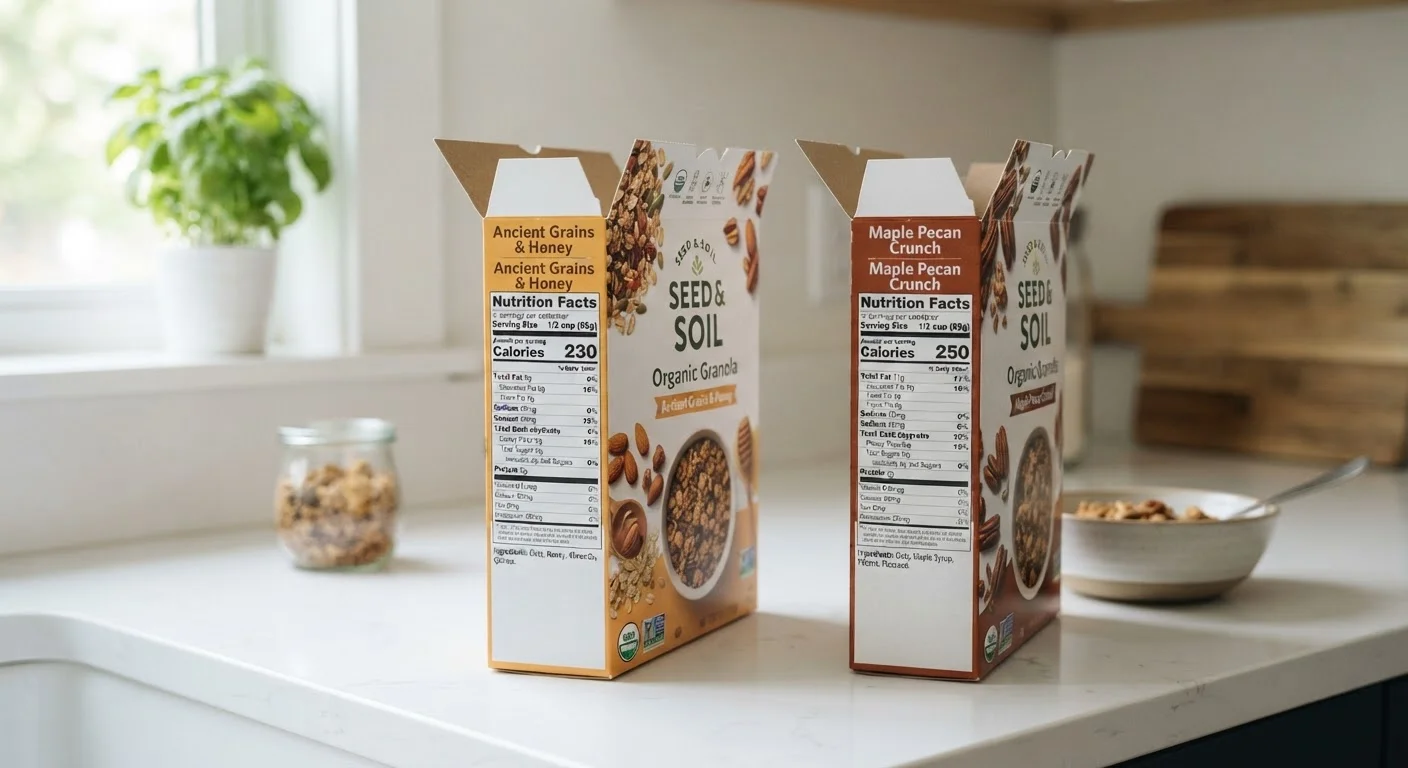
If you're new to reading those panels, the comprehensive label guide covers every element of American food packaging from top to bottom. For a quicker introduction, see Reading a Food Label for the First Time. This checklist assumes you have both products in hand and walks you through a structured side-by-side comparison.
Front-of-Package Claims Are Not Regulated Uniformly
Terms like "natural," "light," "multigrain," and "made with whole grains" do not have a single legal definition under current FDA rules and can appear on products regardless of overall nutritional quality. Always verify any front-label claim against the actual Nutrition Facts panel and ingredient list before drawing conclusions. Marketing language is designed to attract attention — not to inform your comparison.
What Tools You'll Need
You don't need an app or a calculator to do this well — just the products themselves and a consistent method. Here are the resources worth having on hand.
Both product packages
Required to compare Nutrition Facts panels and ingredient lists side by side.
A simple calculator or phone
Useful for adjusting numbers to a common serving size so comparisons are apples-to-apples.
USDA FoodData Central (online database)
Free government database to verify nutrient content or check products you can't physically access.
FDA's daily value reference chart
Clarifies what the %DV percentages on Nutrition Facts panels actually represent for key nutrients.
The Comparison Checklist
Work through these checks in order. The sequence matters: earlier steps calibrate the numbers so later steps are actually meaningful.
Step 1 — Calibrate the Comparison
Step 2 — Evaluate Calories and Macronutrients
Step 3 — Scrutinize Sugar and Sodium
Step 4 — Assess Fiber and Micronutrients
Step 5 — Review the Ingredient List
Reading the Ingredient List Like a Pro
Numbers alone don't tell the full story. The ingredient list reveals what's actually in the product — and in what relative proportion. Ingredients are listed by weight from highest to lowest, so the first three or four items make up the bulk of what you're eating. A bread that lists "enriched white flour" first and "whole wheat flour" fourth is mostly refined flour, regardless of what the front says.
Watch for added sugars under many aliases: cane syrup, dextrose, maltose, fruit juice concentrate, and others all count. The ingredient list rules most shoppers don't know can help you decode these patterns quickly. Also note: a shorter ingredient list isn't automatically better, but it's often easier to evaluate. If you're comparing two protein sources, our breakdown of plant vs. animal proteins can help you weigh what the label numbers actually mean in context.
This article is for general informational and educational purposes only. It is not a substitute for personalized advice from a registered dietitian or other qualified health professional. Individual nutritional needs vary — consult a professional for guidance specific to your health situation.
The content on this site is for informational purposes only and is not a substitute for professional advice. Always consult a qualified professional for guidance specific to your situation.