

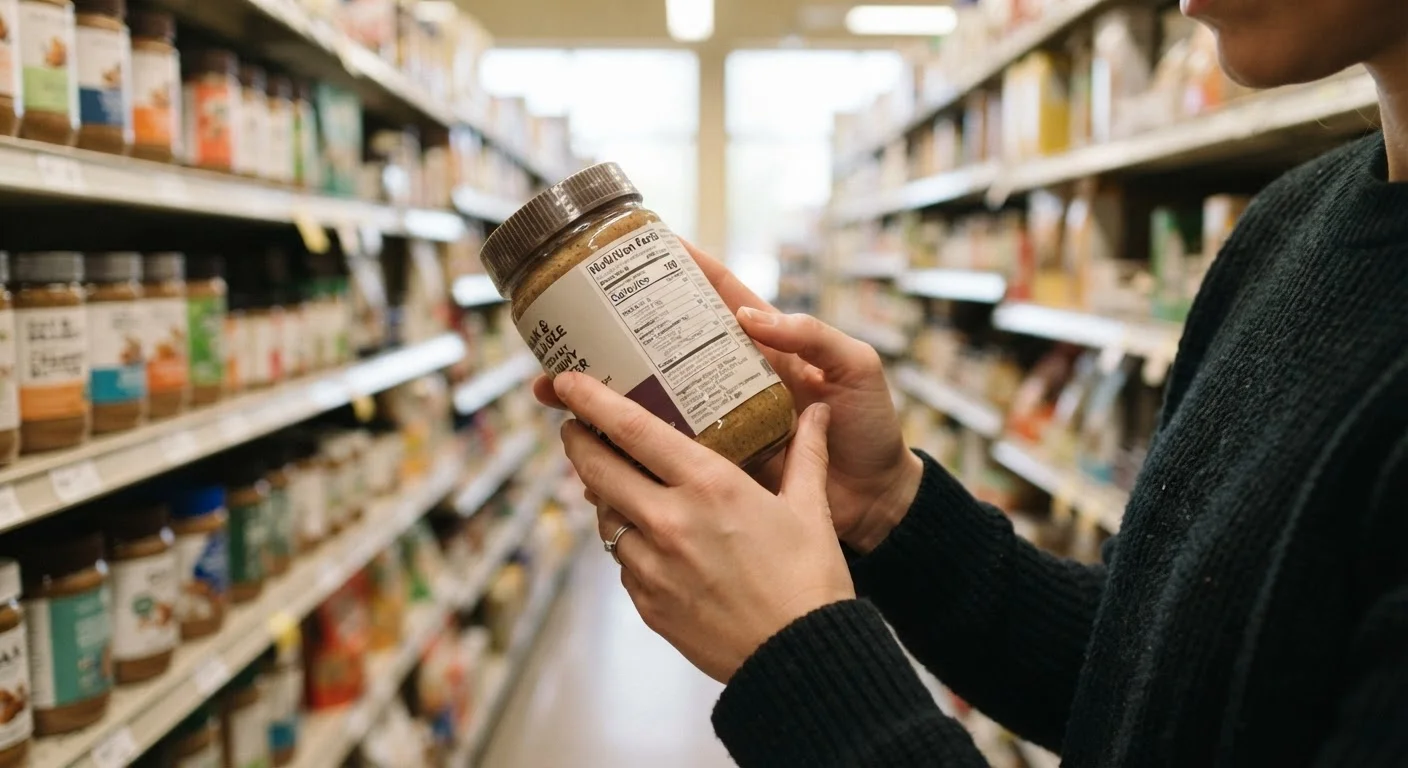
The One Rule That Changes Everything
Most shoppers scan ingredient lists looking for things to avoid — artificial dyes, unfamiliar chemicals, names they can't pronounce. That instinct is reasonable, but it skips the single most important fact about how ingredient lists work: every ingredient is listed in descending order by weight.
Whatever the manufacturer used most is listed first. Whatever was used least appears last. This rule, established by the FDA, applies uniformly to all packaged foods sold in the United States. It means the first three to five ingredients tell you what a product is fundamentally made of — everything after that contributes progressively smaller amounts.
That blueberry muffin mix where "blueberries" appears tenth on a fifteen-item list? Those blueberries are a minor flourish, not a meaningful ingredient. This is why the ingredient list is one of the most honest sections on any package — and why understanding its structure matters more than memorizing which additives to fear.
Ingredient Lists and the Nutrition Facts Panel Work Together
The ingredient list tells you what a product is made of; the Nutrition Facts panel tells you how much of each nutrient is in a serving. Neither section gives you the full picture on its own. Using both together — checking which ingredients appear first and then verifying amounts on the panel — is the most reliable approach to understanding any packaged food.
For a broader guide to interpreting the full label, see our plain-language walkthrough of the Nutrition Facts panel — it pairs well with ingredient list literacy.
How the Sugar Naming Game Works
One of the most widely used label strategies involves sugar. Manufacturers sometimes use several different sweeteners in a single product — cane sugar, brown rice syrup, dextrose, honey, and high-fructose corn syrup might all appear in the same item. Because each is listed separately, no single sweetener necessarily appears near the top of the list, even when their combined contribution is substantial.
This isn't illegal. It's a natural consequence of a labeling system that lists individual ingredients rather than categories. But it does mean a shopper reading quickly might underestimate total added sugar content. Cross-referencing the ingredient list with the "Added Sugars" line on the Nutrition Facts panel — which captures all sources combined — closes that gap.
Spotting Multiple Sweetener Names
When scanning an ingredient list, look for several sweetener names clustered within a short span — cane sugar, brown rice syrup, and dextrose appearing within the first ten ingredients is a signal worth pausing on. Then flip to the Nutrition Facts panel and check the "Added Sugars" line to see the full combined amount per serving.
The FDA currently recognizes more than 60 names for added sugar on ingredient labels. Common ones include: corn syrup, evaporated cane juice, maltose, dextrose, fruit juice concentrate, and anything ending in "-ose." Spotting multiple sweetener names in the same list is a reliable signal worth noting.
Sub-Ingredients and What They Reveal
When a product contains a multi-part ingredient — a seasoning blend, a sauce, a flavored coating — that ingredient's own components must also be disclosed. They appear in parentheses directly after the compound ingredient name. For example: "Seasoning Blend (salt, sugar, onion powder, paprika, natural flavor)."
Sub-ingredients are where hidden sodium, hidden sugar, and common allergens often live. A product might list "soy sauce" as one ingredient and seem relatively straightforward — but the parenthetical that follows reveals wheat and sodium at levels a person monitoring those nutrients would want to know about.
This layer of the ingredient list rewards closer reading. The full picture of how sodium accumulates across packaged foods shows just how often it hides inside compound ingredients that don't immediately signal "salty."
60+
Names for added sugar recognized on ingredient labels
The FDA and nutrition researchers have catalogued over 60 terms that indicate added sugar in ingredient lists, including dextrose, maltose, evaporated cane juice, and fruit juice concentrate.
~70%
Packaged foods in U.S. stores containing added sugar
An analysis of over 1.2 million packaged food products published in the journal Lancet Diabetes & Endocrinology found added sweeteners in approximately 68–74% of U.S. grocery products.
Top 3
Ingredients that define what a product mostly is
Because ingredients are listed by descending weight, nutritionists generally treat the first three ingredients as the primary structural components of any packaged food.
What Front-of-Package Claims Don't Tell You
Phrases like "made with whole grains," "contains real fruit," or "a good source of fiber" are marketing statements — not regulated summaries of what the product is mostly made of. The ingredient list is where those claims get tested.
"Made with whole grains" can be accurate even if refined flour appears first and whole wheat flour appears fifth. "Contains real fruit" may describe fruit that ranks behind sugar, modified starch, and artificial flavor by weight. These statements are not false, but they are selectively framed. The ingredient list gives you the unselected version.
This is why label-reading experts consistently point shoppers to the ingredient list before the front of the package. The marketing language that sounds healthier than it is covers the most common phrases worth scrutinizing. When you shop with the weight-order rule in mind, the gap between front-panel promise and back-panel reality becomes immediately visible.
For a practical method of applying all of this while comparing two similar products, the framework for comparing packaged foods side by side walks through a structured approach that doesn't require memorizing nutrition science.
This article is for general informational and educational purposes only and is not a substitute for advice from a qualified registered dietitian or healthcare professional. Individual dietary needs vary — consult a professional for guidance specific to your health circumstances.
Frequently Asked Questions
The FDA requires that ingredients be listed in descending order by weight before cooking or processing. The ingredient present in the greatest amount by weight always appears first. This rule applies to all packaged foods sold in the U.S.
Food manufacturers sometimes use several different forms of sugar — such as cane sugar, high-fructose corn syrup, and brown rice syrup — in the same product. Each form is listed separately, which can make sugar appear lower on the list than its combined total would suggest. Looking for multiple sweetener names is a practical label-reading strategy.
Nearly all ingredients must be disclosed, including sub-ingredients within compound ingredients. There are limited exemptions — certain processing aids used in tiny amounts may not require listing — but major allergens must always be declared regardless of amount.
Sub-ingredients are the components that make up a multi-part ingredient, like the elements inside a seasoning blend or sauce. They appear in parentheses after the compound ingredient name. This matters because it reveals hidden sources of sodium, sugar, or allergens inside an ingredient you might not expect.
There is no universal cutoff, but a longer list often — though not always — indicates more processing. More meaningful than count is the nature of the ingredients: recognizable whole-food components versus a lengthy chain of additives, stabilizers, and artificial flavors. Context matters more than any specific number.
No — they are two separate, complementary sections. The Nutrition Facts panel shows amounts of nutrients per serving. The ingredient list tells you what the product is actually made of. Using both together gives you a far more complete picture than either one alone.
The content on this site is for informational purposes only and is not a substitute for professional advice. Always consult a qualified professional for guidance specific to your situation.