

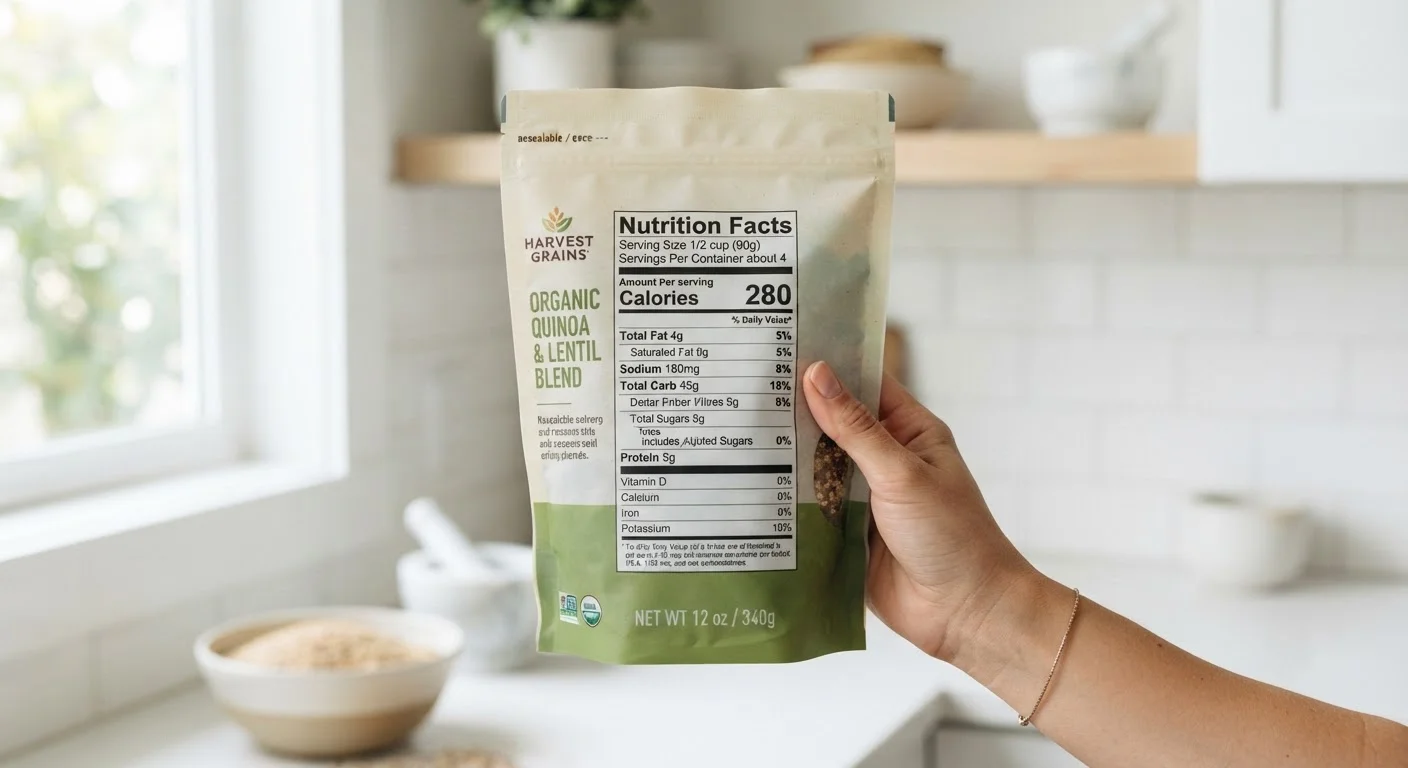
Why the Nutrition Facts Panel Exists
The Nutrition Facts panel is a federally standardized label required on most packaged foods sold in the United States, regulated by the Food and Drug Administration (FDA). It was introduced in 1994 and significantly updated in 2016 to reflect current nutritional science — including the addition of the added sugars line and updated serving sizes. The goal is straightforward: give consumers consistent, comparable information so they can make informed choices.
The panel is designed around a 2,000-calorie reference diet, which is a standardized benchmark — not a personal recommendation. What the label tells you is how a food fits within that reference framework. Whether it fits your framework depends on factors the label can't account for, including your age, health conditions, and activity level.
For a broader look at everything on a food package — including ingredient lists, allergen notices, and health claims — see understanding food labels from start to finish. And if you're brand new to label reading in general, reading a food label for the first time is a good companion starting point.
Labels Inform — They Don't Prescribe
The Nutrition Facts panel is a general education tool based on a 2,000-calorie reference diet. Your individual calorie and nutrient needs vary based on age, activity level, health status, and other factors. This article is for general informational purposes and is not medical or dietary advice. Consult a registered dietitian or qualified healthcare provider for guidance tailored to your situation.
Reading the Label Step by Step
The steps below walk through the Nutrition Facts panel from top to bottom — the logical order in which the information builds on itself. Each section of the label has a specific job. Following this sequence helps you avoid the most common mistake: jumping straight to calories while ignoring the context that makes that number meaningful.
What you will need
Start with serving size — not calories
Every number on the Nutrition Facts panel is calculated based on one serving. Before you read anything else, look at the serving size listed at the very top and the servings per container just below it. These two lines anchor everything that follows. A food that looks low in sodium at 200mg per serving contains 600mg if you eat three servings — which is easy to do with snack foods or beverages.
Serving sizes on U.S. labels are set by the FDA to reflect typical consumption amounts, not necessarily recommended amounts. They're a measurement tool, not a portion suggestion.
Check calories in context
Calories appear prominently below the serving size information. This number tells you how much energy one serving provides. Keep in mind the label's reference point is a 2,000-calorie daily diet — a rough average that won't match everyone's actual needs.
Calories alone don't tell you whether a food is nutritious. A handful of almonds and a handful of candy may have similar calorie counts, but their nutrient profiles are entirely different. Use calories as one data point, not the whole picture.
Scan the 'limit these' nutrients
The next section lists nutrients most Americans consume in excess: saturated fat, trans fat, cholesterol, and sodium. Current U.S. Dietary Guidelines suggest keeping these lower in your overall diet. Sodium is especially worth watching — the American average intake exceeds recommended levels, and most of that sodium comes from packaged and processed foods.
Trans fat is the one nutrient where the target is effectively zero. The FDA has largely phased out partially hydrogenated oils (the primary source of artificial trans fat), but small amounts may still appear in some products.
Look for 'get enough of these' nutrients
Lower on the panel, you'll find nutrients many Americans fall short on: dietary fiber, vitamin D, calcium, iron, and potassium. Foods that deliver meaningful %DV for these nutrients are generally worth prioritizing. The updated label design (required for most manufacturers since 2020) makes these stand out with bolder formatting.
For a fuller picture of what these vitamins and minerals do in your body, see this plain-language reference on vitamins and minerals.
Pay attention to added sugars specifically
The label now separates total sugars from added sugars — a distinction that matters. Total sugars include naturally occurring sugars (like those in milk or fruit), while added sugars are the ones introduced during processing. The Dietary Guidelines for Americans recommend limiting added sugars to less than 10% of daily calories.
A food can have high total sugars but low added sugars (plain yogurt with fruit, for example), which is a very different nutritional profile than a product with most of its sugar added during manufacturing.
Use the % Daily Value column as your guide
The % Daily Value (%DV) column on the right side of the panel is one of the most practical tools on any label. It tells you how much of your daily recommended intake one serving provides, based on a 2,000-calorie reference diet. You don't need to do any math — the work is done for you.
[tip_callout]
The %DV column lets you compare foods at a glance without needing to know specific gram targets. For a more thorough walkthrough of the full label row by row, see every row and number explained.
Multiple Servings Can Multiply the Numbers
A bag of chips or a bottle of juice may list a modest calorie count per serving — but contain two, three, or even more servings. If you eat the whole package, all the nutrients listed must be multiplied accordingly. Our intuition about portions is often off, making this one of the most common label-reading mistakes.
Once you're comfortable reading a single label, the next skill is comparing two similar products side by side. Comparing two packaged foods walks through a practical framework for doing exactly that. The ingredient list is also part of the picture — ingredient lists follow rules most shoppers don't know, and understanding how they're structured adds useful context to what the Nutrition Facts panel shows.
This article is for general informational purposes only and does not constitute medical or dietary advice. Individual nutritional needs vary. Please consult a qualified healthcare professional or registered dietitian for guidance specific to your health situation.
The content on this site is for informational purposes only and is not a substitute for professional advice. Always consult a qualified professional for guidance specific to your situation.